Send Email
Blog

What’s behind the ease of doing business in Estonia

Estonia is a small country on the Baltic Sea coast. It’s being the sixth year in a row this European Union member wins a trophy for the best tax code across the OECD countries. The International Tax Competitiveness Index is seen as the rating indicator covering two major aspects of tax policy – competitiveness and… Read more What’s behind the ease of doing business in Estonia

8 views 0 Comments

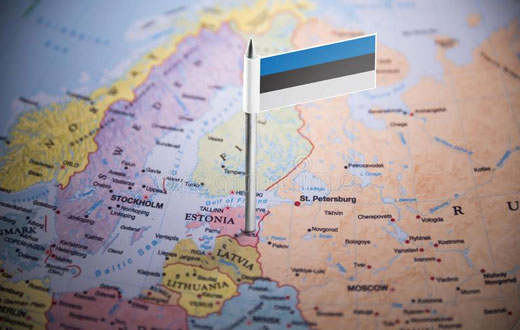
Estonia is a small country on the Baltic Sea coast. It’s being the sixth year in a row this European Union member wins a trophy for the best tax code across the OECD countries. The International Tax Competitiveness Index is seen as the rating indicator covering two major aspects of tax policy – competitiveness and neutrality. Both these aspects reflect the ease of doing business, and in the case of Estonia, they became a benchmark of the digital nomads’ hub.

An intricate path to Victory

Creating favorable investment conditions made possible due to the adoption of advanced technologies into the entire social, economic, and governance aspects of Estonian life. Implementation of electronic standards took nearly two decades with the continuous approaching to raising challenges and problems. In fact, Estonia appears as one of the first countries who declared in 2001 Internet access as a genuine human right. Today, 99% of public services in Estonia are available online. One of the most complicated difficulties on their way to becoming e-society was internet education, as the adoption of e-services required snug confidence in digital practices. The path from 29% of Internet users at early stages to 98% as of 2019.

Economy, taxes, and e-residence

Surviving the aftershocks of Soviet intervention, Estonia managed to modernize and liberalize its practices in order to engage the international standards of living. The estimated GDP per capita in 1991, just after the independence declaration, was as little as $100, while the present data shows a significant, near $20,000 flag.

The modern Estonian economy demonstrates a solid growth due to consistent electronics and telecommunication sectors, strong trading ties, and encouraging investment climate. Loyalty and flexibility, alongside with digital convenience of the state tax system turned Estonia into the hotbed of the technological enterprise. Despite the low rates, taxation delivers a meaningful revenue in the amount of 33.2% of GDP to the Estonian economy. This number, however, continues to decrease.

E-Governance proposed as an innovative administration method plays an essential role in the country’s international relations. It is so effective that even Malaysia and other big countries have adopted this model. The e-residence program launched in 2014 allows foreigners to enter Estonian services, such as banking, company formation, payment operations, and taxation within online. During its lifetime, the amount of 54 thousand participants from over 160 countries have established more than six thousand new companies.

Potential threats

There is a number of threats that innovative digitalization of the Estonian economy involves besides benefits. Two of them are likely to be determined as principal. Here they are:

  • Cybersecurity
  • Tough response to global economic fluctuations

Total digitalization of economic and governmental systems made Estonia vulnerable to cyberattacks, especially those implemented by international hacker organizations, including politically backed. In 2007, the major Estonian public websites and databases became a target for such offense. State-Sponsored cyberwarfare, as it was defined later, become the second biggest cyberattack on government institutions after the US “Titan Rain” in 2003.

The X-Road, main Estonian data storage system, is thereby used by NATO, the US Department of Defense, and major EU institutions, so in case of occurrence, a cybersecurity issue to be confronted by multiple counterparts.

As long as the Estonian economy is tied to international trading, global markets may have a severe impact on it. Back in 2008, the global economic crisis hit many countries, Estonia was among those suffered worse. It took two years to move the economy back on track.

Latest updates and key takeaways from Estonia

Recently, Estonia and Hong Kong have settled an agreement aimed at these jurisdictions to avoid double taxation, as they together propose a loyal tax approach. According to the deal, any tax paid by Hong Kong residents derived from in-Estonia activities to be credited against the local tax withheld on the same amount of income, and vice versa.
The other notion applied in 2019 is that it became possible to pay yourself employee salary only, but only in case, the business activity was performed outside Estonia. However, the inhouse tax still needs to be repaid.

Taxation in Estonia: key takeaways

  • Corporate income tax rate: 20%
  • Individual income tax rate: 20%
  • Property tax applies only to the land
  • Foreign profit exemption (up to 100%)

Despite the ease of business establishment in Estonia, there is a set of formal rules, a cornerstone for legitimate enterprise in this country. Here are some of them:

  • Double taxation of salaries for non-digital nomads
  • A EUR 40,000 turnover threshold for VAT registration
  • Social security contribution and payroll for Estonian residents

More on e-residence and taxation in Estonia here

For your convenience, when it goes about compliant employment in Estonia, we created an efficient approach, Express Global Employment solution. This will reduce the need for studying and examining local legislation wittingly to hold on specific Labour Code and Taxation.

Reach out to us today for more information.

Blog

Global PEO Services For Startup Employment

Let’s start this conversation with a few key statistics about startups and their survival. On average, 80% of startups manage to make it to their second year. 70% make it to the third year. 62% make it to the 4th year. This drops to 52% in the 5th year. Many people may be surprised to… Read more Global PEO Services For Startup Employment

7 views 0 Comments

Let’s start this conversation with a few key statistics about startups and their survival.

On average, 80% of startups manage to make it to their second year.

  • 70% make it to the third year.
  • 62% make it to the 4th year.
  • This drops to 52% in the 5th year.

Many people may be surprised to see this information, given that it’s a common belief that many businesses don’t survive that 1st year. Startups are a bit different. In order to make good on the initial investment that you make, a startup needs to be able to put its concepts into action. The key is having essential talent in place. Ultimately, you can have a great startup concept and ride that potential to a successful year or two, but without talent, that ultimately dwindles. So, with that in mind, here’s how you can make the most use of professional employment solutions for startups.

What Makes Talent A Top Priority For Startups

Part of the reason why talent is so essential for startups, aside from filling that need, is the fact that there are simply more openings to fill. What this means is that there is a general decrease in the amount of agricultural, industrial, and similar labor-based jobs. Startups generally aren’t having these types of vacancies, either. The highest areas of growth are generally areas like tech that require skilled, specialized talent. In one survey, the following skills were labeled as a top priority in hiring.

  • Cloud/distributed computing
  • Statistical analysis
  • Data mining
  • Middleware and integration software
  • Web architecture and development
  • UI design

This is mainly because even if you’re not a tech company, you still need a lot of these skills, like being able to construct and manage a website/app, or being able to collate and access data to guide business decisions. The fact that nearly every startup needs some of these assets is creating a “talent war”. Businesses are pulling out all the stops to make their companies more attractive to candidates with these key skills.

Startups And Employee Retention

Along with being able to draw in top talent, it’s also important to have a strategy to retain them. The startup life can be difficult, and turnover might be even more common here than in conventional business settings. There’s also a very tangible cost element to failing to retain your talent. The cost of turnover is roughly 2.5 times that of employment, but that’s not all. Startups need to position their company and products in the best possible light for potential investors, and a lot of that is a concrete team. If you present one team and then have to present a different one later, or can’t showcase the best talent you want because you can’t retain them, this hurts your startup’s image.

One silver lining here is that if you can get strong talent across the board, this helps your retention. Skilled employees are smart enough to recognize other talented professionals, and this gives them more confidence that your startup knows what it takes to succeed. Talent is your most valuable asset in more ways than one.

How To Attract Top Talent

So, with that in mind, every startup needs to have a talent acquisition strategy in place. This includes not only how to appeal to talent, but the actual logistics of hiring and employing them. For example, full-time employment may seem like the obvious option, but it may not be financially feasible to bring on every single employee full-time at the beginning of a startup.

This is why we see a lot of freelancers getting employed by startups. These professionals can have all the skills and experience you need, but you need to make sure that you are legally compliant with how you bring them on. Depending on where you are based and the actions you take, you may think you have an independent contractor, but they are truly an employee. Failing to file this properly can lead to consequences for your business.

With the heavy competition for local and domestic talent, you may need to think broader, especially if you have international expansion plans. This is where global employment services for startups comes in. A global PEO solution is a perfect way for you to make use of an international marketplace of talent, without exposing yourself to the web of international labor law.

PEO Providers For Startups and the Future of Employment

In many ways, the startup world is a proving ground for a lot of concepts that ultimately end up shaping the general workplace. The sink-or-swim nature of business at this stage means there’s always going to be some innovations required, both in terms of product and how the business is run.

As a result, to have the talent needed to power these areas, startups can’t afford to limit themselves in terms of talent. To open up a pool of international skilled workers, without the red tape of opening your own entity, it’s essential that you consider a PEO for startups. PEO (professional employment services) from a skilled industry partner like Acumen International can help you compliantly hire and retain the talent your startup needs to survive and thrive.

Reach out to us today for more information.

Blog

Expansion Into Saudi Arabia Without Incorporation

When it comes to international business, one of the main benefits is being able to go where the strongest markets are, and you’d be hard-pressed to find a Middle Eastern market like Saudi Arabia. As the largest oil producer in the world and the only Arab country to be a part of OPEC and the… Read more Expansion Into Saudi Arabia Without Incorporation

20 views 0 Comments

When it comes to international business, one of the main benefits is being able to go where the strongest markets are, and you’d be hard-pressed to find a Middle Eastern market like Saudi Arabia. As the largest oil producer in the world and the only Arab country to be a part of OPEC and the G-20 major economies, the opportunities are vast. However, this is also quite a unique setting when it comes to international expansion. So, with that being said, here are some of the fundamental points when it comes to opening a business in Saudi Arabia without incorporation.

Understanding Business In The Middle East

When it comes to Middle Eastern business in general, while there are plenty of opportunities, these may not necessarily be the right opportunities for every company. A good way to gauge whether it’s a proper fit is through a pros or cons analysis. Here are some of the outstanding factors that may make the Middle Eastern expansion decision for you.

Pros:
Relative communication accessibility. While local languages may be the official languages, English is widely spoken in the business world here. For example, in Saudi Arabia, it’s often a compulsory subject in secondary schooling. This can make it easier for your team to discuss and negotiate than in other Gulf countries.
Economic development. Many people associate business in the Middle East with oil, and this resource has created a platform for other areas of the business to develop as well.
Proximity. The Middle East’s proximity to European, Asian, and African markets could make it a potential good staging point if expansion there is in your future goals.

Cons:
Overspecialization. Countries like the UAE and Saudi Arabia are doing a solid job of diversifying business outside of the oil and gas industries, but not every country is as successful in this regard yet.
Cultural adjustment. While this isn’t necessarily a business issue, cultural norms are quite different in the Middle East compared to many Western businesses. You want to be mindful of these so you can network successfully.
Universal challenges. Like any international expansion, you have to heed the laws not only in your country of origin, but also the country that you do business in. This includes everything from export to hiring to labor practices. You need to do your research to make sure that the pros outweigh the opportunity costs of making this adjustment.

How Easy Is It To Do Business in Saudi Arabia?

In general, Saudi Arabian business mitigates a lot of the cons that we mentioned, while being a shining example of the pros. As of right now, its CPI (consumer price index) is at 106.1 points. Primary exports are oil products, as is little surprise, with major imports being foodstuffs, machinery, and automobiles.

However, there are still those universal logistical/compliance challenges that you need to navigate.

For example, when talking about taxes, there are two types in Saudi Arabia, income tax and Zakat. Non-Saudi investors and Saudi branches of foreign companies are susceptible to income tax, which is at a higher rate than Zakat. Note that businesses involved in gas and oil are subject to higher income taxes as well. Selling your shares in a Saudi branch as a foreign investor is also subject to additional tax.

Perhaps one of the most surprising aspects of Saudi business to newcomers is what’s actually required to open the business up. Law requires that you have a local partner with a controlling interest of the company. Because this would technically allow them to close the business whenever they feel like it, you need to make sure that you work with someone you trust. You also need to prove that you have a certain amount of money to invest, though this varies by state.

Say that you can navigate this issue. What about labor laws? In general, Saudi labor laws entail similar provisions that you would see for Western workers, like set workdays, maternity leave and the like. In general, there have been a series of reforms over the last decade or so to make things more appealing for foreign investment. In terms of regulation for expat employment in Saudi Arabia, you will need to register with a variety of local administrations, and it’s customary for the government to hold your passport until you are ready to leave the country.

Prepping For International Expansion Into Advanced Economies

Saudi Arabia is a very desirable location for any company to expand operations into, given the strong economy and continued potential for growth. Because of its already-developed economy and the ongoing international need for oil, chances are that Saudi Arabia is going to be a financial powerhouse for decades to come.

However, advanced economies like these often have unique challenges and regulations to navigate before any of that can happen. This is why it’s important to avoid the bureaucratic headache of opening your own entity and look into PEO in Saudi Arabia. PEO (professional employment services) from a skilled industry partner like Acumen International ensures that you quickly and effectively hire on the team you want for your Saudi Arabian expansion, while always knowing you will be staying in compliance.

Reach out to us today for more information.

Blog

Establishing International Intellectual Property Management

For most companies, intellectual property is the lifeblood of their business, whether it’s a major product that they sell or a cornerstone of their branding. As a result, potential issues like copyright infringement are taken very seriously. However, things start to get a bit murkier when we look at international intellectual property management. Different countries… Read more Establishing International Intellectual Property Management

9 views 0 Comments

For most companies, intellectual property is the lifeblood of their business, whether it’s a major product that they sell or a cornerstone of their branding. As a result, potential issues like copyright infringement are taken very seriously. However, things start to get a bit murkier when we look at international intellectual property management. Different countries may have different laws, making it difficult to determine what applies to what situation. In addition, many international teams are comprised of freelancers, making it difficult to determine exactly who owns a given IP. Here is some key insight on navigating this web with your intellectual property ownership.

Intellectual Property Concerns In The Global Marketplace

The growing importance of intellectual property is due to an overall shift in business focus over the last few decades. In the past, a lot of the value of a company may have been tied up as tangible items, like office space, equipment, and so on. Now, though, it’s the intangible concepts that carry the bulk of importance. This includes concepts like:

  • Products/processes
  • Written/creative work
  • Designs
  • Logos/visual branding
  • Trade secrets

Indeed, if you were to follow a given company and ask its patrons what they value, they’re likely going to say it’s either the end product, marketing method, or the method they go about their business. All of this falls under intellectual property. The bulk of the time, this is a key part of businesses managing to stay on the cutting edge.

However, this doesn’t mean that intellectual property issues don’t happen. A lot of the time, this becomes a legal question of who is entitled to an idea under the law. For example, there is an ongoing issue between the U.S. and China about Chinese companies stealing American IP en masse. This is largely believed to be due to a lack of enforcement on the Chinese end. This highlights a major issue with intellectual property in the global marketplace. If two different countries have two different sets of IP standards and enforcement, how can one enforce their IP elsewhere?

Intellectual Property Ownership And Global Employment

This brings us to intellectual property ownership in an employment context. Conventionally, when an employee is hired on at a company, they either have to sign an agreement regarding IP or sign an employment agreement with relevant clauses included. In essence, this means that when they create a piece of intellectual property in the service of the company, the rights to it revert to the company, rather than the person. This way, if the worker ends up leaving the company later on, they don’t end up taking the property with them.

However, when going into an international context, this becomes a lot more difficult. Expanding operations into a new country means having to go through the local bureaucracy as well as having to deal with taxes in the new area. Many companies try to work around this by hiring international freelancers in order to start their initial operations in new markets. The problem is that if there’s no employment agreement in place, it suddenly becomes a lot less clear who exactly owns a piece of intellectual property the employee creates. In addition, if you try to put one together as an employer, it may be rejected due to labor laws in the country you’re trying to work in.

To avoid being caught in this situation, you want to look at services like a Global Employer of Record as an alternative. Agreements with independent contracts are generally made on a case-to-case basis. By comparison, a GEOR agreement affords the employers all the rights of a conventional employer/employee relationship. So, if a disgruntled employee were to try and claim ownership of an IP after leaving your company, you could reference the GEOR agreement to protect yourself. Technically, they would be a legal worker for the service, but all IP they would create would revert to your company.

A Solution To Your Global Intellectual Property Issues

There have been several debates throughout history on whether or not the employee or the employer has rights to a given piece of intellectual property. If there isn’t a written agreement in place, it can be even more difficult to determine this, as both parties may have a cause behind their claims. Part of the reason that this is so difficult with international markets is due to the high prevalence of freelancers. Freelance contracts are often different and less stringent than employment contracts, leading your valuable intellectual property under dubious ownership.

In general, handling employment and compliance internationally can be more complex than many companies expect. However, this doesn’t mean that you should pass over it completely, considering the advantages of international expansion. At Acumen International, our services are specifically designed to help international companies avoid many of these issues. Foreigners are able to maintain their intellectual property rights in international business, no matter what type of members they decide to bring on their team. Along with this, it’s also a lot faster than the other alternative, setting up a foreign entity.

Reach out to us today for more information.
News

Canada implements the biggest labor reforms in its history

A tremendous number of 18,000 federally regulated entities and 900,000 of their employees are going to face the action of a new roundup of the federal employment standards in Canada enforced from September 1, 2019. New amendments are going to impact Canadian workers related to the federally regulated industries (see the list below), including government… Read more Canada implements the biggest labor reforms in its history

A tremendous number of 18,000 federally regulated entities and 900,000 of their employees are going to face the action of a new roundup of the federal employment standards in Canada enforced from September 1, 2019.

New amendments are going to impact Canadian workers related to the federally regulated industries (see the list below), including government servants. They are aimed to revitalize the Canadian workforce toward a modern reorganized Labor Code and are basically the biggest and the most critical reforms of the Labor Code in Canadian history.

The “Nouvelles normes” are mainly subject to employees entitlement and focused on the following concerns:

  • More flexible work. Under the new law, employees are entitled to request a change in working hours after six months of consecutive employment. The right to propose working outside the office being provided too. Employers, however, may refuse to give such benefits due to financial or operational reasons.
  • Settlements in scheduling and overtime. Employees must be provided with their shift schedule at least 96 hours before the rollup. Employers should inform workers a minimum of 24 hours before their shift schedule to be changed. Employees have the right to exchange the overtime to their time off at the rate of 1.5 hours off to one hour of overtime alternatively to repayment.
  • Increased vacation. Workers can go for three weeks of vacation in the case of five years of consecutive employment and four weeks of vacation after ten years of employment. Holiday pay provided.
  • Personal leave updates. Five days of personal leave are authorized after three successive months of work. The common reasons for personal leave include citizenship ceremonies, family responsibilities, jury duty and medical issues with the option to extend to 10 days for victims of family violence. Indigenous may take five days to leave to meet their traditional practices.

Despite required investments and more freedom provided to employees, officials believe that new amendments will likely increase employees’ productivity due to high motivation rate:
“Federally regulated employees may be more productive while at work because of predictability in their shifts and longer periods away from work”, – Lori Sterling, former Deputy Minister of Labor, said.

As for American companies operating in Canada under federal jurisdiction, their employees are set to be governed under the implemented standards too.

Federally regulated industries in Canada

The industries under federal regulations include:

  • Banks
  • Marine shipping, ferry and port services
  • Air transportation, including airports, aerodromes, and airlines
  • Railway and road transportation that involves crossing provincial or international borders
  • Canals, pipelines, tunnels, and bridges (crossing provincial borders)
  • Telephone, telegraph and cable systems
  • Private businesses necessary to the operation of a federal act
  • Others (see the link)