

Send Email
Blog

How to Hire Top Global Talent Fast

Hiring top global talent is not easy under any circumstances, but when the heat is on to fill vacancies ASAP, it is easy to go into crisis mode. Operating under duress often leads to costly mistakes that can snowball down the road, putting your business at risk, harming your reputation, and creating unnecessary drama. When… Read more How to Hire Top Global Talent Fast

Hire Top Global Talent Fast

Hiring top global talent is not easy under any circumstances, but when the heat is on to fill vacancies ASAP, it is easy to go into crisis mode. Operating under duress often leads to costly mistakes that can snowball down the road, putting your business at risk, harming your reputation, and creating unnecessary drama.

When faced with urgent hiring needs, especially when hiring globally, it is important to keep a cool head and not compromise your standards. Quality global talent is out there, you simply need creative solutions to find it. A global PEO can help.

Top 4 Reasons to Hire Top Global Talent Urgently

Every business owner or manager will eventually confront a situation where key personnel needs to be augmented or replaced, or where unforeseen circumstances create immediate hiring needs. Some common urgent hiring scenarios include the following.

1. Mergers or acquisitions

Mergers or acquisitions where corporate reshuffling leaves critical gaps in key positions displace key employees, or demands relocation. You may lose some of your most seasoned top talents if they are unwilling to relocate. Or if some of the candidates want to be hired directly by your company while you are terminating your business entity because of the takeover. Either way, you may need to transfer your workforce among departments or even to another entity, and allocate them to the active projects, which can directly impact your company’s bottom line.

2. Urgent global talent onboarding

Urgent global talent onboarding on multiple fronts, where new technologies, new departments, or new products and services require skilled professionals for implementation. Finding qualified candidates with specific skills and enticing them to work for you can be difficult. However, timely onboarding can become crucial in the war for top global minds if you don’t want to lose a valuable candidate to competition.

3. Local compliance threats

Local compliance threats, where international contractors must be rapidly converted to full-time employees to avoid litigation and tax issues related to independent contractor/employee misclassification. Political unrest, economic downturns, or regime changes can make compliance a volatile landscape.

4. Sudden critical growth

Sudden critical growth, where your new company receives more orders than it can handle to keep up with explosive demand for your goods or services. While this is generally a good thing, the urgent need for staffing can be a nightmare.

In such situations, your first impulse may be to scoop up the first warm bodies whose CVs reflect the requisite qualifications. But when it comes to onboarding new hires, hasty decisions often lead to long-term regrets.

What Are the Key Challenges of Hiring Top Global Talent Urgently?

When you have critical positions to fill in multiple countries, the challenge looms even larger. There are numerous potential obstacles to overcome and countless nuances that vary from one country to the next, each requiring a unique approach.

Some common challenges faced by recruiters on an international scale include:

Finding qualified candidates

It is not uncommon for businesses to face a “feast or famine” situation. When you’re not hiring, applicants are beating down your door, but when you desperately need to fill a vacancy, there are no qualified applicants to be found.

Beating competitors’ offers

In many cases, if you have urgent staffing needs, there is a good chance your business rivals are vying aggressively for the same pool of candidates.

Beating competitors’ offers

In many cases, if you have urgent staffing needs, there is a good chance your business rivals are vying aggressively for the same pool of candidates.

Impossible timelines for hiring

Higher-ups often want a position filled yesterday, but international hiring is a long game. There can be scads of red tape that pump the brakes on your hiring machine, delaying the onboarding of essential employees.

A general shortage of skilled candidates

The explosive growth in technology has left companies scrambling to fill high-tech positions in a field where the number of vacant positions exceeds the number of skilled candidates.

Under-informed recruiters

It is not unusual for certain positions to be outside the scope of recruiters’ knowledge. This can pose problems when candidates ask specific or technical questions about the position that recruiters are not equipped to handle.

Employee retention challenges

Chances are your prime candidate pool will be Millennials, born between 1980 and 2000. They have a lot to offer, being tech-savvy, flexible, and forward-thinking. But they are less likely to stay at a single job for decades, and more likely to be lured away within two to three years of hiring. This means that your urgent hiring woes are not likely to go away anytime soon.

If you want to succeed and thrive in the international market, you need the very best talent you can find.

Solutions for Hiring Top Global Talent 

Hiring in a hurry is not the optimal scenario, but there are solutions available to accelerate the recruiting and employment process. One of the smartest moves you can make is to align yourself with a global professional employer organization (PEO).

A global PEO can offer HR support for legal onboarding and payrolling selected candidates and can help you recruit international talent if you haven’t found them yourselves. The advantage of working with a global PEO company is that they know how to deftly navigate the often choppy waters of international hiring from one country to the next. A global PEO can expedite foreign employee onboarding procedures including recruiting and arranging local payroll for the desired candidate, so you can fill critical key positions in the least amount of time.

Global PEO Services Include

  1. Local tax compliance
  2. Payroll and tax administration
  3. Legal and regulatory requirements
  4. Insurance and other mandatory and voluntary benefits provision
  5. Workers comp and safety compliance

A global PEO has access to technologies and resources that may not be available to smaller enterprises. Also, they have global expertise that companies that only operate in their home country lack. They can offer your global employees better benefits and incentives, ensure accurate and timely payroll, onboarding, and termination, and provide professional global HR support. Partnering with a global PEO can give your company an advantage over your competitors when it comes to recruiting the world’s top talent.

Acumen: Your Express Global PEO for Immediate Employment Needs

Today’s world is changing at a rapid pace, posing challenges never before experienced by global employers. To stay competitive, businesses need to be nimble and creative, finding unique solutions for new challenges that no company has had to face in the past.

Acumen International offers a flexible and reliable solution for your human resources needs:

  • Whether you’re going through a company acquisition and need to transfer the current workforce as a result of restructuring so that there are no breaks in work
  • Urgent in-country tax compliance threat
  • Starting your own company abroad but need a stopgap solution meanwhile and want the employees to work for you before incorporation is done
  • Cannot move the hire date and have a pressing talent gap to be filled in.

Request a tailored quote for your particular case today.

Contact Acumen today and let us take the stress out of global hiring even if you are pressed for time.


Blog

Compliance Guidelines for Companies that Hire Expats

When your company’s operations span the globe, sending representatives abroad is a necessity if you want to remain competitive. Yet now more than ever, the process of preparing expat employees and helping them get established in foreign jurisdictions is riddled with challenges. In addition to the global pandemic that imposes travel restrictions and causes widespread… Read more Compliance Guidelines for Companies that Hire Expats

When your company’s operations span the globe, sending representatives abroad is a necessity if you want to remain competitive. Yet now more than ever, the process of preparing expat employees and helping them get established in foreign jurisdictions is riddled with challenges. In addition to the global pandemic that imposes travel restrictions and causes widespread political and economic instability, you have to make sure that your company and your workforce are in compliance with local rules and regulations.

Challenges Faced by Expat Employees

Working abroad is not everyone’s cup of tea, and it takes a special type of employee to accept the challenges of an international assignment. For the special few who fit the bill, working in a foreign city offers intangible rewards in terms of culture, experience and personal growth.

But even the most qualified and avid candidate is bound to face some challenges, and it is important for your company to equip them to cope before you throw them to the wolves.

Obstacles often faced by expat workers include:

  • Language barriers. If your candidate does not speak the local language, begin language training early on, and set up a buddy system in the destination country with a local employee who can help the new candidate acclimatize. Be sure to forewarn local employees that the individual you are sending will need some help with language.
  • Culture shock. Provide your expat employee with as much information as you can about the local culture. If possible, put them in touch with a veteran who has lived in the country and can offer some helpful information on navigating the local culture.
  • Personal health and safety issues. Medical care and hygiene standards vary from country to country, so it is important to take the health of your employee into consideration. A candidate with a chronic medical condition that needs to be monitored or managed with medications may be a high risk. Expats also make attractive targets for criminals. Be sure to thoroughly advise your employee on safety risks and how to avoid them. An expat employee can quickly become overwhelmed in a foreign environment if they are not properly prepared, and their job performance will suffer. It is imperative for your company to equip expat workers to face obstacles and challenges, and to keep them safe while they live and work abroad.
  • Immigration procedure. Start early on, especially if you need to relocate the expat with their family and/or dependents. Check the documents required as well as the timelines to get a visa. Think carefully of how you will onboard and pay the person in the target country if a long-term assignment is at stake. Leaving workers on payroll in your home country is only justified in case of short-term projects for 3 months or less. If you are sending expats overseas long-term, you need to think how to arrange local payroll for them compliantly. If it is not viable for you to open your own entities and hire directly, make sure you partner with a reliable third-party employment or global PEO company. Mind that having a single work visa sponsor and local employer that would onboard expats post-immigration would significantly raise your chances to get a visa. It is fine if you have an entity in a foreign country and will apply for a visa directly. However, if you don’t have your own entity or at all don’t plan to incorporate in the target country, a global PEO can apply for a visa on your behalf in addition to arranging local payroll for your employees. Employee termination at the end of contract or visa prolongation can also be done by a global PEO partner.

Preparing Your Employees for Work Overseas

To successfully send a talented employee to work for your company abroad, it is important to provide them with a well-designed relocation package that includes cultural and language training, as well as detailed information on safety and health concerns.

In addition, it is important to assign key sponsors, both at the home office and at the host office, to keep the employee informed and provide support when needed. A sponsor who has worked in the host country can be an invaluable asset for helping the employee transition smoothly to their new home and job.

Frequent open communication with the home office is key to successful job performance, so be sure to keep your expat in the loop throughout the assignment period, and have a plan in place to bring them back into the home fold, once the overseas assignment is over.

Costs of Expatriation

In addition to preparing your staff to live and work overseas, it is important to calculate the cost of retaining a foreign workforce. In general, the expense of sending a worker overseas is calculated at three times their salary, so you want to be sure you’re getting plenty of bang for your buck.

Once you find the most qualified and reliable candidate for an overseas position, you need to crunch some numbers to be sure the assignment is financially feasible:

  • Salary
  • Living accommodations and expenses
  • Travel expenses
  • Taxes and benefits
  • Work permit expenses

Careful planning is key to successfully establishing an expat workforce abroad that is able to adapt to new environments and still maintain high levels of productivity. To successfully launch an expat employee, you should collaborate with your HR, accounting, operations, and other team members. With such a large investment at stake, the last thing you need is a steady turnover of failed assignments.

Getting Work Permits for Expat Workers

It is essential to provide your expat with the proper documentation for working in the host country. While short-term assignments often need only a visa, extended assignments that entail substantial business activities will likely require an official work permit.

Depending on the host country, obtaining a work permit can be a costly and lengthy process. Many countries are closely scrutinizing the applications of foreign companies who want to send workers abroad. Some companies try to skip this step by obtaining visas under false pretenses, but the consequences of doing so can be severe for both the employee and the company.

Acumen International for Global Workforce Solutions

Obtaining visas and work permits for your overseas workforce can be complicated. That’s why Acumen International developed our tailored solution for Expats Foreign Employment. We help companies like yours overcome the obstacles of obtaining work permits in over 190 countries and legally onboarding expats after they have received work permits. We can advise you on the documentation you’ll need, the procedures to be followed, and the nuances of working in your host country. Acumen’s solution can save you the hassle of mounds of paperwork and bureaucratic red tape, so you can focus on getting your employee ready to successfully live and work abroad.

Contact us today or Request a Quote here.

Blog

Solving the Challenges of Cross-Cultural Team Management

Technology has dramatically transformed the way we communicate, work, and play, and it is having an enormous impact on how we conduct business. No longer restricted by geography and borders, tech innovations have opened doors for companies to recruit the best talent from anywhere on the globe. However, not all is smooth sailing. International team… Read more Solving the Challenges of Cross-Cultural Team Management

Technology has dramatically transformed the way we communicate, work, and play, and it is having an enormous impact on how we conduct business. No longer restricted by geography and borders, tech innovations have opened doors for companies to recruit the best talent from anywhere on the globe. However, not all is smooth sailing.

International team management is complex, especially when your company has no local or regional subsidiaries. Working with the international community means navigating foreign systems that are not always convenient or compatible with your own, and failure to comply can land you in hot water. One comprehensive solution for managing your team is to partner with a reliable global employer of record to fulfill your obligations to employees anywhere in the world.

International Team Management Obstacles

Despite the ease of communicating and working across international borders, there are still many obstacles to building a global team. In addition to language and cultural barriers, you have to comply with local laws governing employment and taxation.

Some of the main obstacles faced by global employers include:

  • Recruiting top performers: The ability to go beyond your company’s backyard to find the world’s best talent is a huge advantage for your business. But the downside is dealing with different cultural norms, languages, and foreign hiring processes that put your HR team to the test. Working with a Global PEO (Professional Employer Organization) or EOR (Employer of Record) provider can take the load off your home team and help you acquire the talent you need with minimal friction.
  • Team management and training: Onboarding new employees is always a challenge, but even more so when they work remotely and are not accustomed to your corporate culture. Starting foreign employees off with positive work experience is key to making the process flow smoothly. Designate a teammate from the home office to be responsible for each new employee, making them feel welcome, answering their questions, and guiding them through the early months of employment.
  • Compliance with tax codes and employment regulations: In the past, companies had to establish themselves as an entity within the host country where they wished to hire employees and to comply with local regulations for employment, taxes, and compensation. In many cases, the expense by far outweighed the advantages. Today, service providers like Acumen International eliminate the need for companies to open their own companies, saving you money and relieving an administrative burden while giving you access to a global pool of candidates.
  • Payroll and compensation: Paying your employees is fairly straightforward until you add internationals and foreign branches to the mix. Then it becomes a hornet’s nest of compliance regulations, disparities in currency, withholding for local taxes, and other complicated issues that become a payroll administrator’s nightmare. An International PEO and payroll service provider like Acumen can make payments authorization to cross-cultural teams from anywhere a breeze, no matter the host country. Partnering with a “single point of entry” service provider will facilitate handling all workforce management tasks while letting you retain full control over the employees in their day-to-day activities.
  • Benefits and other HR issues: Setting up equitable benefits that can be accessed and provided in different countries is a complex process. Acumen can manage employee benefits and perform a host of other HR-related tasks that are difficult to execute across international borders. A global PEO provider serves as the company’s global HR extension and can ensure an additional level of protection for a client against possible local provider fraud cases. The paying client remains protected by his agreement with the provider.

What About Contractors?

The gig economy has made it possible for businesses to expand and shrink their labor force when needed, with no long-term commitments to permanent employees. That can mean big savings in benefits and other perks that full-time top performers expect and demand. At the same time, freelancers are able to pick up extra cash, work flexible hours, and travel, without the restrictions and responsibilities that come with a full-time gig.

When it comes to paying short-term or part-time contractors, things can get a little sticky, especially if they live in another country. Employers need to comply with both local and regional statutes that regulate employment, and often need to communicate in multiple languages. In addition, foreign governments may view contractors as your employees, muddying the waters when it comes to compensation, taxes, and withholding. Cases like this often result in huge fines for employee misclassification.

Those obstacles cause many companies to steer clear of contractors whose geographic location makes hiring and payroll processing too complicated, even when the contractor possesses highly sought-after skills and knowledge. If you want the flexibility of working with contractors without the hassles of foreign compliance, payroll, and employee benefits management solution like Acumen offers the perfect solution. A global PEO provider will help you employ the worker compliantly, safely with the best of your company’s interest in mind.

Build a World-Class Team with Acumen International

No matter where your company headquarters is located, you don’t need to miss out on hiring the world’s best talent. Acumen International is a world leader in managing legal issues, payroll, benefits, taxes, and other HR challenges faced by businesses with a growing global workforce.

As a single point of contact partner, Acumen saves you from having to navigate the multitude of different laws governing local compliance by taking care of payroll, benefits, and other details, anywhere in the world. A single point of contact allows the client company to use standardized quotes and contracts without wasting time. In addition, it is easy to add a head account in different countries of the world, since one service contract provides all the conditions for the hiring and processing of benefits, regardless of the country of employment.

Contact us today, and learn how Acumen International’s solutions can help your business build a world-class team to meet your global expansion ambition.

Blog

How To Complete Your First Ukraine Hiring Without Risking Non-Compliance

The worst-kept secret in the industry is that Ukraine is among the top countries in the world for IT talent. So, what makes Ukraine so desirable? And how do you get access to and attract best-in-class IT talent from Ukraine to your company? What’s so great about the Ukraine hiring market? Ukraine has its pulse… Read more How To Complete Your First Ukraine Hiring Without Risking Non-Compliance

The worst-kept secret in the industry is that Ukraine is among the top countries in the world for IT talent. So, what makes Ukraine so desirable? And how do you get access to and attract best-in-class IT talent from Ukraine to your company?

What’s so great about the Ukraine hiring market?

Ukraine has its pulse on the growing IT market. The country prides itself on a strong informational and educational infrastructure. Over 90,000 IT developers from Ukraine are currently employed and 30,000 new IT professionals enter the workforce each year.

This soaring market means an evergreen pool of talent for you to choose from. But the hype doesn’t stop there.

The majority of the population in this large eastern european country speak English fluently — most candidates are well-versed. Even the time-zone difference isn’t a dealbreaker. All of these factors make it easy to rely on the talent coming out of Ukraine.

How can you capitalize on the staggering IT talent for full-time employment coming out of Ukraine?

How Can You Stay Compliant To Hire In Ukraine?

Going through the proper procedures necessary to hire abroad can save you precious time and money. Contrary to popular opinion, our expertise at Acumen shows us that going the freelancer route to hire foreign talent may not be the right choice for your company. What may be considered as compliant for your country may not be agreeable with Ukrainian laws.

Avoid the crisis of back taxes or mislabelling fines you risk when you don’t hire full-time employees.

Find Your Solution

With the benefits of working with Ukrainian IT developers as a foreign company, hiring methods generally fall into one of three major categories.

Contractor Schemes
We already mentioned the potential risk of treating all outsourced workers as independent contractors. The less talked about blunder is risking a decrease in productivity. For an IT project, you may need dozens of freelancers to complete the scope of work in a timely manner. Without a proper contractor relationship to hold your hires responsible, you may find your project slowed due to contractors leaving the project or submitting substandard work.

Expanding With a Legal Entity
You can avoid compliance risks by setting up your own legal entity in Ukraine, but that enters a more complex territory. For example, the full process can take up to 60 days, requires a one-time $2,500 fee, as well as a set of extensive legal documents, all translated into Ukrainian. In addition, if you use this approach, you will be subject to around 40% tax overhead on top of your employee’s wages.

Global Employer of Record (GEOR) Scheme
This is a top choice for many companies looking to hire a Ukranian national in their home country or expats they need working for them there. A GEOR service serves the registered legal employer for your Ukrainian and expatriate IT developers, without a legal entity. It gives you ease of hiring while staying compliant and giving you more control over your hires, including the ability to terminate an employee at your discretion. If you are looking for a Global Employer of Record solution for your company, consider Acumen International for 190+ countries we cover.

Alongside with this service, we render our Independent Contractor Compliance (ICC) solution designed to meet your company’s needs to maintain proper contractor relationship and avoid contractor misclassification risks when your international workforce is dispersed around the world.

To see your options in hiring, get real time estimates on the cost of engaging your selected candidates, locals and expats, in Ukraine with our Global Payroll Calculator. We’ve designed this to speed up your budget process and get you to talent faster so you can focus on growing your company.

Reach out to us today for more information.

Blog

All employers have equal rights to access the best global talent. What about equal possibilities?

“All employers are entitled to have equal rights to access the best global talent, but they haven’t had equal possibilities until recently” – Nick Ganzha, the Founder and CEO of Acumen International, says. “In the recent past, only companies with big resources were doing business globally and only those companies could afford to have the… Read more All employers have equal rights to access the best global talent. What about equal possibilities?

“All employers are entitled to have equal rights to access the best global talent, but they haven’t had equal possibilities until recently” – Nick Ganzha, the Founder and CEO of Acumen International, says.

“In the recent past, only companies with big resources were doing business globally and only those companies could afford to have the best global talent in their teams.

But everything has changed recently – nowadays international business is no longer a prerogative of only blue-chip companies. To have access to global talent you don’t need to be a big multinational company anymore.

And it’s not a secret that the talent you have in your team will determine if you are a success or failure – your talent is your competitive advantage.

Our solution equalizes the chances of companies of all sizes and resources to get the best global talent, no matter where they live.

Now with our help all employers like you have not only equal rights to access global talent but also have equal possibilities.

So now, you are the one who chooses to win or lose in this war for talent”.

Blog

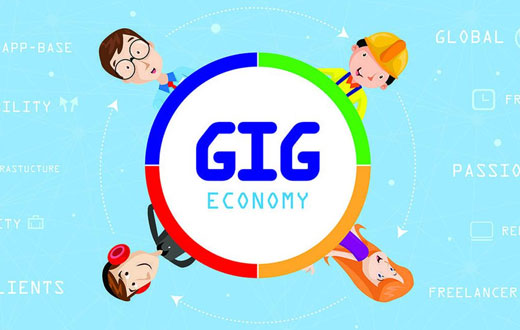
GIG Economy: How it shifts the entire HR industry and multinationals’ HR strategies

In 1999, a 9-to-5 job was the norm. One couldn’t imagine that in a few decades 34% of the entire global workforce would be “gig” workers. The “gig economy” is determined as a subset of the sharing economy. The McKinsey Global Institute defines the “gig economy” as contracted contingent work transacted in the digital marketplace… Read more GIG Economy: How it shifts the entire HR industry and multinationals’ HR strategies

In 1999, a 9-to-5 job was the norm. One couldn’t imagine that in a few decades 34% of the entire global workforce would be “gig” workers. The “gig economy” is determined as a subset of the sharing economy. The McKinsey Global Institute defines the “gig economy” as contracted contingent work transacted in the digital marketplace and managed by an online talent platform.This definition doesn’t cover ongoing part-time employment and freelance work that is not contracted through an online talent platform. As it stands, 150 million workers in Western Europe and North America are employed as independent contractors. Thanks to the numerous technological platforms that allow remote collaboration in tasks, the “gig economy” is a rising trend. Creating a workplace where people work for themselves either in one or many places, trading their services either part-time or full-time, the “gig economy” is no longer an imagined reality but a way of life for millions of skilled workers across the globe.

However, there are both complexities and advantages involved with both parties transacting in the “gig economy”. For employers, it gives an opportunity to source for employees globally, transcending skill limits that may exist in a local geographical area, with lowered costs, and flexible scalability. Likewise, the downside is the unreliability of employees. For employees, it creates opportunities for career independence, flexibility, and control of their development, with a wider variety of work options. On the flipside, the tradeoff is regular employment benefits and job-security related stress given the competitive and unpredictable nature of “gig”.

It is certain that outsourcing, crowdsourcing, and freelancing trends are here to stay, so organizations must adapt to the demands of managing a diverse global workforce of “gig” employees. Re-strategizing policies to optimize the “gig economy” is key to hire, retain, and manage a global workforce. The HR industry is experiencing a learning curve on re-developing incentive programs as well as training and development programs for contingent workers.

Entire HR industries are re-adjusting not only to expanding physical offices across the globe and increasingly diverse workforces; but also, to a technologically disrupted workforce, adding its own dimension. Contingents are becoming a priority for organizations’ HR strategies, and the relationship between the two is an aspect HR research is exploring. Soon, countries are going to draft legislation outlining regulations for contingent employment, and HR must devise plans to operate within stipulated frameworks to become a global employer.

Blog

A contingent workforce in the GIG Economy: How global employment is shifting

The gig economy isn’t new and is here to stay. In which case we’ll continue to observe a substantial evolution of the way companies do business. That’s especially relevant for those doing business globally. Above all, the projects’ implementation requires human resources. Here’s where hiring comes in to play. The key task is to see… Read more A contingent workforce in the GIG Economy: How global employment is shifting

The gig economy isn’t new and is here to stay. In which case we’ll continue to observe a substantial evolution of the way companies do business. That’s especially relevant for those doing business globally. Above all, the projects’ implementation requires human resources. Here’s where hiring comes in to play. The key task is to see the hiring process as a negotiation, with a view to form a partnership, as the article originally published at Vervoe states. Technically, that partnership is between a business and an employee. But in reality, it is a partnership between human beings who need to work together and achieve common goals.

In global hiring, the rise of a contingent workforce signals the above evolution, marking a challenging shift for both employees and employers. If highly-skilled workers seek flexible employment, an alternative to the traditional full-time to maintain their independence, then companies in their turn, are apt to make the most of that talent to meet their business needs. The challenge for businesses seeking the top-notch skills that contingent labor can provide is to pay those workers properly and compliantly. As an employer, you can engage your global workers in different ways. Which, in its turn, determines the worker-organization relationships and therefore the following worker classifications:

  • Employees: These are staff employed directly by the company they are working for.
  • Independent contractors: These workers stand on their own. They provide services and are paid on completion. They are not employed by any company. At the end of their work they provide an invoice for payment.
  • Contingent workers: As such, they are not employees of the firm they are working for, and the business owner has no responsibility to provide continuous work on a permanent basis.

These workers are hired to complete specific tasks under a statement of work (SOW) provision. Generally, it could reduce the cost and strain required to manage more employees, in the form of benefits administration, training/development, etc. Contingent workers are responsible for their own taxes as they work for themselves — not the company. However, using a contingent employment model on a permanent basis can bring lots of trouble for you as an employer: the most significant risks of using contingent workers lie in the legal consequences of misclassifying them. You’ll face significant liability under tax law, wage and hourly regulations, and other employment laws if a court or administrative agency determines that your contingent workers were actually employees. The company can be hit with fines and penalties on top of having to pay the taxes owed to that employee. Another issue is confidentiality. An employer that uses contingent workers has no guarantee that they won’t move on to a competitor. That’s particularly true when workers possess specialized skills and expertise that limit the number of companies for which they can work. The no benefits issue lies in the fact that contingent workers receive no benefits compared to their directly hired colleagues, and it may be tricky to retain this talent, paying him/her only the salary. Some contingent workers even feel as “second-class citizens” compared to regular employees or as if they aren’t a part of the team.

It’s critical for you to understand the differences between these types of relationships, as confusing them causes a growing number of lawsuits. The relationship of the workers to your company is a key concern to federal and state governments, in particular the agencies responsible for collecting payroll taxes. That’s why the worker’s employment status is crucial for both a company and a worker. The contingent or gig workers tend to be classed as ‘dependent contractors’ making them more connected to the company engaging them. But again, it’s up to the HR departments of the companies hiring globally to take that into account when developing their strategies.

Hiring a global workforce always takes time and effort. Need to quickly and compliantly onboard your international talent? For that we have designed our solid Global Employer of Record solution. We at Acumen International help you handle all of the above challenges with 100% legal compliance, thus giving you a superpower to attract and retain the best-of-breed global talent.