Send Email
News

Nick Ganzha, CEO at Acumen International at SIA’s Collaboration in the Gig Economy Europe 2019

We are happy to announce that Nick Ganzha, the Founder and CEO of Acumen International, will attend the Staffing Industry Analysts, SIA’s Collaboration in the Gig Economy Europe in London. This is the premier conference designed to connect and optimise the entire talent supply chain. Acumen’s Founder and CEO will join a wide range of… Read more Nick Ganzha, CEO at Acumen International at SIA’s Collaboration in the Gig Economy Europe 2019

11 views 0 Comments

We are happy to announce that Nick Ganzha, the Founder and CEO of Acumen International, will attend the Staffing Industry Analysts, SIA’s Collaboration in the Gig Economy Europe in London. This is the premier conference designed to connect and optimise the entire talent supply chain.

Acumen’s Founder and CEO will join a wide range of high-profile professionals who are investigating and experimenting with new ways of managing talent: staffing suppliers, workforce solutions buyers, managed services (MSP) and recruitment Process Outsourcing (RPO) providers, representatives of gig economy companies, and others interested in innovative workforce solutions for maximising value and optimising the talent supply chain.

In the framework of networking with the conference participants and attendees, Nick Ganzha will be pleased to present Acumen International and our solid Global Employment solutions in over 190 counties.

Staffing Industry Analysts’ Collaboration in the Gig Economy Conference Summary 

Watch us on YouTube

Acumen International YouTube

Watch us on YouTube

Nick Ganzha’s YouTube

Blog

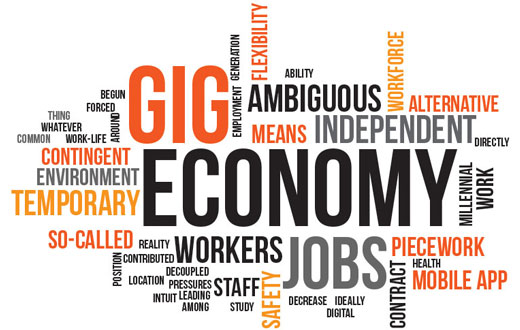
A contingent workforce in the GIG Economy: How global employment is shifting

The gig economy isn’t new and is here to stay. In which case we’ll continue to observe a substantial evolution of the way companies do business. That’s especially relevant for those doing business globally. Above all, the projects’ implementation requires human resources. Here’s where hiring comes in to play. The key task is to see… Read more A contingent workforce in the GIG Economy: How global employment is shifting

The gig economy isn’t new and is here to stay. In which case we’ll continue to observe a substantial evolution of the way companies do business. That’s especially relevant for those doing business globally. Above all, the projects’ implementation requires human resources. Here’s where hiring comes in to play. The key task is to see the hiring process as a negotiation, with a view to form a partnership, as the article originally published at Vervoe states. Technically, that partnership is between a business and an employee. But in reality, it is a partnership between human beings who need to work together and achieve common goals.

In global hiring, the rise of a contingent workforce signals the above evolution, marking a challenging shift for both employees and employers. If highly-skilled workers seek flexible employment, an alternative to the traditional full-time to maintain their independence, then companies in their turn, are apt to make the most of that talent to meet their business needs. The challenge for businesses seeking the top-notch skills that contingent labor can provide is to pay those workers properly and compliantly. As an employer, you can engage your global workers in different ways. Which, in its turn, determines the worker-organization relationships and therefore the following worker classifications:

  • Employees: These are staff employed directly by the company they are working for.
  • Independent contractors: These workers stand on their own. They provide services and are paid on completion. They are not employed by any company. At the end of their work they provide an invoice for payment.
  • Contingent workers: As such, they are not employees of the firm they are working for, and the business owner has no responsibility to provide continuous work on a permanent basis.

These workers are hired to complete specific tasks under a statement of work (SOW) provision. Generally, it could reduce the cost and strain required to manage more employees, in the form of benefits administration, training/development, etc. Contingent workers are responsible for their own taxes as they work for themselves — not the company. However, using a contingent employment model on a permanent basis can bring lots of trouble for you as an employer: the most significant risks of using contingent workers lie in the legal consequences of misclassifying them. You’ll face significant liability under tax law, wage and hourly regulations, and other employment laws if a court or administrative agency determines that your contingent workers were actually employees. The company can be hit with fines and penalties on top of having to pay the taxes owed to that employee. Another issue is confidentiality. An employer that uses contingent workers has no guarantee that they won’t move on to a competitor. That’s particularly true when workers possess specialized skills and expertise that limit the number of companies for which they can work. The no benefits issue lies in the fact that contingent workers receive no benefits compared to their directly hired colleagues, and it may be tricky to retain this talent, paying him/her only the salary. Some contingent workers even feel as “second-class citizens” compared to regular employees or as if they aren’t a part of the team.

It’s critical for you to understand the differences between these types of relationships, as confusing them causes a growing number of lawsuits. The relationship of the workers to your company is a key concern to federal and state governments, in particular the agencies responsible for collecting payroll taxes. That’s why the worker’s employment status is crucial for both a company and a worker. The contingent or gig workers tend to be classed as ‘dependent contractors’ making them more connected to the company engaging them. But again, it’s up to the HR departments of the companies hiring globally to take that into account when developing their strategies.

Hiring a global workforce always takes time and effort. Need to quickly and compliantly onboard your international talent? For that we have designed our solid Global Employer of Record solution. We at Acumen International help you handle all of the above challenges with 100% legal compliance, thus giving you a superpower to attract and retain the best-of-breed global talent.

Blog

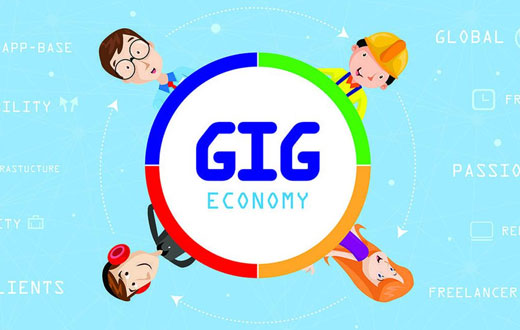
GIG Economy: How it shifts the entire HR industry and multinationals’ HR strategies

In 1999, a 9-to-5 job was the norm. One couldn’t imagine that in a few decades 34% of the entire global workforce would be “gig” workers. The “gig economy” is determined as a subset of the sharing economy. The McKinsey Global Institute defines the “gig economy” as contracted contingent work transacted in the digital marketplace… Read more GIG Economy: How it shifts the entire HR industry and multinationals’ HR strategies

In 1999, a 9-to-5 job was the norm. One couldn’t imagine that in a few decades 34% of the entire global workforce would be “gig” workers. The “gig economy” is determined as a subset of the sharing economy. The McKinsey Global Institute defines the “gig economy” as contracted contingent work transacted in the digital marketplace and managed by an online talent platform.This definition doesn’t cover ongoing part-time employment and freelance work that is not contracted through an online talent platform. As it stands, 150 million workers in Western Europe and North America are employed as independent contractors. Thanks to the numerous technological platforms that allow remote collaboration in tasks, the “gig economy” is a rising trend. Creating a workplace where people work for themselves either in one or many places, trading their services either part-time or full-time, the “gig economy” is no longer an imagined reality but a way of life for millions of skilled workers across the globe.

However, there are both complexities and advantages involved with both parties transacting in the “gig economy”. For employers, it gives an opportunity to source for employees globally, transcending skill limits that may exist in a local geographical area, with lowered costs, and flexible scalability. Likewise, the downside is the unreliability of employees. For employees, it creates opportunities for career independence, flexibility, and control of their development, with a wider variety of work options. On the flipside, the tradeoff is regular employment benefits and job-security related stress given the competitive and unpredictable nature of “gig”.

It is certain that outsourcing, crowdsourcing, and freelancing trends are here to stay, so organizations must adapt to the demands of managing a diverse global workforce of “gig” employees. Re-strategizing policies to optimize the “gig economy” is key to hire, retain, and manage a global workforce. The HR industry is experiencing a learning curve on re-developing incentive programs as well as training and development programs for contingent workers.

Entire HR industries are re-adjusting not only to expanding physical offices across the globe and increasingly diverse workforces; but also, to a technologically disrupted workforce, adding its own dimension. Contingents are becoming a priority for organizations’ HR strategies, and the relationship between the two is an aspect HR research is exploring. Soon, countries are going to draft legislation outlining regulations for contingent employment, and HR must devise plans to operate within stipulated frameworks to become a global employer.