
Send Email
Blog

New Tasks And Opportunities For Companies Post-Brexit

Recent news shows that while the extension to figure out a Brexit deal may be welcomed by some, this isn’t the case for the business world. The UK’s services sector has seen a slump, and the ongoing uncertainty on what exact form Brexit will take is largely to blame. However, in business, it pays to… Read more New Tasks And Opportunities For Companies Post-Brexit

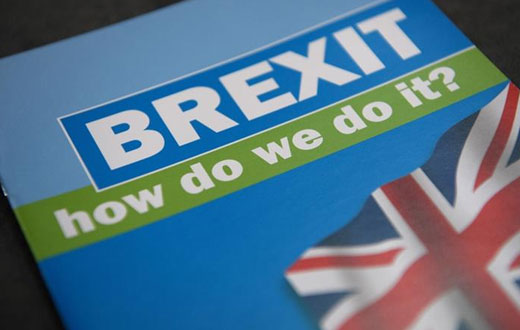
Recent news shows that while the extension to figure out a Brexit deal may be welcomed by some, this isn’t the case for the business world. The UK’s services sector has seen a slump, and the ongoing uncertainty on what exact form Brexit will take is largely to blame. However, in business, it pays to be proactive. Here are some of the things that business with UK operations can do in the wake of a looming Brexit.

How to React

How exactly companies choose to react to Brexit is largely based on their relationship with the UK. Here are examples of some of the main categories of professionals and what they need to focus on.

EU Nationals working in the UK: This will largely depend on whether we see a “Deal” or “No Deal” Brexit. In the event of a “No Deal,” which seems more likely, given recent events, residents before Exit Day will have the right to work, but must be settled or pre-settled by December of 2020. For those who arrive after Exit Day, they will have a temporary right to work. A “Deal” will result in a flat right to work until December 2020, and these people need to be settled or pre-settled by June 2021.

Businesses in the EU: Many businesses in the EU need to adapt for the sudden loss that they will experience when Brexit occurs. For example, statistics show that Brexit is going to cost Germany 10 billion euros per year. Brexit could mean losing customers/clients, so businesses need to have a backup plan now. In addition, for UK businesses, British entities have been allowed in the UK up to this point. That may change now.

US Businesses: The UK made for a great entry point into the EU due to common languages and similar regulatory systems. However, with Brexit taking this off the table, American businesses may need to think about an alternative country, or whether business in the EU makes sense at all.

There are a few common steps that all companies should take with Brexit on the horizon as well. Some of these include:

  • Prioritizing staff to move and secure immigration status for
  • Looking at mobility provisions in current staff contracts
  • Preparing for a temporary service gap
  • Looking for changes in immigration law across the EU

Moving Operations

For various reasons, one of the most difficult tasks that may accompany Brexit for a lot of businesses is the decision to be proactive and leave the UK altogether. Statistics show that one out of eight German firms is planning to leave the UK, with Brexit as a primary reason.

However, for some companies, the decisions may not be as easy. There’s the potential risk of a language barrier, as well as the compliance barriers that make it long and difficult to hire expats across the EU. Some companies get around this by setting up an entity, but for companies trying to relocate post-Brexit, this isn’t a time-efficient option.

The ideal alternative in this regard is using a Global Employer of Record (GEOR) to facilitate your relocation or reorganization. No matter what EU country you decide to move operations to, you can skip a lot of the bureaucracy and move all your top employees to your new location. To make this happen, the GEOR serves as the registered legal employer for the worker. This means that they take on the responsibility of

  • Immigration requirements/compliance
  • Payroll
  • Maintaining foreign employment, in any country

However, your company maintains control in the most essential areas, including:

  • Compensation
  • Performance
  • Assigned Duties
  • Termination

In the wake of Brexit, many companies are scrambling to find a more stable place to do business. A Global Employer of Record solution is the best way to accomplish this, and Acumen International is the best GEOR on the market. Whether you want to relocate as a bridge option while you continue to plan, or have permanent plans to establish roots in Germany, the Netherlands, or other countries, we can help. Don’t let visa/immigration processes hinder the scaling of your business.

Since Brexit developments are happening day by day, we know speed is important. Because of this, we make it possible to onboard expats in the EU as fast as 72 hours after submitting your initial request. This means:

  • Lower employment risk
  • Quicker speed for projects
  • An emergency employment option-in any country
Blog

EU Countries To Do Business In Post-Brexit

Brexit has created an environment of uncertainty when it comes to companies that have their European operations based in the UK. A recent extension of the deadline has given UK leaders extra time to decide how to approach the split, but this is of little comfort for many international businesses. The UK’s combination of a… Read more EU Countries To Do Business In Post-Brexit

Brexit has created an environment of uncertainty when it comes to companies that have their European operations based in the UK. A recent extension of the deadline has given UK leaders extra time to decide how to approach the split, but this is of little comfort for many international businesses. The UK’s combination of a common language and favourable environment made it a common starting point for many international businesses, but now, there’s a question of what can fill that void, especially in a no-deal scenario.

There are a few EU countries that stand out as the strongest candidate.

The Ideal Countries of Choice

Germany: With the UK potentially going off on its own, Germany is now poised to be the economic center of the EU. Roughly 20,000-30,000 new jobs are poised to be brought to Frankfurt and other major German cities, meaning there will be many positions to fill. On top of this, Germany is currently making major changes to its immigration laws to make it easier for foreign countries to set up shop and bring on their own expat employees. The fact that Germany has an unemployment rate of below 5%, one of the lowest in the EU, makes expat hiring even more attractive.This puts Germany at the top of the list when it comes to UK alternatives for post-Brexit business. However, easier doesn’t mean ideal. The new laws are designed more for German speakers with vocational skills. This means that other companies will want to either set up a German entity or use a GEOR solution. In addition, English speaking companies will need to navigate a language barrier to start.

The Netherlands: As mentioned before, one of the biggest reasons that the UK was so popular with American companies is the lack of a language barrier. The Netherlands is similar to Germany in that it is centrally located in Europe (making for a good central base for EU operations), and has a strong economy. However, one major difference is that the language barrier is minimal. Over 90% of Dutch people in the Netherlands speak English, which makes onboarding and general operations far easier. In addition, there are even tax incentives for some skilled international workers. However, you will need a residence and work permit, which can take time your business doesn’t have when it comes to expat hires.

For example, you need to have a Citizen Service Number for tax and employment purposes in order to work. This is something you get at city hall upon entering the country, but can be an annoying logistical step if you need your expat workers to get started right away.

France: France is a viable option to do business in, compared to other EU countries, but it’s not as easy to onboard expatriate employees as it is in Germany, nor do you enjoy the lack of language barrier that you see in the Netherlands. In addition, as far as setting up an entity in the EU goes, France is one of the more difficult countries to get things off the ground in. The main reasoning for this is there is a lot of bureaucracy involved in terms of creating an entity. While France has implemented a “talent passport” program to try and speed things up, qualifications are very specific.

Expanding Your Operations To Other EU Countries

Brexit means that a variety of EU companies and companies with EU operations are beginning to consider relocation now, rather than waiting to see how things pan out. Whether you plan on doing business in Germany, the Netherlands, France or another part of the EU, there’s always going to be some sort of compliance hurdle that you need to overcome.

Larger companies may set up an entity in the EU to navigate this, but for many other businesses, this isn’t feasible in terms of their time or resources.

The alternative here is using a Global Employer of Record (GEOR). This combines speed and efficiency to allow companies to bring on the employees they want in the EU and elsewhere, without having to set up their own entity. To accomplish this, the GEOR becomes as the registered legal employer for the worker.

In terms of a Global Employer of Record solution, Acumen International is the strongest option available. Whether you are looking for a long-term solution to keep your expat hires in compliance with in-country laws, or just looking for an interim solution while establishing an entity in the country of your choice, we have you covered.

To give you an idea of the efficiency, we can help you onboard your expats fast as 72 hours after the initial request. This puts less risk on your company, and makes it possible to tackle emergency projects faster.

In addition, if you’re still in the planning stage when it comes to global operations, we offer handy online tools like our Global Payroll Calculator to see what type of expenses you may need to account for. See how your company can be proactive with Brexit, rather than reacting to an uncertain situation.

Reach out to us today for more information.