
Send Email
Blog

Global Employment Tax and Compliance Newsletter. July 2023

Greetings and welcome to the July 2023 issue of our Global Employment Tax and Compliance Newsletter. As our world rapidly evolves, the arena of international employment, tax, and immigration law keeps pace, consistently offering new challenges and opportunities. In this edition, we dive into many legislative changes spanning multiple corners of the globe. From the… Read more Global Employment Tax and Compliance Newsletter. July 2023

Greetings and welcome to the July 2023 issue of our Global Employment Tax and Compliance Newsletter. As our world rapidly evolves, the arena of international employment, tax, and immigration law keeps pace, consistently offering new challenges and opportunities.

In this edition, we dive into many legislative changes spanning multiple corners of the globe. From the sweeping labour and tax law transformations in the United Kingdom and Ireland to the dynamic alterations to remote work regulations in the United States – particularly New York – this issue leaves no stone unturned. Our journey also takes us to the heart of Europe with a detailed overview of Belgium’s employment laws and crosses oceans to bring you the latest updates from Australia and Malaysia.

Our mission with this Newsletter is more than to inform; we aim to enlighten you, providing you with the insights you need to better comprehend the intricacies of these developments. Whether you are an employer seeking to meet changing obligations across jurisdictions or a global employment professional keeping up with the ever-evolving legal landscape, our expertly curated content is designed to enhance your understanding and preparedness.

As you delve into this month’s edition, we trust you will find the analysis insightful, the updates valuable, and the perspectives thought-provoking. We welcome you to join us in exploring the shifting global regulatory panorama.

Stay tuned, stay informed, and stay ahead of the curve!

🇬🇧 A Sharp Increase in UK Business Immigration Visa Fees Announced

To finance proposed wage enhancements in the public sector, the UK government has declared its intentions to raise various immigration-associated charges significantly.

Changes to Immigration Health Surcharge

An essential modification will be in the Immigration Health Surcharge, an upfront payment due during the visa application for each year of the visa’s validity. The standard rate will experience a jump from £624 to £1,035 per year, and for those under 18 and students, an increase from £470 to £776 per year is planned. To illustrate, a 3-year visa would now necessitate a Health Surcharge of £3,105.

Work and Visit Visa Application Fee Increase

The costs associated with work and visit visa applications are set to climb by 15%. This means that the expense for a 3-year Skilled Worker visa application lodged outside the UK would rise from £625 to £719.

Boost in Other Visa-related Fees

Further increases of at least 20% are expected for fees related to Certificates of Sponsorship, citizenship, settlement, wider entry clearance, study visas, leave to remain, and priority visas. Although no exact date for these increases’ enforcement has been communicated, they’re likely to be implemented in the near future due to the current economic climate.

Implications for Employers

These significant augmentations could drastically affect UK employers who plan to sponsor non-UK/Irish nationals for work in the country, especially when considered alongside the existing Immigration Skills Charge for sponsored work visas, which stands at £1,000 per visa year (£364 per year for small companies and charities).

With these changes, a medium or large employer could potentially shell out a minimum of £7,000 for a single employee’s 3-year sponsored work visa, not including legal advice fees and priority processing charges.

Effects on Sponsored Employees and the Employment Market

While visa costs, except the Immigration Skills Charge, can be shifted to sponsored employees, this might need to be reevaluated given the competitive nature of the recruitment market and the risk of discouraging high-potential candidates. Furthermore, sponsored employees intending to bring dependents to the UK will face these additional costs unless covered by their employers.

Looking Forward

These increased charges should be factored into future recruitment budgets, especially by UK employers heavily dependent on the non-UK/Irish workforce.

🇺🇸 Regulation Updates from New York: Implications for Global Employers

Why New York’s Employment Laws Matter to the World

Even for those outside the United States, changes to employment laws in influential jurisdictions like New York State (NYS) and New York City (NYC) can provide valuable insights into potential global trends. As we see the impact of the pandemic continue to shape workspaces and as Artificial Intelligence (AI) increasingly intertwines with HR functions, these updates offer a glimpse into the future of worldwide employment regulations.

NY Warn Act: Recognizing Remote Work Reality

In response to the pandemic-induced shift towards remote work, the NYS Department of Labor has amended the NY WARN Act, changing how employee count is determined. Remote workers based at the employment site are now considered in the employee count. The updates also streamline the communication method with the Department of Labor, replacing mail and fax notices with electronic submissions via the newly launched WARN Portal.

Increased Transparency & Accountability

The amendments now require employers to provide detailed information about affected employees and changes to how the payment in lieu of notice is treated. Furthermore, invoking exceptions to the NY WARN now includes additional administrative steps, reinforcing accountability.

AI in Hiring: A Brave New World

AI is transforming HR processes globally. NYC’s Local Law 144, regulating AI’s use in employment, came into effect in early 2023. As of July 5, employers must perform an annual “bias audit” on automated employment decision tools (AEDTs) and provide necessary notices before use.

These trends highlight the increasing importance of data transparency, employee rights in the digital workplace, and the potential challenges of AI in HR processes. Understanding these trends as employment laws evolve globally can help employers prepare for the future. Keep an eye on these areas, as the laws in New York often precede broader trends.

To further explore, please check out the FAQ by NYC Department of Consumer and Worker Protection (DCWP).

🇦🇺 Australia Raises Minimum Wages Effective from July 1, 2023

Australia is initiating significant wage alterations from July 1, 2023, following the Annual Wage Review 2022-23. This change in the wage landscape is poised to have widespread effects on employees and employers.

Key Highlights

National Minimum Wage: It will be increased to $882.80 per week, or $23.23 per hour, impacting all employees not within the scope of an award or registered agreement.

Award Minimum Wages: These will rise by 5.75%, applicable to most employees covered by an award.

National Training Wage: It is set to increase in line with the award minimum wage increases. This includes awards pertinent to the terms under Schedule E of the Miscellaneous Award, which have an operative date of 1 July 2023.

High-Income Threshold and Compensation Cap: These will now be $167,500 and $83,750, respectively, which could affect conditions for higher-income employees.

Super Guarantee Rate: This will jump from 10.5% to 11%.

Sector-specific Changes: Supported Employment Services Award will undergo alterations, and the aged care sector will see a 15% wage boost for direct care and some senior food services employees.

For more detailed information, including new pay rate calculations, visit the official Fair Work Commission website or use the Pay and Conditions Tool. Please note that these changes come into effect from the first pay period starting on or after July 1, 2023.

Keeping abreast of these changes is crucial for maintaining fair and legal business practices. Stay informed, and stay compliant!

🇬🇧Significant Immigration Rule Changes in the UK Effective July 17, 2023

The UK government has introduced significant changes to the Immigration Rules, effective July 17, 2023. These changes touch on various aspects, including student visas, the EU Settlement Scheme, the Shortage Occupation List, and more. Understanding these changes is crucial for employers to maintain legal and compliant practices.

Key Takeaways

🇬🇧 New regulations restrict international students from switching to sponsored worker routes.

A few key points are:

Students cannot switch to a sponsored worker route until they finish their course.

PhD students can switch to a sponsored worker route after 24 months of UK study.

Students can no longer apply for permission to stay as a dependent unless certain conditions are met.

EU Settlement Scheme (EUSS): The scheme underwent several updates, including:

Automatic two-year extension for individuals with pre-settled status.

Automatic conversion of eligible pre-settled-status holders to settled status.

Changes in how late applications to the EUSS are considered.

Shortage Occupation List (SOL): The SOL has been updated to include additional occupations from the construction and fishing industries, which will benefit from lower visa application fees and salary thresholds.

Other Updates

A new “genuineness” requirement for the skilled worker, global business mobility, and scale-up routes.

An extension of the application deadline for the Ukraine Extension Scheme is until May 16, 2024.

Impact and Response

These alterations to the UK immigration regulations carry significant implications for employers. Particularly, changes to student visa rules could affect ongoing graduate recruitment programs. Therefore, an immediate evaluation of these rules is necessary. Employers should consult with immigration counsel to assess the implications of these changes and update their policies accordingly.

🇲🇾 Malaysia Refines Job Advertisement Requirements for Hiring Expatriates

Malaysia’s Social Security Organisation (SOCSO) has rolled out significant modifications to the job advertisement process on the MYFutureJobs portal (MFJ). These updates, coming into effect on 15th June 2023, include the cessation of conditional exemptions for roles with specialised skills and a condensed advertising period, now 14 days.

What This Means for Employers

Advertising jobs on the MFJ portal before hiring expatriates has been a prerequisite for businesses seeking the Employment Pass (EP) for expatriates. The new guidelines, while shortening the advertisement period, have simultaneously eliminated the exemption for positions requiring unique skill sets. Therefore, HR and recruitment teams must stay updated on these changes to plan their expatriate hiring strategies optimally.

Why These Changes

The mandatory advertisement of job vacancies on the MFJ portal, introduced in January 2021, forms part of the Malaysian government’s broader initiative to enhance employment opportunities for local talent. Despite this, the dearth of experienced local talent in certain sectors has necessitated expatriate hiring to bridge the skills gap.

Digging Deeper

Here are the three central changes businesses need to be aware of when planning to hire expatriates:

Advertisement Duration: Businesses must now advertise for at least 14 days, down from the previous 30-day requirement.

Reporting Process: The updated process now permits companies to submit a ‘Hiring Outcome Report’ to SOCSO’s designated email address (papd@perkeso.gov.my) on the eighth day after the job advertisement, facilitating the issuance of a support letter.

Exemptions: The earlier provisions allowing the exemption for specialised or niche skills have been rescinded.

These changes serve as a reminder of the dynamic regulatory environment surrounding employment. Businesses must stay updated on these developments to ensure smooth expatriate hiring processes.

🇬🇧 Changes on the Horizon: New Legislation Impacting Employment in the UK

Several impending legislations will bring forth noteworthy changes to employment practices in the UK, encompassing aspects from redundancy and flexible work arrangements to carer’s leave, neonatal care, and the fight against discrimination at the workplace. Here’s a succinct rundown of these laws:

The Safeguard from Redundancy (Maternity and Family Leave) Act

Scheduled to take effect from July 24, 2023, this Act grants a lifeline to employees at risk of redundancy, providing them the right to suitable job alternatives before redundancy is confirmed. Initially limited to employees on maternity, shared parental, or adoption leave, the Act’s scope has been broadened to protect pregnant employees and those recently back from the leaves described above, as well as those who have experienced a miscarriage. Awaiting precise operational details, expected by April 2024, employers should begin to ponder the potential impacts of these extended protections.

The Employment Relations (Flexible Working) Act

Currently awaiting Royal Assent, this Act proposes several transformative shifts, such as:

  1. Employees are entitled to submit two flexible working requests annually.
  2. Employers are obliged to respond to such requests within two months.
  3. Denial of a request mandates consultation with the employee.
  4. Employees are relieved from explaining the implications of the proposed working arrangement.

However, the Act doesn’t sanction immediate access to flexible working, with employees still requiring 26 weeks of service to submit a request. While not legally mandatory, offering an appeal option if a flexible working request is denied remains recommended.

The Carer’s Leave Act

With around 600 people quitting jobs daily due to the struggle to balance work and unpaid caregiving responsibilities, this Act, likely to be law by April 2024, introduces an annual provision of one week’s unpaid leave for employee caregivers. Leave can be consumed as a single ‘block’ of five days or spread out to suit individual needs. Evidence of how or for whom the leave is used is not required. In anticipation of this law, employers can consider necessary policy adaptations.

The Neonatal Care (Leave and Pay) Act

Enforced in April 2025, this Act grants parents with a newborn in neonatal care up to 12 additional weeks of paid leave, over and above their maternity or paternity leave.

Worker Protection (Amendment of Equality Act 2010) Bill

This Bill heralds significant evolution in the UK’s workplace discrimination law, with fundamental changes including:

  1. Mandating employers to take active steps to prevent sexual harassment at the workplace.
  2. Reviving protection from harassment by third parties, with employers held responsible.
  3. Provide up to a 25% compensation if employers fail to prevent sexual harassment.
  4. In response to this Bill, employers may want to reassess and bolster their existing policies on Bullying and Harassment, fostering a proactive approach to tackling sexual harassment in their organisations.

🇮🇪 Expanding Reporting Duties for Irish Employers – ERR from 2024

In the 2022 Finance Act, Ireland introduced Enhanced Reporting Requirements (ERR) for employers to report specific tax-free benefits provided to employees, known as ‘reportable benefits’. This new mandate is set to kick in on January 1, 2024.

Under the ERR, employers must report tax-exempted ‘small benefits’ such as vouchers or benefits up to a combined value of €1,000 and the daily remote working allowance of €3.20. Additionally, business-related travel and subsistence expense reimbursements fall under this requirement.

Revenue Online Service (ROS) will be the platform of choice for reporting. Employers must submit, correct, and amend ERR data in real-time, before or during employee payment. Employees can view this data through their myAccount from 2024.

This reporting is separate from payroll submissions, intended to protect payroll records’ integrity and avoid accidental creation of new employments for reporting benefits.

To adapt to ERR, employers should start evaluating their existing systems for collating reportable benefits and determine how to integrate current IT systems with Revenue’s online reporting. It’s advisable to review policies on reimbursement of reportable benefits in line with legislation and Revenue guidance.

Remember, this is only Phase I – expect more employee payments and benefits to come within the scope of ERR in the future. Prepare now for a smoother transition when January 2024 arrives.

Employment Law Innovations in Belgium: Strengthening Worker Protections and Toughening Sanctions

In 2023, Belgium’s employment law landscape is set to evolve with many reforms. These are focused on fortifying employment stability, unifying resignation notice periods, and bolstering penalties for non-compliance with social laws. Here are the key details:

Subtitle: “Job Stability for Workers on Successive Temporary Contracts”

Effective from 8th May 2023, Belgium’s Employment Contracts Act of 1978 is adjusted to boost employment stability for individuals on a series of temporary contracts, frequently referred to as “precarious contracts”. Once these contracts surpass two years, the legislation stipulates that conditions typical to a permanent employment contract will take effect. This includes norms associated with a severance payment. For specific exceptions and a deeper understanding, our Belgian employment team is available for guidance.

Uniform Notice Periods Introduced

As of 28th October 2023, blue-collar workers who have been employed since before 1st January 2014 will have a maximum resignation notice period of 13 weeks. The transitional provisions for employees hired before 2014 will be replaced by the standardised notice periods introduced post-2014.

Strengthened Social Penal Code

Belgium is set to revise its Social Penal Code significantly, with increased sanctions for breaches of social legislation, including prison sentences for the most severe infringements. Now, promising a foreigner to work in exchange for payment in Belgium, along with incidents of harassment, sexual harassment, or instances where a worker’s health is endangered, could potentially lead to imprisonment.

Additionally, the practice of ‘social dumping’ – using cheaper labour, for instance, underpaid migrant workers – has been clearly defined and included in the highest level of sanctions. A scientific committee will be formed to aid in the battle against social fraud and dumping. This committee will advise and offer recommendations to shape the inspection services’ strategies and actions.

🇦🇺 Australia Rings in Major Immigration Changes from July 1

The Australian government has recently enacted numerous impactful changes to its immigration policy. These amendments, effective from 1 July 2023, could considerably reshape the landscape for foreign nationals looking to work or live in Australia.

The Implications of Changes

In April 2023, Australian Home Affairs Minister Clare O’Neil announced significant adjustments to the current migration system. These changes aim to facilitate employers in recruiting high-skill overseas workers, provide greater work flexibility for temporary migrants, and retain international students in the country. Consequently, current and prospective visa holders, expatriates, and businesses needing specialized workers may be significantly impacted. Thus, understanding these changes and adhering to the new procedures are essential.

UK Passport Holders: Eased Labor Market Testing

With the enforcement of the Australia-United Kingdom Free Trade Agreement (Australia-U.K. FTA) on 31 May 2023, UK passport holders applying for the Temporary Skill Shortage (TSS) subclass 482 visa are now exempt from the Labour Market Testing (LMT) requirements, paving a smoother path for UK nationals to work in Australia.

Revamped Working Holiday Maker Program for UK Nationals

The Australia-U.K. FTA has also spurred alterations to the Working Holiday Maker (WHM) program and the Youth Mobility Scheme, broadening opportunities for UK nationals. Key amendments include extending the eligible age limit and providing the possibility for multiple Working Holiday visas without specified work prerequisites.

Simplified Australian Citizenship for New Zealand Residents

In a significant step, New Zealand citizens who have resided in Australia for at least four years can now directly apply for Australian citizenship, bypassing the need for a permanent visa first. This change mainly benefits New Zealand citizens with a Special Category Visa (SCV) (subclass 444).

Adjustments in Temporary Skilled Migration Income Threshold (TSMIT) and Visa Filing Fees

Effective 1 July 2023, the TSMIT has increased, and numerous visa application charges (VACs) have also risen. These modifications may affect the cost calculations for individuals and businesses alike, with specific visa fees witnessing significant hikes beyond the consumer price index (CPI).

Elevated Superannuation Guarantee Payments

The Superannuation Guarantee (SG), which mandates employers to contribute a percentage of an employee’s earnings to a retirement fund, has increased from 10.5% to 11% from 1 July 2023. This development impacts subclass 482 visa holders and may add to the cost of international assignments.

Visa Condition Changes for Student Visa Holders and Working Holiday Makers

From 1 July 2023, there have been adjustments to work rights for student visa holders and Working Holiday Makers, primarily in terms of permissible work hours each fortnight. Notably, student visa holders engaged in the ‘aged care’ sector are granted unlimited work rights until 31 December 2023.

Australia’s immigration reform marks a crucial development with potentially far-reaching consequences for individuals and businesses. It further highlights Australia’s dedication to building an environment conducive to attracting and retaining foreign talent.

Harness the Power of the Global Payroll Calculator

Navigating the intricacies of global employment has never been more streamlined, thanks to our Global Payroll Calculator. This essential tool has been designed to optimize global employment operations and guide strategic decision-making on talent acquisition strategy. Here’s a glimpse at the remarkable benefits it brings to the table:

Discover Ideal Talent Pools

Identify the most promising markets for recruiting your global workforce. Global Payroll Calculator tool helps you spot the countries offering the best conditions for your operations.

Easy Cross-country Comparison

Compare employment conditions across a whopping 190 countries effortlessly. With such limitless comparisons at your disposal, making informed decisions becomes as easy as a click.

Stay Compliant with Confidence

With our tool’s detailed tax and compliance data for each country, ensure your operations always stay within the boundaries of the tax and labour law.

Optimize Your Costs

Spot jurisdictions with the best tax rates and social contributions to optimize employment costs. Global Payroll Calculator makes identifying such opportunities straightforward and efficient.

Plan Your Global Payroll Accurately

Utilize the Global Payroll Calculator to craft detailed payroll projections. We enable better strategic global payroll planning and budgeting by offering insights into potential financial commitments.

Spot Employment Patterns

Identify cross-jurisdictional employment patterns and costs that can guide your company’s strategic decisions. The Global Payroll Calculator makes spotting these trends simple and efficient.

Explore the world of global employment with our Global Payroll Calculator and equip your business with the insights it needs to thrive in the international arena.

Try Global Payroll Calculator

News

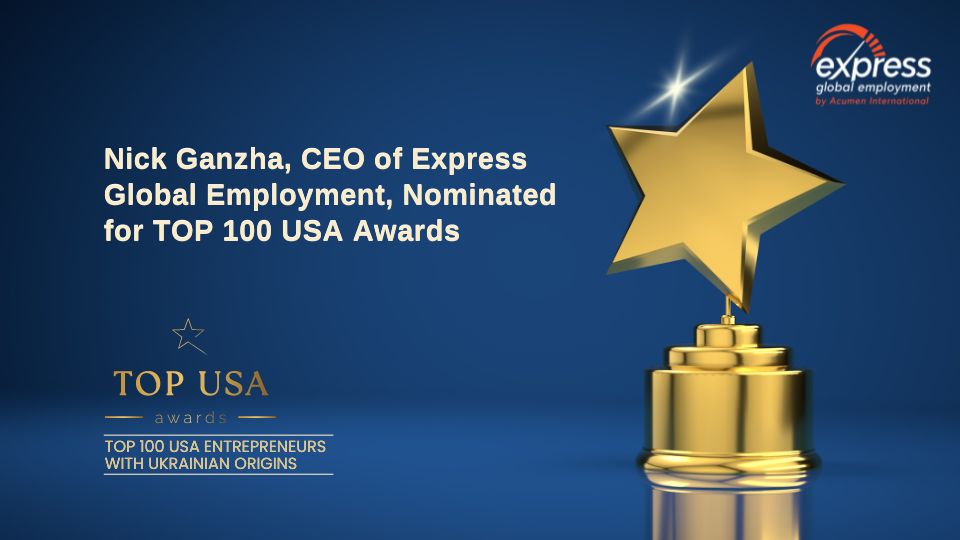
Nick Ganzha, CEO of Express Global Employment, Nominated for TOP 100 USA Entrepreneurs with Ukrainian Origins Award

Manhattan, New York – July 21, 2023. Nick Ganzha, the visionary founder and CEO of Express Global Employment, a leading global Employer of Record (EOR) and Professional Employer Organization (PEO) covering 190 countries, has been nominated for the prestigious “TOP 100 USA Entrepreneurs with Ukrainian origins” Award. The award ceremony will take place at Cipriani… Read more Nick Ganzha, CEO of Express Global Employment, Nominated for TOP 100 USA Entrepreneurs with Ukrainian Origins Award

Manhattan, New York – July 21, 2023.

Nick Ganzha, the visionary founder and CEO of Express Global Employment, a leading global Employer of Record (EOR) and Professional Employer Organization (PEO) covering 190 countries, has been nominated for the prestigious “TOP 100 USA Entrepreneurs with Ukrainian origins” Award. The award ceremony will take place at Cipriani 25, Broadway, Manhattan, New York, USA, and promises to be an exceptional gathering of successful Ukrainian entrepreneurs who have significantly impacted the business landscape in Ukraine and globally.

The “TOP 100 USA Entrepreneurs with Ukrainian Origins” Award celebrates the achievements and contributions of outstanding Ukrainian entrepreneurs who have positively and significantly impacted the business world, both within Ukraine and internationally.

Among the well-deserving nominees, Nick Ganzha stands out for his exceptional accomplishments in transforming Express Global Employment into a leading global employment solutions provider.

Nick Ganzha’s entrepreneurial journey began in 2001 when he founded a Ukrainian staffing and recruitment agency. His expertise and experience gained from working at prominent firms like PricewaterhouseCoopers and Accenture allowed him to pioneer staff outsourcing projects in Ukraine. As a result, he successfully won over clients like Procter & Gamble, setting the foundation for what would eventually become Express Global Employment.

Over the years, Nick’s company has evolved into a powerhouse offering global employment solutions, allowing businesses of all sizes and industries to operate and expand internationally quickly and compliantly. Express Global Employment’s world-class services and solutions, including the innovative Global Payroll Calculator, have earned them recognition and accolades, such as the prestigious GPA Award for Payroll Innovation in 2022.

Nick Ganzha is actively supporting Ukraine in its fight against full-scale russian aggression through significant donations, driven by his deep patriotism, dedication to his homeland, and desire for his country to overcome the russian aggressor. Nick has donated over $200,000 and will continue to donate until Victory is achieved.

His actions have inspired and mobilized the entire Express Global Employment team to join the collective effort. Under Nick’s leadership, Express Global Employment has actively supported various charitable initiatives to help Ukraine. They demonstrate their humanitarian commitment to assisting Ukraine in its fight for peace and sovereignty.

As the guests of the TOP 100 USA Entrepreneurs with Ukrainian Origins Ceremony prepare to honour the nominees that will take place on July 22, 2023, it is a moment of pride for the Ukrainian community and a testament to the resilience of entrepreneurs with Ukrainian roots. This recognition inspires countless aspiring entrepreneurs, exemplifying the boundless opportunities the American and global market offers those with a determined spirit and a vision for success. In celebrating the achievements of Ukrainian entrepreneurs, the USA also celebrates the spirit of entrepreneurship and the enduring strength of the Ukrainian people, who continue to shine on the global stage.

Express Global Employment Provides Crucial Talent Retention Support for Ukrainian and Multinational Employers

Since the start of the full-scale russian invasion of Ukraine on February 24, 2022, Express Global Employment has been at the forefront of assisting both Ukrainian and international companies in retaining vital talent that was compelled to leave the country.

Leveraging its robust global employment solutions, the company enables its clients to employ and payroll their displaced employees abroad quickly, legally, and compliantly, all without the necessity of establishing foreign legal entities.

This strategic approach helps prevent critical talent loss and ensures business continuity while avoiding potential project disruptions. Express Global Employment’s timely and effective support has become an invaluable asset for companies, mitigating challenges during the ongoing war and workforce displacement, empowering them to retain skilled individuals essential to their operations.

About Express Global Employment

Express Global Employment (formerly Acumen International) is a leading global Employer of Record (EOR) and Professional Employer Organization (PEO) operating in 190 countries. Their innovative solutions empower businesses of all sizes to hire and operate worldwide without the need for establishing foreign legal entities.

With Express Global Employment’s comprehensive services, companies of all sizes gain access to an unparalleled international workforce, tapping into a pool of top-tier talent without the burden of complex legal and administrative complexities. This innovative approach empowers organizations to scale and expand their operations seamlessly, maintaining compliance with local regulations, tax laws, and employment standards in each respective country.

Through its widespread network and deep expertise in global workforce management, Express Global Employment has earned a stellar reputation as a trusted partner for businesses looking to navigate the complexities of international expansion quickly and cost-effectively.

About TOP USA Awards

TOP USA Awards Inc. is set to embark on an exciting new project showcasing the entrepreneurial success of Ukrainians in the USA. This initiative aims to spotlight the significant number of Ukrainians who have fearlessly launched their businesses in the American market. By highlighting these success stories, the project seeks to demonstrate the vast opportunities available in the USA for individuals from diverse backgrounds. Through this endeavour, TOP USA Awards Inc. aims to inspire and motivate aspiring entrepreneurs worldwide, showcasing the boundless potential and possibilities the American market offers.

50% of the ticket sales proceeds from the TOP 100 USA Entrepreneurs with Ukrainian Origins Award Ceremony will be donated to the CashForRefugees fund.

About Cash for Refugees (CFR) Fund

Amidst the ongoing full-scale Russian invasion of Ukraine, the Cash for Refugees (CFR) Fund has emerged as a lifeline for those affected by the war. With a steadfast dedication to providing direct assistance, CFR has successfully supported over 15,500 families in Ukraine. What sets CFR apart is its unique approach, where dedicated volunteers conduct in-person interviews and facilitate direct connections between donors and recipients, bypassing middlemen on the ground. With a focus on ensuring immediate impact, CFR provides one-time grants, with a baseline amount of $150, to women with young children and the elderly.

Mainly, CFR focuses on reaching small distant villages in the de-occupied territories, where larger humanitarian organizations may be absent, ensuring that vulnerable populations, such as families with young children and seniors aged 65 and older, receive the much-needed support. Cash for Refugees stands tall in the face of adversity, delivering essential aid to those most in need and providing hope during these challenging times.

News

Acumen International Joins Industry Innovators at LEAP HR: Life Sciences East Conference

We’re thrilled to announce that Acumen International, a global leader in Employer of Record solutions, will participate in the prestigious LEAP HR: Life Sciences East Conference. The event will take place in Boston, USA, from July 18th-20th, 2023. Now in its 8th year, the conference will bring together over 200 senior HR leaders from the… Read more Acumen International Joins Industry Innovators at LEAP HR: Life Sciences East Conference

10 views 0 Comments

We’re thrilled to announce that Acumen International, a global leader in Employer of Record solutions, will participate in the prestigious LEAP HR: Life Sciences East Conference. The event will take place in Boston, USA, from July 18th-20th, 2023.

Now in its 8th year, the conference will bring together over 200 senior HR leaders from the life sciences industry to share innovative solutions to the biggest challenges in their domains. These insights will provide an invaluable look into the future of work in the life sciences industry, revealing how organisations are breaking away from traditional HR thinking. These transformative approaches inspire the talent needed to drive their business-critical mission of delivering better drugs and devices to patients faster.

Insightful Agenda and Future of Work

During the three-day event, diverse biotech and pharma organizations will share over 35 case studies that reveal their breakthrough solutions to tackle some of the industry’s toughest challenges. These insights provide an invaluable look into the future of work in the life sciences industry, showcasing how organizations are breaking away from traditional HR thinking. By adopting these transformative approaches, companies inspire and attract the talent needed to support their mission of delivering improved medical products to patients more efficiently.

Express Global Employment: Future-Focused Vision

The LEAP HR: Life Sciences East Conference is not just a platform for discussing HR; it’s an opportunity to shape the future of HR practices in the life sciences industry. HR leaders and professionals understand the significance of staying ahead of the curve in the fast-paced and competitive life sciences domain. By participating in the event, Acumen International aims to play an active role in contributing to the industry’s growth and inspiring other businesses to embrace transformative HR approaches.

Representing Express Global Employment at the LEAP HR: Life Sciences East Conference are Natalie Oprya, Managing Director, and Iryna Oprya, Media Head. They are eager to contribute to discussions, engage with thought leaders, and share Express Global Employment’s future-focused approaches to global talent engagement and retention. With a dedication to assisting organizations in attracting and retaining the best global talent, Express Global Employment aims to align its Employer of Record services with the evolving HR paradigms in the dynamic life sciences industry.

“The LEAP HR conference is a significant event in the life sciences HR calendar. At the LEAP HR conference, we are not just talking about HR – we’re shaping its future. It’s an experience that truly broadens our thinking,” said Natalie Oprya, Managing Director at Express Global Employment. “In these dynamic times, our dedication to assist organizations in attracting and retaining the best of global talent remains steadfast. This conference represents a pivotal opportunity to explore how our Global Employer of Record services can align with these evolving HR paradigms.”

Follow Express Global Employment’s Journey on LinkedIn

For those interested in Express Global Employment’s key takeaways, insights, and inspirations from the LEAP HR: Life Sciences East Conference, the company invites you to follow their journey on LinkedIn. By sharing valuable learnings and experiences from the event, we aim to contribute to a stronger, more engaged global workforce. We hope to inspire other organizations to drive innovation and excellence in global talent management within the life sciences industry.

Blog

Global Employment Tax and Compliance Newsletter. June 2023

Welcome to the June Edition of the Global Employment Tax Compliance Newsletter. At Acumen International, we pride ourselves on being your trusted partner, providing comprehensive solutions to simplify your global employment operations. We are dedicated to helping you navigate the complex world of employment tax compliance and immigration regulations, allowing you to focus on what… Read more Global Employment Tax and Compliance Newsletter. June 2023

Welcome to the June Edition of the Global Employment Tax Compliance Newsletter.

At Acumen International, we pride ourselves on being your trusted partner, providing comprehensive solutions to simplify your global employment operations. We are dedicated to helping you navigate the complex world of employment tax compliance and immigration regulations, allowing you to focus on what truly matters – driving success in your global endeavours.

In this edition, we bring you a wealth of expert insights and professional advice tailored to our clients, partners, accountants, global payroll and tax professionals, employment compliance and global mobility experts.

As the world adapts to new challenges, we understand the critical role immigration plays in global workforce management. Our newsletter also features expert advice and tips to ensure smooth immigration processes for your international employees.

We invite you to delve into this edition of our newsletter, where knowledge meets excellence. Stay informed, stay compliant, and stay ahead of the curve with Acumen International.

European Council Council Advances on Platform Workers’ Rights: Negotiations Set to Begin

The European Council has unanimously agreed on its position. It is poised to negotiate with the European Parliament to establish a groundbreaking law extending employment rights to millions of gig workers.

The platform economy has experienced a phenomenal surge in recent years, with revenues soaring from an estimated €3 billion to approximately €14 billion between 2016 and 2020. Projections indicate that platform workers will reach 43 million by 2025.

While digital platforms have yielded benefits for businesses and consumers alike, they have created a grey area regarding employment status for many platform workers. The European Commission estimates that around 5.5 million individuals currently classified as self-employed are, in reality, engaged in de facto employment relationships with digital platforms, entitling them to the same labour and social rights granted to traditional employees under EU law.

Most of the EU’s 28 million platform workers, such as taxi, domestic, and food delivery drivers, are officially classified as self-employed. However, many are subject to the same regulations and constraints as traditional employees, indicating an implicit employment relationship that warrants the labour rights and social protections guaranteed by national and EU laws.

The European Council’s primary objective is to rectify misclassification instances and streamline reclassifying these workers as employees. Under the Council’s general approach, a digital platform will be legally presumed to employ workers (instead of considering them self-employed) if their association with the platform meets at least three out of seven specified criteria. 

These criteria include 1) income limitations, 2) work refusal restrictions, and 3) regulations governing appearance or behaviour. In cases where the legal presumption applies, digital platforms will bear the onus of proving, in accordance with national law and practices, that no employment relationship exists.

The proposed directive introduces two crucial enhancements: accurately determining the employment status of individuals engaged in platform work and establishing pioneering EU guidelines for using artificial intelligence in the workplace. 

Furthermore, the directive addresses concerns regarding transparency by mandating that workers be informed about the implementation of automated monitoring and decision-making systems. These systems must be supervised by qualified personnel safeguarded against discriminatory treatment, and account suspensions will require human oversight.

Albania Implements Sweeping Changes to Income Tax: Impacts on Corporate, Individual, and Withholding Tax

Albania’s new income tax law, Law No. 29/2023, was published on May 2, 2023, and will take effect on January 1, 2024, replacing the current law from 1998. This new law introduces significant changes to corporate income tax, individual income tax, and withholding tax, including a broader definition of tax residence, stricter requirements for the dividend participation exemption, extended limitations on interest deductibility, specific provisions for long-term contracts, the introduction of an exit tax, and more. 

Here are some key changes to Individual Income Tax under the new law.

  1. The new law defines tax residence based on whether an entity is established in Albania or has its place of effective management and control in the country during the tax period. The criteria for management and control in Albania include decision-making, board membership or directors’ residency, and ownership by Albanian residents. In contrast, the current law only considers entities resident in Albania if they have their head office or place of effective management in the country.

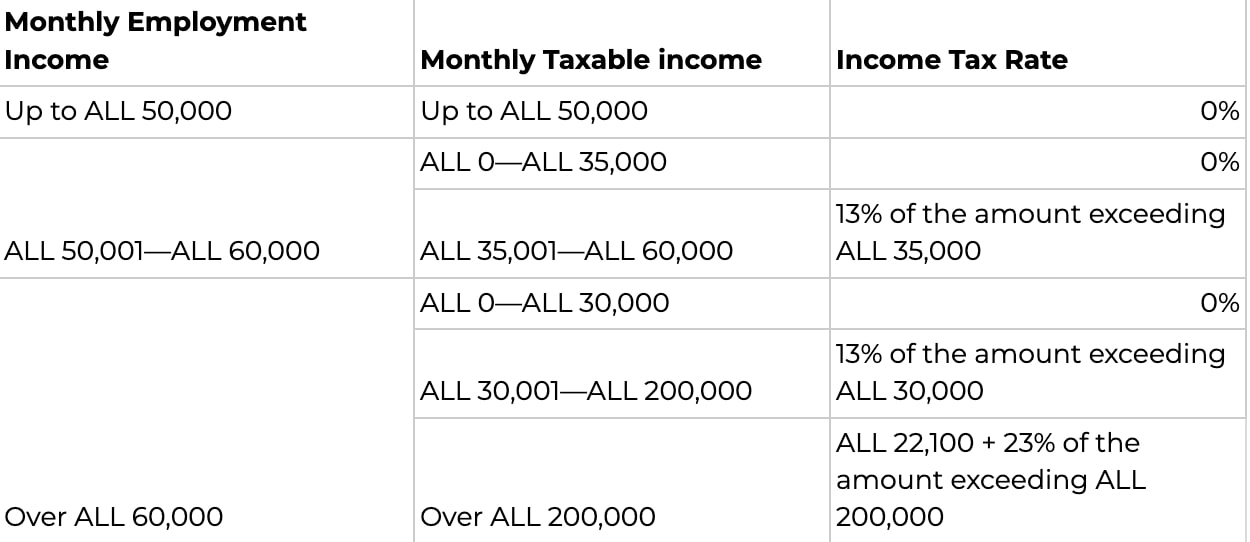
2. A revised tax rates system for employment income is introduced, with a top marginal rate of 23%.

3. Controlled foreign company (CFC) rules are introduced, which will subject the income of CFCs to IIT (Individual Income Tax) in Albania, even if the income is not distributed to the Albanian resident shareholder.

4. Employers will withhold the tax on a monthly basis and remit it to the tax authorities by the 20th day of the following month for entities or by the 20th day of each three-month reporting period for self-employed individuals. 

5. To facilitate this process, a new form called the “statement on personal status” will be introduced, requiring signatures from both the employer and employee. The employer indicated on the form will calculate the tax due on employment income and deduct 1/12th of the relevant personal allowance from the monthly tax base based on the annual income level. In cases where an employee holds multiple employments, the second employer will apply the progressive tax rates without deducting any personal allowances.

During the transitional period between June 1, 2023, and December 31, 2023, progressive tax rates will apply to employment income. These rates are as follows:

Income earned by self-employed individuals engaged in professional activities will be classified as employment income. These conditions are:

  • At least 80% of the total income generated is obtained directly or indirectly from a single customer.
  • At least 90% of the total income generated is derived directly or indirectly from no more than two customers.

However, it is important to note that if the professional services are exclusively provided to nonresident clients, the income generated will be treated as business income, regardless of the abovementioned conditions.

Bulgaria Introduces New Minimum Wage Regulations: Implications for Employers

New regulations on the minimum wage in Bulgaria have been established. The Council of Ministers determines the national minimum salary for each calendar year. By September 1, 2023, the national minimum salary for the upcoming calendar year will be determined. 

It will be set at a level equivalent to 50% of the average gross wage over 12 months, considering the last two quarters of the previous year and the first two quarters of the current year. It is crucial to note that the national minimum salary cannot be lower than the rate set for the previous year.

Employers and payroll professionals should be aware of the potential economic impacts of the minimum wage increase. Additionally, they may need to adjust standard employment documents referencing the minimum wage to align with the new regulations.

Czech Republic: Changes to Czech Labour Code: Simplifying Remote Work Agreements and Cost Reimbursement

The Czech parliament is currently discussing a draft amendment to the Labour Code, which the Czech government has approved. The amendment introduces changes related to remote work, including the requirement for written agreements addressing remote work and reimbursement for remote work costs. The bill has undergone significant modifications since its initial publication last autumn. The final wording of the amendment will be determined after the legislative process is completed, and the bill is expected to come into effect in September 2023.

The revised rules for working from home are highly advantageous for employers. The revised rules make mandatory remote working agreements simpler than the original draft and reduce the obligation for employers to reimburse employees for costs associated with working from home. Additionally, employers can now agree with employees not to reimburse these costs, which helps reduce administrative burdens.

Mandatory remote work agreements are expected to be simplified compared to the original draft. The employer’s obligation to accommodate employees caring for children to work from home has been significantly alleviated. 

Regarding the entitlement to work from home, employees caring for children under 15 or other dependents and pregnant employees no longer have an automatic right to work from home. Instead, they have the right to apply for remote work, and employers must provide written reasons for refusing their request. The age limit for children cared for by employees has been lowered to children under nine years old.

Under the draft amendment, written agreements for remote work will still be required, but the extensive list of mandatory conditions has been reduced. The agreement should cover communication, work assignments and monitoring, cost reimbursement, and occupational health and safety rules, as Czech law currently lacks regulations for remote workers.

Reimbursing employees’ costs related to working from home has been a contentious issue. The amendment now provides three options: reimbursement of actual costs, provision of a lump sum for increased energy costs determined by a Ministry of Labour decree, or an agreement that limits or excludes cost reimbursement. This change is positive for employers, as it addresses administrative and financial burdens associated with remote work.

Slovakia – New Bilateral Agreement with Austria on Tele-Work and Social Security

Slovakia and Austria have signed a bilateral agreement on telework and social security that allows teleworkers to work up to 40% of their total employment from their home country while maintaining social security coverage in their employer’s country. 

The Framework Agreement, signed by the Ministries of Labour in both countries, came into force on June 1, 2023. This agreement addresses the challenges faced by cross-border workers and provides clarity on social security liabilities. It applies to Slovakia and Austria, with specific conditions and requirements. Employers and teleworking employees must stay updated on applicable social security laws and consult professional tax advisers for guidance.

The Framework Agreement specifically applies to Slovakia and Austria, with the employer’s registered office in one country and the employee’s residence in the other. It defines “habitual cross-border telework” as regular employment carried out by the employee in both the employer’s country and their country of residence, using information technology to fulfil assigned tasks. Additional employment or self-employment activities are not permitted, and no third-country element should be involved.

Similar framework agreements have been signed between Austria and the Czech Republic, Austria and Germany.

Uzbekistan Joins OECD/G20 Framework to Combat Tax Evasion and Address Digital Economy Tax Challenges

Uzbekistan has recently joined the OECD/G20 Inclusive Framework on Base Erosion and Profit Shifting (BEPS), demonstrating its commitment to fight against tax evasion and address the tax challenges posed by the digital economy. As a member, Uzbekistan will collaborate with other nations on an equal footing to implement the comprehensive BEPS package, comprising 15 measures to curb tax avoidance and promote tax transparency.

Participating in the two-pillar plan, Uzbekistan will contribute to achieving a fairer distribution of taxing rights for multinational enterprises under Pillar One. This will entail allocating taxing rights on an estimated annual profit of USD 200 billion to market jurisdictions. Implementing Pillar One is expected to yield global tax revenue gains ranging from USD 13-36 billion annually, with developing countries benefiting more than advanced economies.

Pillar Two introduces a global minimum corporate tax rate of 15% for companies with revenue surpassing EUR 750 million. This measure is projected to generate approximately USD 220 billion in annual global revenue gains, equivalent to around 9% of global corporate income tax revenues. Beyond financial benefits, Pillar Two aims to enhance tax stability and certainty for taxpayers and tax administrations.

Sweden – New Work-Permit Application Process

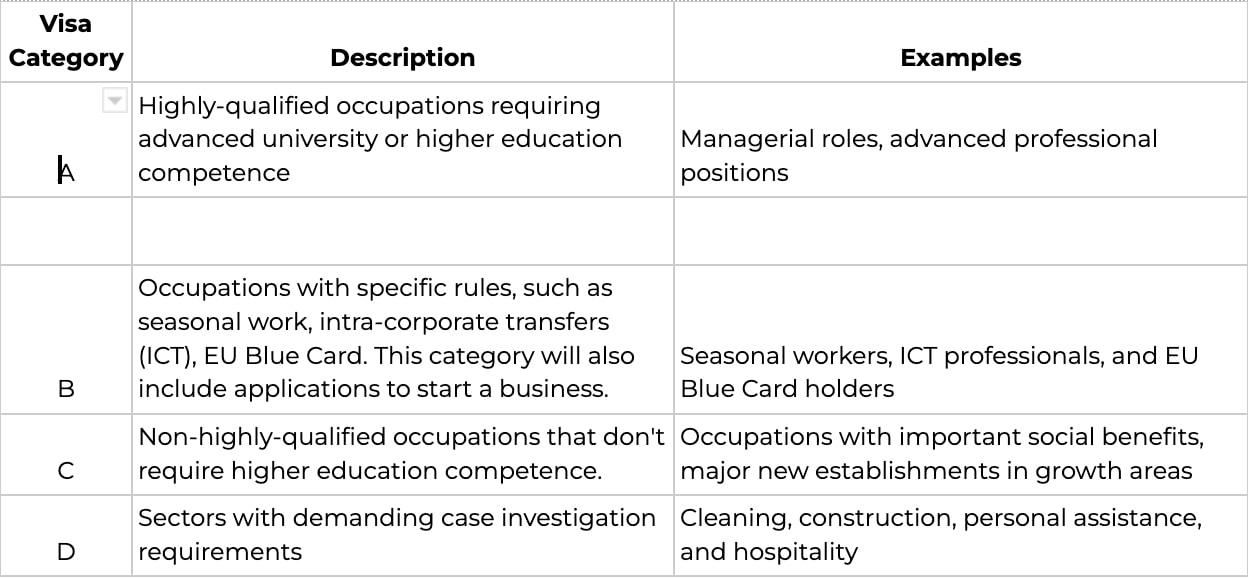
Sweden is revamping its work permit certification scheme with a new process prioritising applications into four categories. This initiative aims to streamline and expedite the processing of work permits, particularly for highly-skilled workers from outside the European Union. The new system replaces the existing certification scheme and introduces specific criteria for each category. Let’s take a closer look at the four priority categories:

The Swedish Migration Agency is actively implementing this new process and establishing new entities within the authority. They are expected to report back to the government by 4 September 2023, with the changes set to become operational by the end of the year. This revamped system aims to enhance efficiency and flexibility, enabling businesses to meet their labour needs more effectively and attract highly qualified talent outside the European Union.

The Impact of the German Whistleblower Protection Act on UK-Based Companies Operating in Germany

The German Whistleblower Protection Act, also known as “Hinweisgeberschutzgesetz” or “HinSchG,” came into effect on 2nd July 2023. This act implements the requirements of the EU Whistleblower Directive (Directive (EU) 2019/1937) and introduces mandatory regulations for whistleblower protection in companies with a minimum of 50 employees.

German companies with at least 250 employees and German subsidiaries of internationally active groups are now required to implement internal reporting systems and channels for reporting whistleblowing or breaches. Companies must act promptly and thoughtfully to ensure compliance, as penalties for non-compliance will be enforced starting from 1st December 2023.

Smaller companies have additional time to comply with the act. Companies with 50 to 249 employees are not obligated to adhere to the requirements until 17th December 2023.

Denmark: Transparent and Predictable Working Conditions

New legislation has been enacted to implement the EU Directive on transparent and predictable working conditions for employees, leading to important modifications in employment practices in Denmark. This legislation expands the scope of employee classification, adjusts the timeframe for providing written information, enhances the disclosure requirements for working conditions, and establishes new minimum standards.

Noteworthy updates include:

  • Granting employees the right to pursue additional employment unless the employer can provide valid justifications for prohibiting it.
  • Allowing employees to request alternative types of employment and receive written explanations for the employer’s decision.
  • Introducing regulations for training during employment.
  • Ensuring employees receive information about guaranteed working hours when their schedules are unpredictable.

These changes became effective on July 1, 2023. Employers should proactively comply with the new rules by reviewing employment agreements, policies, and procedures. Existing employees employed before July 1, 2023, have the right to request updated employment agreements or additional documentation in line with the new requirements, and employers must respond within eight weeks. 

Failure to comply with the legislation may result in compensation payments. The compensation amounts will align with those outlined in the Danish Contracts Act, typically ranging from DKK 5,000 to DKK 10,000. In aggravating circumstances, compensation may reach up to 20 weeks’ salary, while breaches deemed excusable and of minimal significance are subject to a maximum compensation limit of DKK 1,000.

Ensuring Compliance: Saudization Mandate for Sales Professions in Saudi Arabia

A new Ministerial Resolution has been issued in Saudi Arabia, imposing localization requirements on sales positions within establishments. Effective 24th December 2023, the resolution mandates that sales positions in establishments with five or more workers must be localized to 15%. This means that Saudi nationals must fill a certain percentage of these positions.

The resolution applies to specific sales roles, including sales managers, internal sales and customer services directors, and patent specialists. Employers operating in Saudi Arabia are advised to carefully review the requirements outlined in the resolution and take the necessary steps to comply with the localization obligations.

Failure to adhere to the localization requirements can result in financial penalties and potential restrictions on work license renewals. To mitigate these risks, employers should promptly adjust their employment practices to meet the localization quota and ensure continued compliance with Saudi Arabian labour law.

It is crucial for affected employers to familiarize themselves with the details of the resolution and make the required adjustments to their workforce composition. By doing so, they can ensure smooth operations within the Kingdom and maintain a positive relationship with the local authorities.

Lithuania’s National Visa Procedure Overhaul: Key Updates from July 2023

Effective July 1, 2023, Lithuania has implemented changes to issuing national visas. The Migration Department will now handle this procedure, and all applications must be submitted through the Lithuanian Migration Information System (MIGRIS). However, certain categories of foreign nationals will no longer be eligible to apply for a national visa.

The significance of these changes lies in simplifying the application process for national visas, which will resemble that of a residence permit. The new amendments eliminate the issuance of national visas based on work, with the exception of seasonal work, as well as other grounds that duplicate the reasons for granting a temporary residence permit in Lithuania.

What has changed is that from July 1, 2023, foreign nationals not in Lithuania will be required to apply for national visas through an external service provider designated by the Migration Department. Previously, such applications were accepted by Lithuanian diplomatic missions, consular offices, or visa centres abroad chosen by the Ministry of Foreign Affairs.

A new legal act, “Description of the Procedure for Issuing a National Visa” will be enacted on July 1, 2023. This law will outline the process for submitting documents, providing consultations, issuing or refusing national visas, and cancelling and revoking them.

Starting from July 1, 2023, all applications for national visas must be submitted through the Lithuanian Migration Information System (MIGRIS) via the website. The option to fill out applications through the Electronic Application Module (EPM) will no longer be available.

The grounds for granting national visas will also change. According to the Migration Department, as of July 1, 2023, national visas will no longer be issued to the following individuals:

  • Full-time students intending to study at higher education institutions registered and operating in Lithuania.
  • Teachers and researchers coming to work in higher education institutions under employment contracts.
  • Foreign nationals coming to work in professions listed as “missing professions.”
  • Foreign national employees who possess a work permit issued by the Employment Service.
  • Citizens of Australia, the United Kingdom, the United States, New Zealand,  South Korea, and Canada who previously obtained national visas through a simplified process.
  • Foreign nationals who have applied to obtain or change an EU citizen’s residence permit or a family member card.
  • Foreign nationals for whom the Migration Department has decided to issue a residence permit or a family member card of an EU citizen.

To legally enter and stay in Lithuania, foreign nationals falling under these categories will need to apply for a temporary residence permit instead of a national visa.

Global Payroll Calculator

Acumen International provides Global Payroll Calculator, a comprehensive SaaS solution for global employment needs. This cutting-edge tool streamlines your global operations by automating processes, providing valuable global employer and employee tax insights across 190 countries, and ensuring compliance with global employment regulations.

With this powerful tool, you can unlock a range of key benefits:

  1. Gain visibility into global employment tax and compliance intelligence.
  2. Access the latest tax benchmarks, labour market trends, and compliance insights.
  3. Attract and retain talent in a competitive marketplace.
  4. Make data-driven decisions about compensation and talent sourcing.

Wrap Up

We hope the information shared will help you make informed decisions and stay compliant across multiple jurisdictions.

At Acumen International, we remain committed to providing unparalleled support as your trusted Global Employer of Record partner. As you continue your journey in managing a global workforce, we encourage you to stay connected with Acumen International for ongoing updates, industry news, and expert guidance.

Thank you for being a part of our valued network of clients, partners, and professionals. We look forward to serving you in the future and wish you continued success in all your global endeavours.