
Send Email
Blog

Global Employment Tax and Compliance Newsletter. October 2023

Welcome to the October 2023 edition of the Global Employment Tax and Compliance Newsletter. This month, we have curated a selection of topics at the forefront of regulatory shifts and strategic planning across the world. We’re thrilled to announce that our newsletter now reaches 993 subscribers. Your trust motivates us to keep delivering precise and… Read more Global Employment Tax and Compliance Newsletter. October 2023

11 views 0 Comments

Welcome to the October 2023 edition of the Global Employment Tax and Compliance Newsletter. This month, we have curated a selection of topics at the forefront of regulatory shifts and strategic planning across the world.

We’re thrilled to announce that our newsletter now reaches 993 subscribers. Your trust motivates us to keep delivering precise and actionable insights to help you navigate the complexities of international employment, tax, and compliance.

Whether you are an employer adjusting to newly minted regulations or a global employment solutions provider, this edition aims to equip you with the insights you need for operational excellence in a dynamic environment.

🇮🇹Italy Announces Work Visa Quotas for 2023–2025

Overview

In a recent development, the Italian government has published a decree outlining the number of non-EEA workers allowed in the country for the period of 2023 to 2025. The cap is set at 450,000, with 136,000 quotas allocated for 2023 alone. This has important implications for organisations planning their staffing strategies in Italy.

Key Dates

  • Quota Announcement: 27th September 2023
  • Official Gazette Publication: 3rd October 2023

Application Timelines

  • Cooperative Agreement Countries: Subordinate work permit applications from 9am, 2nd December 2023
  • Other Subordinate Work: Applications from 9am, 4th December 2023
  • Seasonal Work: Applications from 9am, 12th December 2023

Quota Categories

The 136,000 quotas for 2023 are distributed as follows:

Seasonal Work: 82,550 quotas, focused on agriculture and the hospitality and tourism sectors, reserved for certain nationalities.

Subordinate & Self-Employed Work: 53,450 quotas, further broken down as 52,770 for employee work and 680 for self-employment.

Specific Nationalities: 25,000 quotas for nationals of designated countries, including Albania, Egypt, and India, among others.

Cooperative Agreement Countries: 12,000 quotas reserved for future cooperation agreements.

Special Categories: Specific quotas for Italian ancestry holders in Venezuela, stateless persons, refugees, family care and support services, and more.

Strategic Considerations

Planning ahead in line with these quotas can significantly streamline your immigration and staffing strategy in Italy.

🇪🇺EU Extends Temporary Protection for War-Displaced Ukrainians Through March 2025

Overview

The European Council has agreed to extend temporary protection status for Ukrainians displaced by the ongoing war in their homeland. Initially activated on 4 March 2022, this status has now been extended through 4 March 2025, providing clarity and assurance for both affected individuals and their employers within the EU.

Key Extension Details

Extended Duration: From 4 March 2024 to 4 March 2025

Governing Directive: EU Directive 2001/55/EC

Eligibility: Specific to Ukrainians displaced on or after 24 February 2022 due to military actions.

Why Matters

This decision has immediate and significant consequences:

  • Labour Market Access: Individuals with this temporary status can work in the EU immediately.
  • State Benefits: Includes access to social welfare, housing, healthcare, and education.
  • Employer Assurance: Businesses employing these individuals can plan better, knowing their staff have secured status through March 2025.

Categories Covered

The directive covers:

  • Ukrainian Nationals: Those residing in Ukraine before the war began on 24 February 2022.
  • Stateless and Third-Country Nationals: Who had protection in Ukraine prior to the war.
  • Family Members: Of both the above categories.

Future Considerations

The temporary protection is slated to end in March 2025. Discussions are ongoing about subsequent steps, and organisations should stay alert for updates that may impact staffing strategies.

🇬🇧United Kingdom Issue Updated Travel Advisories for Israel

Overview

In the wake of escalating conflicts between Israel and Hamas, the United Kingdom has updated the travel advisories concerning Israel. To safeguard their citizens, government-supported flights have been organised for the repatriation or relocation to safe third countries of U.K. nationals currently in Israel.

State of Emergency

The U.K. government has announced that a state of emergency is in effect across Israel. Unexpected border closures, both air and land, are a possibility in Israel and the Occupied Palestinian Territories (OPTs).

U.K. Advisory

The U.K. government has updated its travel advice and is requesting British nationals currently in Israel to inform the government and to comply with plans for their safe exit from the country.

Why It’s Important

  • Security Concerns: The situation is volatile and sudden changes in operational conditions can occur.
  • Corporate Responsibility: Companies with employees who are U.K. nationals, or third-country nationals, currently in Israel should be vigilant regarding updates in government policies related to safety and travel.
  • Communication Is Key: It’s crucial for employers to communicate the next steps to their workforce in Israel and to implement emergency plans to ensure their safety.

Key Points to Note

  • No reported closures of consular offices or embassies.
  • Israelis can use a valid foreign passport for travel until 31 December 2023.
  • Work permit applications may face delays due to staffing shortages at Israel’s immigration authorities and consulates.
  • Israelis have visa-free entry to Schengen countries for a maximum of 90 days in any 180-day period. The legality of remote work during this period should be verified country-by-country.
  • As the situation remains fluid, it’s advised to watch updates from travel agents, immigration counsel, and global mobility professionals for the most current information.
  • Operations continue at Ben Gurion Airport, though passengers should be aware that some commercial flights have experienced delays or cancellations.

🇦🇺Australia – U.K. Innovation and Early Careers Skills Exchange Pilot (IECSEP)

Overview

The Innovation and Early Careers Skills Exchange Pilot (IECSEP) is an initiative designed to offer short-term employment opportunities in Australia for innovative and early-career professionals from the United Kingdom. This programme is part of the Australia-United Kingdom Free Trade Agreement (A-UKFTA).

Initially, there will be 1,000 visas made available during the first-year pilot of the IECSEP. This allocation will double to 2,000 visas in the second year, at which point the programme will also be reviewed.

Two Key Streams

  • Early Careers Stream

Age: 21-45 years

Qualifications: Tertiary education required

Work Experience: At least 3 months in the current organisation

Duration: Up to one year in Australia

  • Innovation Stream

Age: No age limit

Expertise: Must demonstrate innovative contributions

Sectors: R&D, Renewable Energy, AI, Medical Tech, etc.

Duration: Up to three years in Australia

Application Steps

  • Initial Endorsement: Apply to the Department of Foreign Affairs and Trade (DFAT) for an initial endorsement. Submit employment proof and additional documents based on your stream.
  • Letter of Support: If endorsed, DFAT issues a Letter of Support.
  • Visa Application: Submit the Letter of Support when applying for the Temporary Work (International Relations) Government Agreement stream (subclass 403) visa.
  • Eligibility Factors
  • Financial Self-Sufficiency: Must demonstrate financial ability to support oneself and accompanying family.
  • Health & Character: All applicants and families must meet standard requirements.
  • Processing Timelines: DFAT processing times to assess IECSEP applications are currently unavailable.  Current processing times for the subclass 403 visa, following lodgement with the Department of Home Affairs, are estimated to be 11 days.

OECD Update on International Tax Reform Provided to G20 Finance Ministers (October 2023)

Understanding the Latest Multilateral Convention by the OECD/G20 Inclusive Framework on International Taxation

Highlights

The OECD/G20 Inclusive Framework on Base Erosion and Profit Shifting has released a new Multilateral Convention. This marks a significant step toward the finalisation of the Two-Pillar Solution, designed to tackle tax issues emerging from the digitalisation and globalisation of the economy.

Overview

The Multilateral Convention to Implement Amount A of Pillar One (MLC) is the latest development from the OECD/G20 Inclusive Framework, aiming to align international tax policies with 21st-century realities. It will soon be discussed at a meeting of G20 Finance Ministers and Central Bank Governors in Morocco.

What MLC Achieves

  • Reallocation of Tax Rights: Pillar One focuses on reallocating taxing rights over profits to market jurisdictions, targeting large multinational corporations (MNEs) irrespective of their physical presence there.
  • Elimination of Digital Services Taxes: The MLC works toward repealing and preventing the proliferation of digital services taxes.
  • Mechanisms Against Double Taxation: It also establishes systems to avoid double taxation, contributing to stability and certainty in international taxation.

Ongoing Discussions

There is a broad consensus on most aspects of the MLC. However, a few issues are still under negotiation among a small number of jurisdictions, who are constructively working to resolve them.

Financial Implications

Pillar One is expected to affect about USD 200 billion in profits annually, leading to global tax revenue gains of between USD 17-32 billion. Low and middle-income countries stand to benefit the most from this redistribution.

Developments on Pillar Two

  • Subject to Tax Rule (STTR): This treaty-based rule allows developing countries to “tax back” certain intra-group payments taxed at nominal rates below 9%.
  • Global Minimum Tax: Pillar Two introduces a universal minimum tax of 15% on large MNEs, irrespective of where they operate.

Closing Remarks

The release of the MLC is a monumental step in modernising international tax law. It aligns closely with the Two-Pillar Solution’s objectives to tackle tax complexities arising from globalisation and digitalisation. OECD Secretary-General Mathias Cormann calls it a “fundamental reform” in making international taxation fairer and more relevant in today’s digital age.

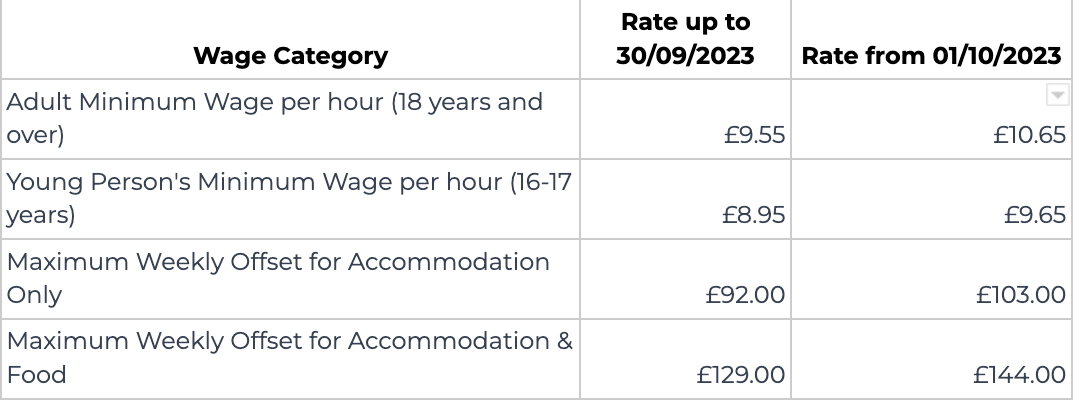
🇬🇬New Statutory Minimum Wage Rates in Guernsey Effective from 1 October 2023

Effective from 1 October 2023, Guernsey has updated its statutory minimum wage rates for adults and young persons. These changes also include adjustments to the maximum weekly ‘offset’ rates for accommodation and food provided by employers.
Additional Information

Entitlement: Under Guernsey Law, almost all workers are entitled to a minimum wage. The rules apply uniformly regardless of business size or if a private individual employs the worker.

🇬🇧Navigating Employment Practices Under UK Competition Law: CMA Guidance

Introduction:

The UK’s Competition and Market Authority (CMA) has outlined how competition law impacts employment practices, specifically regarding wage-setting and employee recruitment and retention. The advisory is aimed to help employers stay on the right side of the law.

Risky Behaviours in Labour Markets

  • No-poaching Agreements: Employers should avoid agreements that promise not to recruit from each other’s staff pools.
  • Wage-fixing Agreements: Any form of collusion with other businesses to set a standard rate for employee wages is considered illegal.
  • Information Sharing: The disclosure of sensitive employment conditions between businesses can be a violation of competition law.

Preventive Measures

To avoid breaking the law, the CMA recommends that employers:

  • Understand the applicability of competition law on no-poaching and wage-fixing agreements.
  • Educate HR and recruitment staff about competition law.
  • Implement robust internal reporting mechanisms.

Consequences for Violation

Fines can amount to as much as 10% of a business’s global annual turnover. Individuals may also face penalties, including imprisonment for up to 15 years.

Reporting

The CMA encourages reporting of anti-competitive behaviours and offers leniency options, including reduced fines and immunity from prosecution under certain conditions.

🇳🇱Dutch Senate Turns Down ‘Work Where You Want’ Act

The Dutch Senate has rejected the ‘Work Where You Want’ Act a year after its approval by the Dutch parliament. Despite its dismissal, current law mandates employers to consider requests for remote work, as outlined in the existing Flexible Working Act.

What Was the ‘Work Where You Want’ Act?

The rejected bill aimed to strengthen employees’ rights to work remotely within the European Union. If enacted, employers would have been required to permit remote work, so long as the request aligned with reasonableness and fairness, considering all involved circumstances.  

Ambitions of the Rejected Bill

The bill, formally known as the Act Working Wherever You Want, had the ambitious goal of revolutionising workplace flexibility. It was crafted to compel employers to accommodate requests from employees wishing to work remotely within the EU. The requirement for employer compliance hinged on a set of nuanced criteria, namely the balance between employer interests and employee needs, evaluated against a framework of reasonableness and fairness.

Reasons for Senate Rejection

Despite its transformative aims, the Senate struck down the bill, citing multiple concerns. The legislative body argued that the bill’s prescriptive nature would corner employers into an inflexible operational model, hampering their ability to manage business activities effectively. The Senate also questioned the potential adverse effects on employee productivity and workplace morale if the bill were enacted.

Government Commitment to Remote Work Flexibility

Despite the setback, the Dutch government has reaffirmed its commitment to enhancing remote work options. In a recent statement, it declared a vested interest in simplifying remote work conditions for employees while maintaining managerial effectiveness for employers.

Recommendations for Employers

The act could have had far-reaching implications for Dutch businesses. Employers would need to consider foreign employment law and navigate complex tax and social security issues, especially if employees sought to work from other countries. Despite the act’s rejection, employers should still assess workplace adjustment requests as per the Flexible Working Act. Employers should formulate a clear hybrid working policy, including guidelines on how to handle remote work requests.

Spooktacular Feature: Navigate the “Haunted House” of Global Employment with Laughter!

This Halloween, take a break from the ghouls and ghosts to dive into a different kind of adventure—the labyrinth of global employment! If you’ve ever felt navigating international employment laws is like walking through a haunted house 👻, you’ll love our featured video, “Global Employment Adventure: The Fun & Frustration Comedy!”

From the tricks of payroll budgeting in foreign currencies 💱 to the threats of making sense of complex employment laws, this comedy video tackles it all. Think hiring contractors is the magic potion for avoiding complexity? Think again! Misclassifying workers can lead to a real witch-hunt.

But don’t fret; our video introduces you to Express Global Employment, your guiding light 🌟 for compliant and headache-free global expansion.

Watch and learn how to make your employment journey more treat than trick 🍬!

Global Employment Adventure: Fun & Frustration Comedy

Wrapping Up This Spooktacular Edition 🎃👻

As we draw the curtains on this Halloween edition of our newsletter, we’d like to extend a big thank you for joining us on this global employment adventure 🌍🎬.

We hope the insights and resources we’ve shared, including our feature video, have been enlightening and entertaining.

As the nights grow longer, remember: global expansion doesn’t have to be a haunting experience. Armed with the right information, you can turn any challenge into an opportunity 🌟.

So, here’s to a Halloween filled with more treats than tricks and to a global employment journey that’s more sweet than spooky! 🍬👻

Blog

Global Employment Tax and Compliance Newsletter. September 2023

Welcome to the September 2023 Global Employment Tax and Compliance Newsletter edition. This newsletter is tailored for employers operating across jurisdictions and global employment solution providers who play a pivotal role in their success. In the dynamic landscape of global employment, governments worldwide aim to enhance, streamline, harmonise, and customise labour, tax, and immigration laws… Read more Global Employment Tax and Compliance Newsletter. September 2023

16 views 0 Comments

Welcome to the September 2023 Global Employment Tax and Compliance Newsletter edition. This newsletter is tailored for employers operating across jurisdictions and global employment solution providers who play a pivotal role in their success.

In the dynamic landscape of global employment, governments worldwide aim to enhance, streamline, harmonise, and customise labour, tax, and immigration laws to align with the evolving needs of their populations and adapt to global trends, such as the rise of remote work. This ongoing process unfolds as employers navigate the complexities of international employment, seeking agile solutions to meet compliance requirements and an ever-changing workforce’s demands.

This edition focuses on the latest developments in employment tax, labour, and immigration laws that emerged by September 2023. Each country’s spotlight dissects these changes, examines their implications for employers, and provides actionable steps for compliance and operational excellence.

Whether you are an employer seeking clarity on a new regulation or a global employment solution provider looking to enhance your client services, this newsletter is designed to meet your needs. 

Poland: Home Office and Permanent Establishment (PE) Concerns 🇵🇱

Legislation Adopted

Polish tax authorities (PTA) and administrative courts have recently addressed the risk of creating a Polish permanent establishment (PE) by a Polish employee working in a home office model. This issue has led to key developments in Polish tax regulations.

In recent individual tax rulings, the PTA has argued that an employee’s private home address, when used as a consistent place of work, could be deemed a fixed place of business at the disposal of a foreign enterprise. This interpretation hinges on the intent to work from home regularly. Additionally, the PTA is actively pursuing PE exposure under the dependent agent concept, especially when Polish employees are involved in contract negotiations, offer presentations, or marketing functions on behalf of the enterprise.

Why It Matters

Understanding the implications of home office arrangements on PE status in Poland is crucial for foreign enterprises. This interpretation by the PTA and supported by recent court judgments underscores the material risk of Polish PE exposure for businesses employing Polish workers.

Implications for Employers & Immediate Actions

  • Businesses should exercise caution when allowing employees to work from home regularly.
  • Employers should consider home office arrangements’ potential tax and legal implications.
  • It’s essential to assess the role of Polish employees in contract-related activities and marketing functions.
  • Seek professional advice to ensure compliance with evolving tax regulations and mitigate PE risks in Poland.

Read our Guide on Preventing Permanent Establishment Risk

United Kingdom: Immigration and Nationality Fee Increases 🇬🇧

Legislation Adopted

Legislation was introduced in the UK Parliament on September 15, 2023, paving the way for a series of immigration and nationality fee adjustments scheduled for October 4, 2023.

Key Provisions

These fee adjustments, ranging from 15% to 20%, impact various visa application fees and Certificate of Sponsorship fees in the UK.

The UK government’s decision to increase these fees is a response to the recommendations of independent pay-review bodies, accepted following the Public Sector Pay debate in Parliament. This decision includes raising visa and Immigration Health Surcharge (IHS) fees to support public sector pay rises.

Why It Matters

For employers recruiting and employing foreign nationals in the UK, these fee increases affect multiple immigration and nationality “routes,” encompassing individuals coming to the UK for work, study, and residence.

Assessing the impact of these fee hikes on recruitment, talent acquisition, and budgetary considerations is essential for employers.

Implications for Employers & Immediate Actions

Employers should evaluate the financial implications of the fee increases on their recruitment and talent management strategies.

Considerations include budget adjustments to accommodate higher immigration and nationality fees and potential effects on workforce planning.

Keep a close eye on forthcoming increases to the Immigration Health Surcharge (IHS) and prepare for potential changes in autumn.

Further Details

The fee adjustments, effective from October 4, 2023, vary based on visa categories, with the IHS increases scheduled for later in the autumn due to the associated legal process.

Impacted visas include those for short stays (up to 6 months), longer-term visits (2-, 5-, and 10-year visas), work, study, and residence. The changes also affect fees for indefinite leave to enter or remain, travel documents, health and care visas, Certificate of Sponsorship, and more.

Be aware of adjustments to priority service fees and reduced fees for the “settlement priority” service. Individuals seeking British citizenship through registration and naturalisation and users of the User Pays Visa Application service will also encounter fee changes.

U.S.-Taiwan Tax Relief: A Step Towards Cross-Border Harmony  🇺🇸 – 🇹🇼

Legislation Adopted

On September 14, 2023, the U.S. Senate Committee on Finance unanimously passed the U.S.-Taiwan Expedited Double-Tax Relief Act, marking a significant development in cross-border taxation.

Key Provisions

This bipartisan bill aims to mitigate double taxation challenges faced by American and Taiwanese tax residents while addressing permanent establishment and residency issues.

It contains a critical reciprocity clause, requiring Taiwan to enact reciprocal legislation to activate its measures.

Why It Matters

The bill promotes cross-border commerce, relieving businesses, investors, and workers of international tax complexities. Including the reciprocity clause ensures fairness in tax treatment for U.S.-based companies and individuals investing and working in Taiwan.

Implications for Employers & Immediate Actions

Employers engaged in cross-border activities between the U.S. and Taiwan should closely monitor this legislation’s progress.

If the bill becomes law, businesses operating in these regions should be prepared to adapt their tax strategies to benefit from reduced double taxation.

Italy Extends Remote Work Provisions 🇮🇹

Effective July 2023, Italy has extended remote work provisions to provide support and flexibility to specific groups of employees:

Vulnerable Employees

Individuals suffering from specified illnesses or conditions are now entitled to work remotely or be assigned different duties based on their job until 30 September 2023. A list of these conditions can be found in the Decree of the Minister of Health from 4 February 2022.

Parents with Children Under Age 14

Parents with children under 14 whose job duties allow remote work can continue working remotely until 31 December 2023. This provision applies when no parent is available to care for the child. Parents who are unemployed or receiving income support benefits are considered available for this purpose. Unlike the 2022 regulations, these parents must not sign an individual remote work agreement.

Labour Law Compliance Requirements

Employers must provide these employees with health and safety information annually. Additionally, they must inform the Ministry of Labor about which employees will be working remotely.

Czech Republic’s ‘Digital Nomad’ Program: Simplifying Work Visas 🇨🇿

The Czech Republic has launched a ‘Digital Nomad’ program, effective from July 1, 2023, to facilitate the entry and stay of highly-skilled IT professionals from specific countries, including Australia, Japan, Canada, South Korea, New Zealand, the United Kingdom, the United States, and Taiwan.

What Employers and IT Professionals Should Know

Previously, digital nomads faced a conundrum when seeking visas to work remotely from the Czech Republic. The absence of a dedicated visa category meant relying on business visas, which often didn’t align with the nature of their work. This led to frequent rejections from Czech authorities due to insufficient justification for their stay or non-compliance with stringent conditions.

The ‘Digital Nomad’ program seeks to simplify the entry and work processes for specific worker categories, aligning them more accurately with their intended purpose of stay. The new program aims to streamline this process.

Changes and Aims of the Digital Nomad Program

The program differentiates between two types of digital nomads: those employed by foreign companies working remotely through telecommunications and computerised means and self-employed freelancers holding a Czech trade license.

In both cases, IT specialists must demonstrate a higher education degree in natural sciences, engineering, technology, mathematics, or three years of relevant IT experience. Additionally, they need to prove a minimum income equivalent to 1.5 times the gross annual salary in the Czech Republic.

This initiative ushers in a new era of economic migration in the Czech Republic, providing a streamlined pathway for IT professionals to contribute their skills while embracing the flexibility of the digital age.

France Enhances Bereavement and Parental Leave 🇫🇷

The French government has recently made significant amendments to the Labor Code, focusing on government-paid bereavement and parental leave. These changes, which took effect on 19 July 2023, aim to support employees during challenging times better.

Bereavement Leave

Government-paid bereavement leave after losing an employee’s child has been extended. Parents with children under 25 now receive 14 days of leave, while parents aged 25 years or older are entitled to 12 business days. This extension acknowledges the diverse needs of parents facing this difficult situation.

Leave for Child’s Diagnosis

The government-paid leave that can be taken following the diagnosis of a child’s disability or serious health condition, such as cancer or neuromuscular diseases, has also been extended. This leave, designed to support parents in managing medical and administrative matters, has increased from two to five business days. It complements the current compassionate leave, which can go up to 310 working days.

Teleworking and Flexible Arrangements

The new law grants working parents the right to request teleworking and flexible working arrangements. While employers can refuse these requests, such refusals must be justified in writing.

Next Steps for Employers

Employers are encouraged to review these changes and ensure compliance by adjusting their HR internal policies, employment agreements, company-level collective bargaining agreements, and family-related benefits and policies as necessary. It’s essential to stay informed and adapt to these enhancements in leave provisions.

European Commission Proposes Digitalization of EU Social Security Coordination 🇪🇺

Legislation Adopted

On September 6, 2023, the European Commission unveiled a dedicated Communication proposing advancements in the digitalisation of social security coordination within the European Union (EU). The primary objective of this proposal is to streamline access to cross-border social security services, making the process faster and more straightforward.

Why It Matters for Employers

The digitalisation of EU social security coordination aims to alleviate administrative burdens linked to social security for individuals and businesses. This initiative is expected to enhance information exchange between national administrations, including healthcare providers and labour inspectorates, especially when processing claims for benefits across borders.

Implications for Employers & Immediate Actions

Companies with employees who frequently travel across EU countries for business or leisure should consider revising or establishing compliance processes for social security. One key point of the digitalisation effort is the issuance and verification of documents like A1 certificates for social security coverage.

Proposed Key Measures

The European Commission has called upon member states to take several actions:

  1. Accelerate EESSI Implementation: Ensure full operation of the Electronic Exchange of Social Security Information (EESSI) by the end of 2024. EESSI facilitates instant cross-border communication between local administrations, reducing reliance on paper-based communication.
  2. Digitalise Access to Benefits: Deliver more social security coordination procedures online, simplifying access to eligible benefits for individuals and businesses.
  3. Introduce EUDI Wallets: Implement EU Digital Identity (EUDI) wallets, enabling EU citizens to carry digital versions of entitlement documents such as A1 certificates and the European Health Insurance Card, instantly verifying them by local authorities.

Employee Benefits Guide

Unlock the world of employee benefits with our ‘Employee Benefits Guide for Global Employers.‘ This resource is your compass for understanding and optimising employee benefits on a global scale.

UK Announces Tripling of Penalties for Employers and Landlords on Illegal Migrants 🇬🇧

Legislation Adopted

On August 7, 2023, the U.K. Home Secretary unveiled plans to triple fines for employers and landlords who knowingly hire or house illegal migrants in the United Kingdom, effective early 2024.

Key Provisions

This announcement is a significant step in the government’s efforts to combat illegal employment and housing of migrants. Minister for Immigration Robert Jenrick emphasised the need for proper checks, stating, “There is no excuse for not conducting the appropriate checks.”

Why It Matters for Employers

Businesses employing overseas nationals in the U.K. will face substantially increased penalties for hiring illegal workers. The consequences include larger fines, potential downgrading or revocation of their sponsorship licenses, and damage to their reputation as offending employers’ details will be made public by the Home Office.

It’s essential to note that illegal workers encompass employees, business travellers, students, and others working in violation of their visa conditions. To mitigate these risks, robust compliance systems must be in place, including conducting thorough pre-travel due diligence and correct right-to-work checks.

Implications for Employers & Immediate ActionsCurrent PenaltiesPenalties Effective 2024
Employers Hiring Illegal WorkersUp to £15,000 per illegal worker (First Offense)Up to £45,000 per illegal worker (First Breach)
Up to £20,000 per illegal worker (Repeat Offenses)Up to £60,000 per illegal worker (Repeated Offenses)
Landlords Housing Illegal Lodgers or Renting Illegally£80 per lodger or £1,000 per occupier (First Offense)£5,000 per lodger or £10,000 per occupier (First Offense)
£10,000 per lodger and £20,000 per occupier (Repeated Offenses)

Action Steps for Employers

Employers must prioritise compliance with the Home Office right-to-work checking requirements. This includes conducting proper checks on all prospective employees before employment begins and retaining relevant information in the prescribed format.

Ensuring compliance with these measures is essential to avoid the significant penalties associated with employing illegal workers in the U.K.

Employment Contracts Guide

We’re excited to introduce our ‘Employment Contracts Guide for Global Employers.’ This invaluable resource is designed to assist HR professionals, legal teams, and business leaders in understanding the intricacies of employment contracts across different jurisdictions.

Inside this guide, you’ll find:

🌍 Insights into key elements of employment contracts, including terms and conditions, termination clauses, and more.

Whether you’re expanding your workforce into new territories or simply seeking to enhance your understanding of global employment practices, our Employment Contracts Guide is an indispensable tool.

Conclusion

As we conclude this September 2023 edition of our Global Employment Tax and Compliance Newsletter, we hope that the insights and updates provided have been valuable in navigating the ever-evolving landscape of employment laws and regulations around the world.

As we look ahead to the final months of 2023, we encourage you to reach out to our experts for personalized guidance on specific compliance challenges your organization may face. We’re here to support your global employment needs, offering solutions that empower your business to succeed.

Thank you for choosing Express Global Employment as your trusted partner in global workforce management. We look forward to continuing this journey together and assisting you in achieving your international employment goals.

Stay compliant, stay competitive, and stay connected with Express Global Employment.

🚀 Get Express Quote Today: https://bit.ly/47bskpY