Send Email
Blog

Global Employment Tax and Compliance Newsletter. September 2024

Welcome to the 21st Edition of Acumen International’s Global Employment Tax & Compliance Newsletter! Your continued engagement and support have inspired us to craft each edition with even more dedication; this one is no exception. In this September issue, we’ve curated the most critical updates and practical insights to help you confidently navigate global employment.… Read more Global Employment Tax and Compliance Newsletter. September 2024

Welcome to the 21st Edition of Acumen International’s Global Employment Tax & Compliance Newsletter!

Your continued engagement and support have inspired us to craft each edition with even more dedication; this one is no exception. In this September issue, we’ve curated the most critical updates and practical insights to help you confidently navigate global employment.

Solving Global Workforce Challenges with Employer of Record Solutions

As global workforce demands shift, businesses expanding into new markets encounter challenges—from managing compliance with local employment laws to ensuring accurate payroll across multiple jurisdictions. With real-time, hands-on support in over 190 countries, Global Employer of Record solutions helps businesses navigate critical issues such as permanent establishment risks, complex immigration procedures, and worker misclassification.

Explore this guide to understand how Acumen’s EOR solution enables faster team deployment, efficient market scaling, and seamless compliance without setting up local entities.
EU 🇪🇺: Artificial Intelligence (AI) Regulation

The EU’s new Artificial Intelligence (AI) Regulation has been introduced to establish a legal framework for developing, marketing, and using AI systems across the region. This regulation, which has been in development for nearly three years, aims to ensure that AI systems comply with relevant laws and respect fundamental EU rights and values. The regulation adopts a risk-based approach, categorizing AI systems into four levels of risk: unacceptable, high, limited, and minimal.

Key Changes

  • AI systems are classified based on risk categories. Depending on the classification, systems may face prohibitions, be subject to market monitoring, or require specific documentation, impact assessments, and transparency measures.
  • Companies, including HR departments, must assess the use of AI systems and identify whether their systems fall under these regulated categories.
  • Effective Date: 1 August 2024 (Phased implementation, with obligations entering into force in stages until August 2027).

Employer Actions

  • Identify which AI systems they use.
  • Determine if any AI systems, particularly those used for HR purposes, are prohibited or classified as high-risk.
  • Ensure compliance with the regulations for AI systems deemed high-risk, including monitoring and documentation.
  • To mitigate liability risks, companies should ensure robust compliance systems are in place to support AI’s safe and lawful use following the regulation’s requirements.

Austria 🇦🇹: Teleworking Regulations to Be Extended

The Austrian Employment Contract Law Amendment Act (AVRAG), Section 2h, currently outlines the requirements for home office use. This regulation is being expanded to include teleworking, which covers working from locations like relatives’ homes, libraries, or co-working spaces. From January 2025, employers must ensure that written agreements for teleworking arrangements, alongside existing home office agreements, are in place to comply with the updated law.

The extended law requires teleworking agreements to be formalised in writing, like home office agreements, to ensure proper organisation and compliance with the expanded scope. The effective date is 1 January 2025.

Czech Republic 🇨🇿: Significant Amendments to the Labour Code (Flexible Amendment)

A new government bill introducing flexible amendments to the Labour Code is currently being discussed in Parliament. These amendments aim to provide flexibility for employees and employers, covering parental leave, termination rules, work time organisation, wages, probation periods, and youth employment. The effective date is 1 January 2025 (subject to changes until final adoption).

Parental Leave

  • Employees on parental leave can perform the same job under a different contract with the same employer.
  • Employees returning from parental leave before their child’s second birthday are guaranteed their original position and workplace.

Termination Rules

  • The notice period will begin on the day the termination notice is received.
  • The notice period is reduced to one month for terminations due to misconduct or failure to meet job requirements.

Compensation for Work-Related Health Issues

Employees who lose their jobs due to work-related injuries or illnesses will receive special compensation funded by employer insurance.

Work Time Organisation

  • Employees can schedule their working hours by agreement.
  • Rest periods can be shortened to six hours in emergencies, with rest time compensated the following day.

Wages

Employees who work abroad, permanently reside abroad, or are EU citizens without permanent residence in the Czech Republic can agree to be paid in a currency other than CZK.

Probation Period

The maximum probation period will be extended to four months for regular employees and up to eight months for managers.

Czech Republic 🇨🇿: Cancellation of Guaranteed Wages

Historically, the guaranteed wage set the minimum pay for various jobs based on complexity, responsibility, and required effort. As of 1 August 2024, this system will be abolished in the private sector. Only the national minimum wage of CZK 18,900 per year (approximately €750) will apply. Effective Date: 1 August 2024.

Czech Republic 🇨🇿: Self-Scheduling of Working Hours

Employers and employees in the Czech Republic may mutually agree for employees to self-schedule their working hours. The agreement must be formalized in writing, and the average weekly working time must be adhered to over the agreed compensation period. Effective date: 1 January 2025. Employers must ensure that any self-scheduling agreements are in writing to avoid penalties. If self-scheduling agreements are not properly documented, a fine of up to CZK 300,000 (approximately €12,000) can be imposed.

Key Points

  • Notice Period: Either party can terminate the agreement with 15 days’ notice without providing a reason.
  • Compensation Period: The standard period is 26 weeks, extendable to 52 weeks under a collective agreement.
  • No Allowance: Employees are not entitled to compensation for personal obstacles like medical appointments.

Is Shadow Payroll Holding Back Your Global Expansion?
Managing payroll for internationally mobile employees often leads businesses to choose shadow payroll as a temporary solution. However, this approach can introduce hidden complexities and risks for long-term growth. In our latest article, we examine the limitations of shadow payroll and present Global Employer of Record (Global EOR) as a more scalable and sustainable alternative.

Why Global Employer of Record Is the Smarter Choice

  • Compliance across multiple countries: Avoid non-compliance risks and penalties with expert handling of local regulations.
  • Seamless scalability: Expand into new markets without the complexities of establishing local entities or managing intricate payroll systems.
  • Simplified operations: Focus on your core business strategy while we manage payroll, taxes, and legal requirements across borders.
  • Long-term sustainability: While shadow payroll may suffice in the short term, Global EOR is designed to support your long-term international operations with stability and peace of mind.

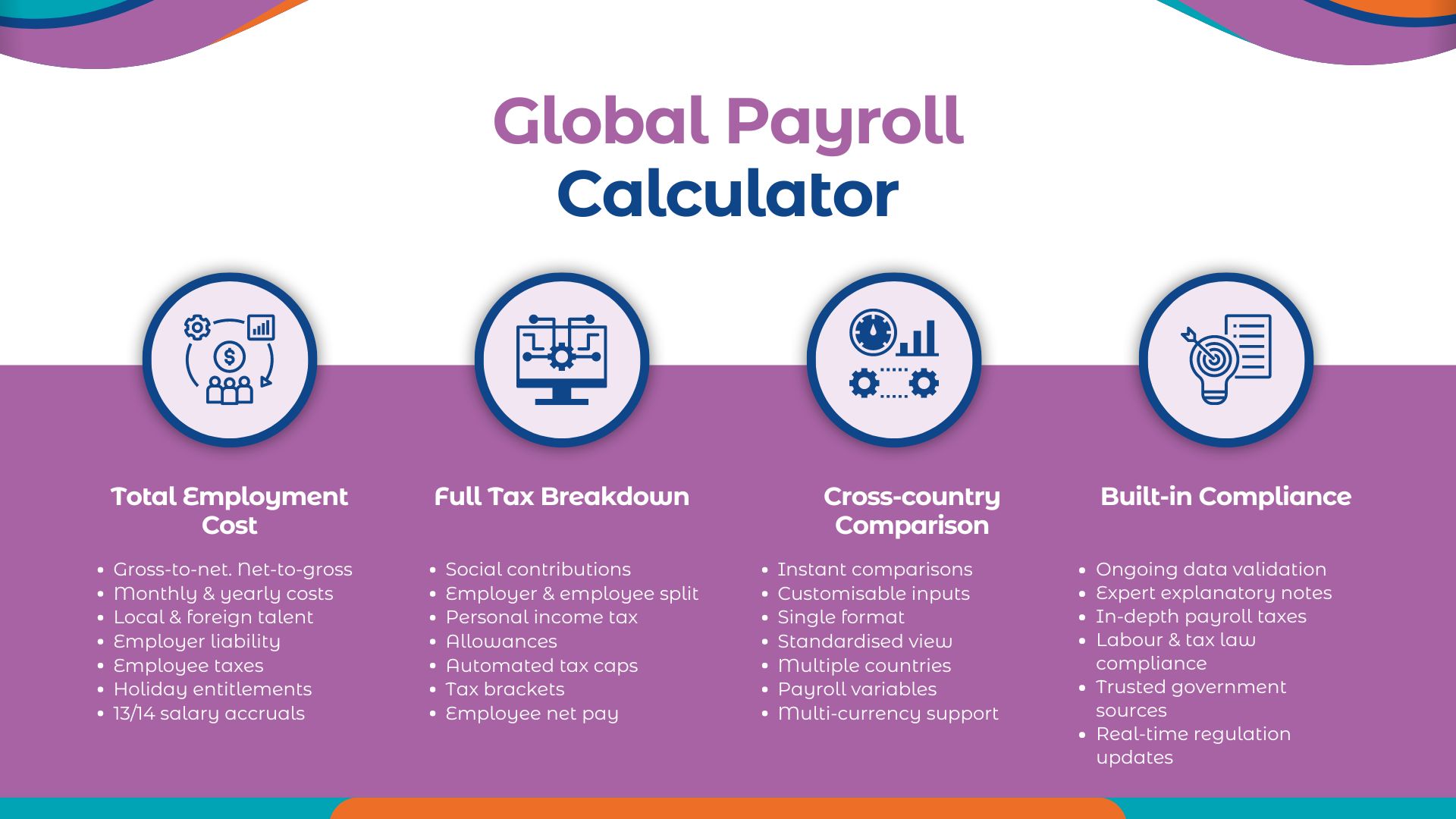
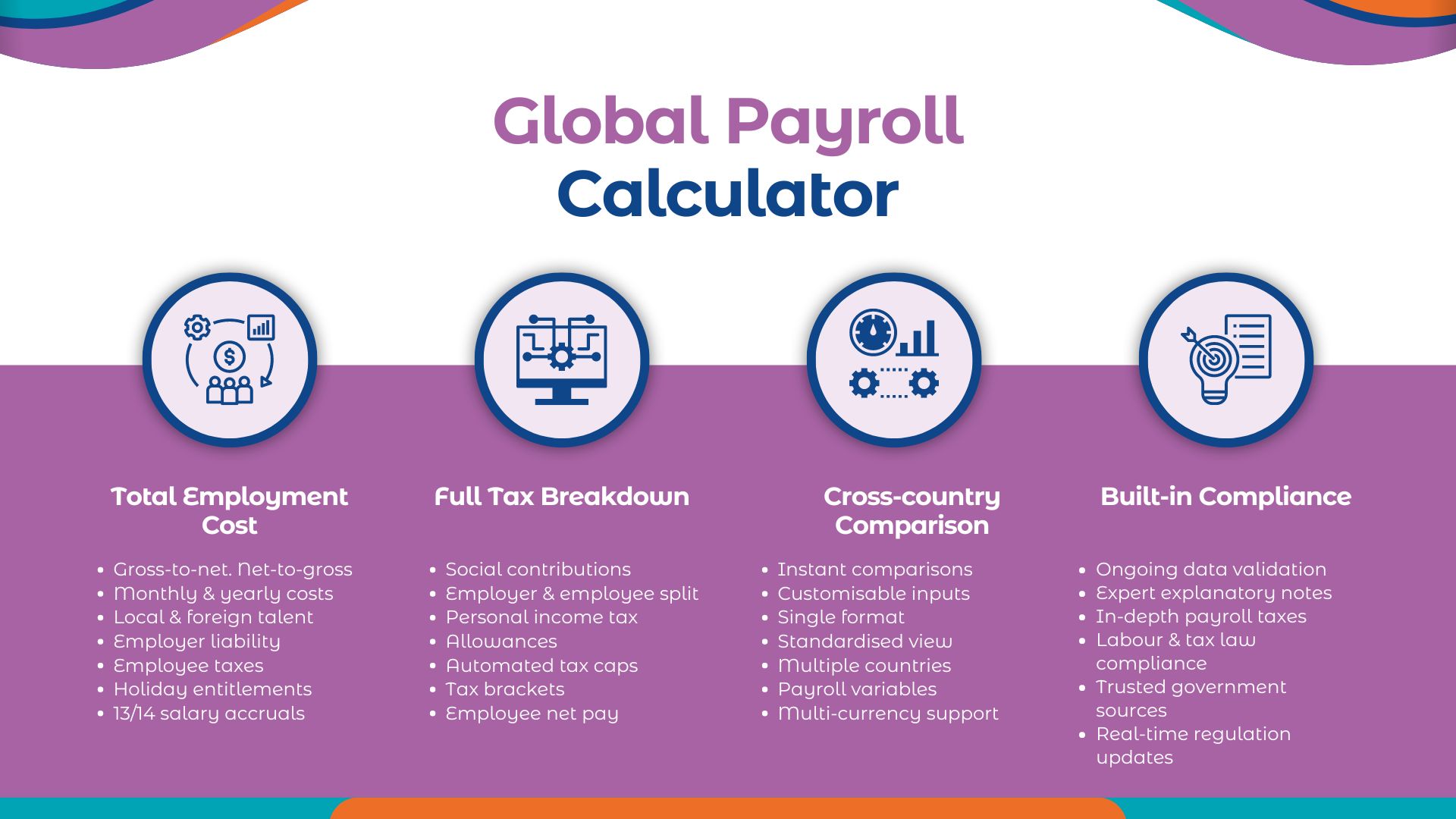
Looking to assess employment costs across multiple countries? Our Global Payroll Calculator helps you gain clear insights into total costs, tax obligations, and compliance needs across 190 countries.

Read the full article to explore how Global EOR can be a game-changer for your global expansion strategy.

Denmark 🇩🇰: Legal Challenge to the EU Minimum Wage Directive

The Danish Government has launched legal action against the EU’s Directive on adequate minimum wages, arguing that it conflicts with Denmark’s long-standing labour model. In Denmark, wages and other employment terms are negotiated between employers and employees through collective agreements rather than being set by legislation.

The government views the Directive as incompatible with these practices and seeks to have parts of it annulled by the European Parliament.

Impact Date: Awaited (The legal process is ongoing, and the Directive is scheduled to be implemented by 15 November 2024 across the EU).

Key Points

  • Denmark’s legal challenge is based on its labour model, in which wages are negotiated collectively rather than through statutory regulation.
  • The outcome of the legal proceedings could impact how the Directive is implemented across Member States.
  • Employers in Denmark should follow the legal proceedings closely, as the outcome may affect wage-setting practices and collective agreements.

France 🇫🇷: Proposed Birth Leave Initiative

The French Government plans to introduce a new “birth leave” initiative to replace the current parental leave system. While the proposal is still being developed, it aims to provide both parents with six months of leave following the birth of a child, with flexible arrangements for how the leave can be utilised. The anticipated effective date is subject to final approval.

Key Changes

  • A 6-month birth leave option will substitute parental leave for both parents.
  • The leave can be used by either parent or shared between both, simultaneously or separately, with options for full-time or part-time usage.
  • Social security will cover 50% of the employee’s previous salary, with a cap of €1,932 per month. Employers may opt to top up this compensation.

France 🇫🇷: New Pathway for Legal Residence of Foreign Workers in Labour Shortage Areas

The French government has granted préfets—senior regional government officials who represent the national government at the local level—the authority to provide residence permits to undocumented workers in sectors and regions with significant labour shortages. This measure is in effect until 31 December 2026 and offers eligible individuals a one-year residence permit—an implementation period until 31 December 2026.

Eligibility Criteria

To qualify for legal residence, individuals must meet the following conditions:

  • Have worked as a salaried employee in a sector or region facing recruitment difficulties for at least 12 months (consecutively or within the last 24 months).
  • Have held a job in one of the identified areas or sectors.
  • Have lived continuously in France for at least three years.
  • Have a clean criminal record with no convictions, disqualifications, or legal restrictions.

Préfets retains the discretion to deny applications based on social and family integration, compliance with public order, and alignment with French values.

Additional Changes

  • Training programs will be provided for foreign workers who are not proficient in French.
  • Social security benefits will be extended to non-EU foreign nationals.
  • Employers should revise their hiring and employment procedures for foreign workers to ensure compliance with the new provisions.

Non-compliance with the new regulations may expose employers to fines and potential claims for damages.

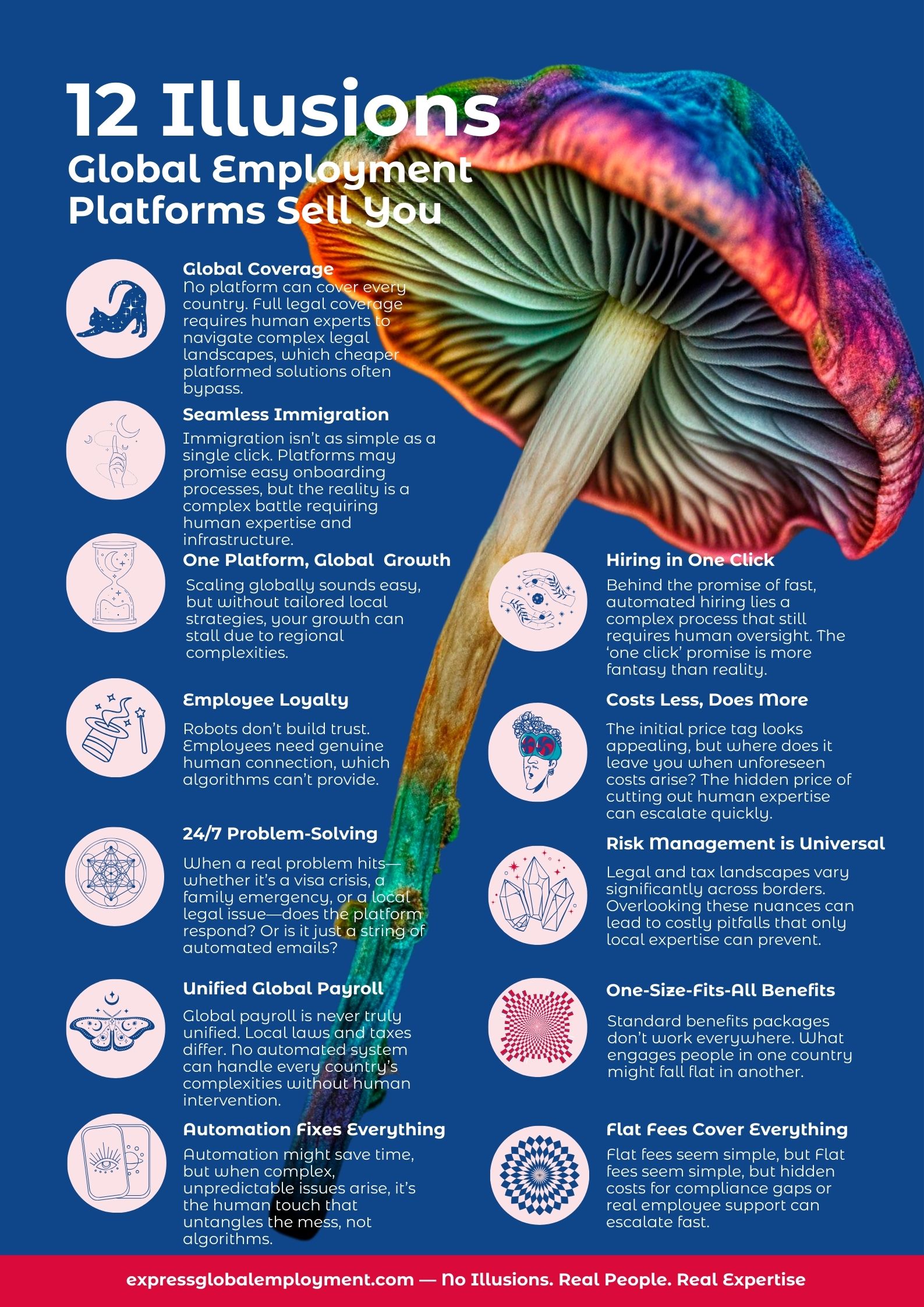
Selling the Illusion: Why Global Employment Can’t Be Fully Automated
As global employment platforms flood the market with promises of rapid onboarding and low costs, the allure of full automation often overshadows the reality. Our latest article explores the critical gaps these platforms leave behind and why human expertise remains essential for sustainable international growth.

Key Insights

  • The Illusion of Automation: Automated platforms may seem like a quick fix, but they lack the adaptability needed for real-world global employment challenges.
  • Human Support is Irreplaceable: Complex immigration, tax, and regulatory issues demand personalised, on-the-ground solutions.
  • Building Strong Teams: Long-term success in global employment requires more than software—it needs the human touch to navigate unpredictable challenges and support employee well-being.

Read the full article to understand why human-led expertise, supported by a robust infrastructure, is vital to building resilient and loyal global teams.

Ireland 🇮🇪: Implementation of the EU Adequate Minimum Wages Directive

Ireland is required to implement the EU Adequate Minimum Wages Directive by 15 November 2024. The Directive promotes wage adequacy and encourages collective bargaining without enforcing a uniform approach across Member States. Ireland, which has a statutory minimum wage, must conduct regular reviews to ensure wages meet set criteria. Impact Date: by 15 November 2024.

Key Points

  • Ireland must regularly review its minimum wage to ensure it meets adequacy standards.
  • The Irish Government will work with trade unions and stakeholders to comply with the Directive’s requirements.

Lithuania 🇱🇹: Minimum Wage Increase Legislation

The Lithuanian government has enacted new legislation to increase the minimum wage to better align with living costs and economic conditions. This update aims to provide more substantial financial security for workers. The new wages requirements will become effective on 1 January 2025, and employers must fully comply by this date.

Key Changes

  • Monthly Minimum Wage: Increased to €1,038 from January 2025.
  • Hourly Minimum Wage: Raised to €6.35, ensuring that hourly workers receive fair compensation aligned with the new standard.

What Employers Need to Do

Employers should adjust their payroll systems to reflect the new minimum wage levels, ensuring all workers are paid according to the updated legislation. Failing to comply with these wage standards can result in fines imposed by the State Labour Inspectorate, ranging from €240 to €880 for initial violations, with higher penalties for repeated non-compliance.

UAE 🇦🇪: Court Recognizes Cryptocurrency as Part of Salary Payment (Case Law)

In a landmark case, the Dubai Court of First Instance has ruled that part of an employee’s salary can be paid in cryptocurrency, marking a significant development in the UAE Labour Law. This ruling arose from a dispute where an employer failed to pay a portion of the salary in cryptocurrency, as stipulated in the employment contract. The impact date is 15 August 2024. Employers should ensure compliance by this date.

Key Changes

  • The court has confirmed that cryptocurrency can be used to partially pay an employee’s salary under the UAE Labour Law.
  • However, paying the full salary in cryptocurrency is not permissible, as salary payments are still required in UAE Dirhams (AED) or another recognised currency for companies under the Wage Protection System or in free zones.

What Employers Need to Do and Why

Employers that wish to pay part of an employee’s remuneration in cryptocurrency must ensure that contracts and policies clearly outline how cryptocurrency will be valued and include provisions for volatility. They should also be aware that tax and social contributions cannot be paid in cryptocurrency and must account for these limitations in their payroll processes.

Failure to properly outline the terms of cryptocurrency payments in contracts could lead to unexpected liabilities or disputes, especially if the cryptocurrency’s value fluctuates significantly or if regulations change. Employers must clarify the arrangements for employees to avoid financial and legal risks.

Global Employment Services in Ukraine and Risky Regions
The war in Ukraine has caused immense disruption, displacing millions and damaging vital infrastructure. Despite these challenges, Ukraine remains a key part of the global economy. Our latest article explains how Acumen International’s Global Employer of Record (EOR) services have helped businesses rehire displaced Ukrainian talent and continue operations across borders.

Key Insights

  • Rehiring Talent Across Europe: Learn how we helped a Ukrainian enterprise quickly rehire employees who had been displaced in Spain, Poland, and Austria.
  • Continued Hiring in Ukraine: Despite the conflict, industries such as military production and software development continue to need local talent.
  • Hiring in Risky Regions: We provide compliant hiring solutions for companies operating in volatile regions, ensuring lawful employment without local entities.
  • Global Immigration Support: Our tailored services ensure businesses can seamlessly onboard employees and their families, offering essential support in risky or complex regions.

Read the full article to discover how Acumen International’s Global EOR solution helps businesses hire in Ukraine or risky regions, keeping operations running smoothly even in unpredictable circumstances.

Netherlands 🇳🇱: Broadening of Unemployment Premium Exemption

The Dutch government has introduced changes to the unemployment premium system, expanding the conditions under which employers can benefit from lower unemployment premiums. This reform, set to take effect on 1 January 2025, aims to offer employers more flexibility while maintaining employment contract security for workers.

Key Changes

  • Employers currently pay lower unemployment premiums for permanent employment contracts and higher premiums for flexible contracts.
  • Under the new rule, employees on permanent contracts will be allowed to work up to 30% overtime beyond their contractual hours without triggering higher unemployment premiums.
  • Contracts with 30 or more working hours per week will now qualify for this exemption, broadening the scope beyond the current threshold of 35 hours.
  • If an employee works over 30% overtime in a given year, the higher premium will apply retroactively for the entire year.

What Employers Need to Do and Why

Employers should review their existing contracts and working hour arrangements. Contracts with average working hours of 30 or more hours per week will fall under the expanded exemption, allowing for greater flexibility in work hours while maintaining lower unemployment premiums. Consider adjusting work hours (e.g., reducing to 30 hours) to remain within the new scope and benefit from the lower premium.

Netherlands 🇳🇱: Legislative Proposal to Enhance Job Security for Flexible Workers

The Dutch government has proposed the “More Security for Flexible Employees Act,” which has been under consultation since July 2023. This new law aims to replace on-call contracts with “basic contracts,” offering more precise terms for employees with fixed or indefinite working hours and improving job security for flexible workers. Expected Date: The implementation date is not yet confirmed but is expected no earlier than 1 January 2026. Employers will likely have a 6-month transition period to comply with the new regulations.

Key Changes

  • Introduction of Basic Contracts: On-call contracts will be replaced by contracts specifying a minimum number of paid hours for which employees are scheduled. These contracts will offer greater stability to workers.
  • Exemptions: On-call contracts will still be available for students and temporary agency workers, but only during the first 52 weeks of their employment.
  • Breaks Between Contracts: The maximum allowable gap between fixed-term contracts will increase from 6 months to 5 years. If the combined duration of contracts exceeds 3 years, with breaks of 5 years or less, the contract will automatically convert to an indefinite term.

What Employers Need to Do and Why

Employers should prepare to replace existing on-call contracts with basic contracts where applicable. It is advisable to start keeping detailed records of fixed-term employees and their contracts for at least 5 years after termination to ensure compliance with the new rules. Failure to manage the timing between contract renewals could lead to unintended conversions to indefinite contracts, with potential wage claims from employees.

If this proposal becomes law, employers risk wage-related claims or the automatic conversion of fixed-term contracts into indefinite contracts if breaks between contracts are not managed carefully.

Singapore 🇸🇬: Upcoming Guidelines on Restrictive Clauses in Employment Contracts

The Ministry of Manpower, in collaboration with the National Trades Union Congress and the Singapore National Employers Federation, is developing new guidelines to regulate the use of restrictive clauses in employment contracts. These guidelines will cover clauses related to restraints of trade and non-compete agreements. Effective date: second half of 2024 (exact date pending).

Key Changes

  • The new guidelines will provide more transparent standards for the reasonable use of restrictive clauses, ensuring fairer employment practices. They will complement existing guidelines on retrenchment and manpower management.
  • Employers should be aware of these upcoming guidelines and prepare to review their employment contracts once the guidelines are released.

Singapore 🇸🇬: Upcoming Parental and Paternity Leave Legislation

The Singapore government is rolling out new leave policies to support parents better. In 2025, significant changes will be made to paternity and parental leave entitlements.

Key Changes

  • Paternity Leave Extension: From 1 April 2025, working fathers with Singaporean children born on or after this date will be entitled to four weeks of Government Paid Paternity Leave (GPPL), an increase from the current two weeks.
  • New Parental Leave Framework: A new system will replace the existing shared parental leave scheme. From 1 April 2025, parents will share six weeks of paid leave, increasing to ten weeks from 1 April 2026. This new entitlement is in addition to the existing maternity and paternity leave provisions.

Effective Dates

  • Paternity Leave Extension: Effective from 1 April 2025.
  • Parental Leave: Implementation begins on 1 April 2025 (six weeks) and entirely takes effect on 1 April 2026 (ten weeks).

Employer Implications

Employers hiring in Singapore must update their leave policies and systems to reflect these changes by April 2025. Failure to do so may lead to non-compliance risks. It is also essential to inform employees of these new entitlements on time to ensure a smooth transition.

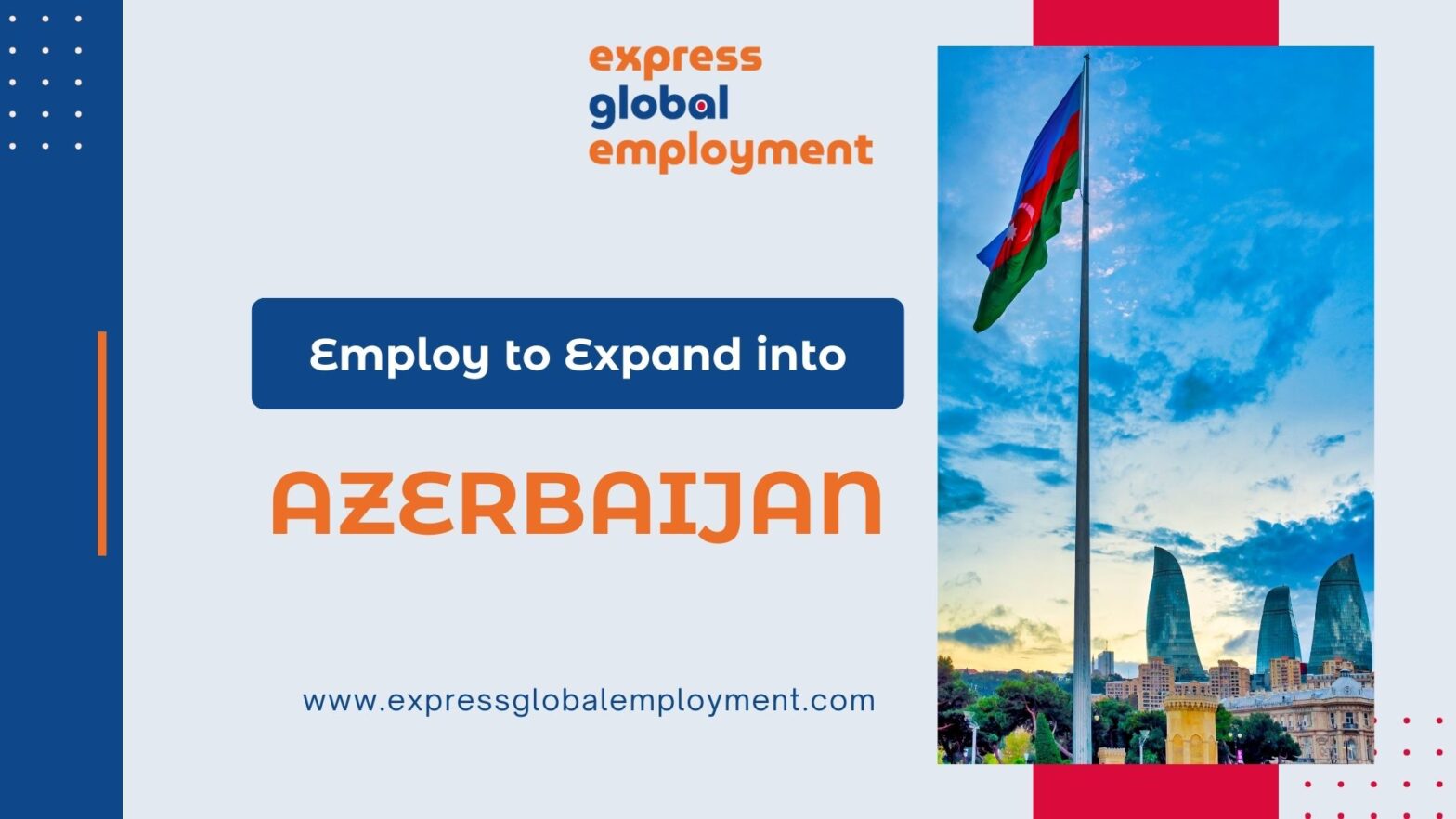
Expanding into Azerbaijan: A Strategic Approach with a Global EOR Solution
Expanding into a new market like Azerbaijan can present various challenges, but with the right guidance, the process can be significantly streamlined. Acumen International’s Global Employer of Record (EOR) solution offers businesses a streamlined, compliant, and efficient way to enter the Azerbaijani market without the need to establish a legal entity.

Key Insights

  • Achieve fast, compliant market entry within 1-2 weeks.
  • Access top local talent without the complexities of setting up local operations.
  • Stay compliant with evolving tax regulations and labour laws.
  • Minimise risks while cutting unnecessary operational costs.

Take the next step in your global expansion journey with confidence. Read the full Guide to explore how Global EOR can simplify your business entry into Azerbaijan.

Coming Soon: The Global Compliance Navigator — Your Key to Seamless Global Expansion
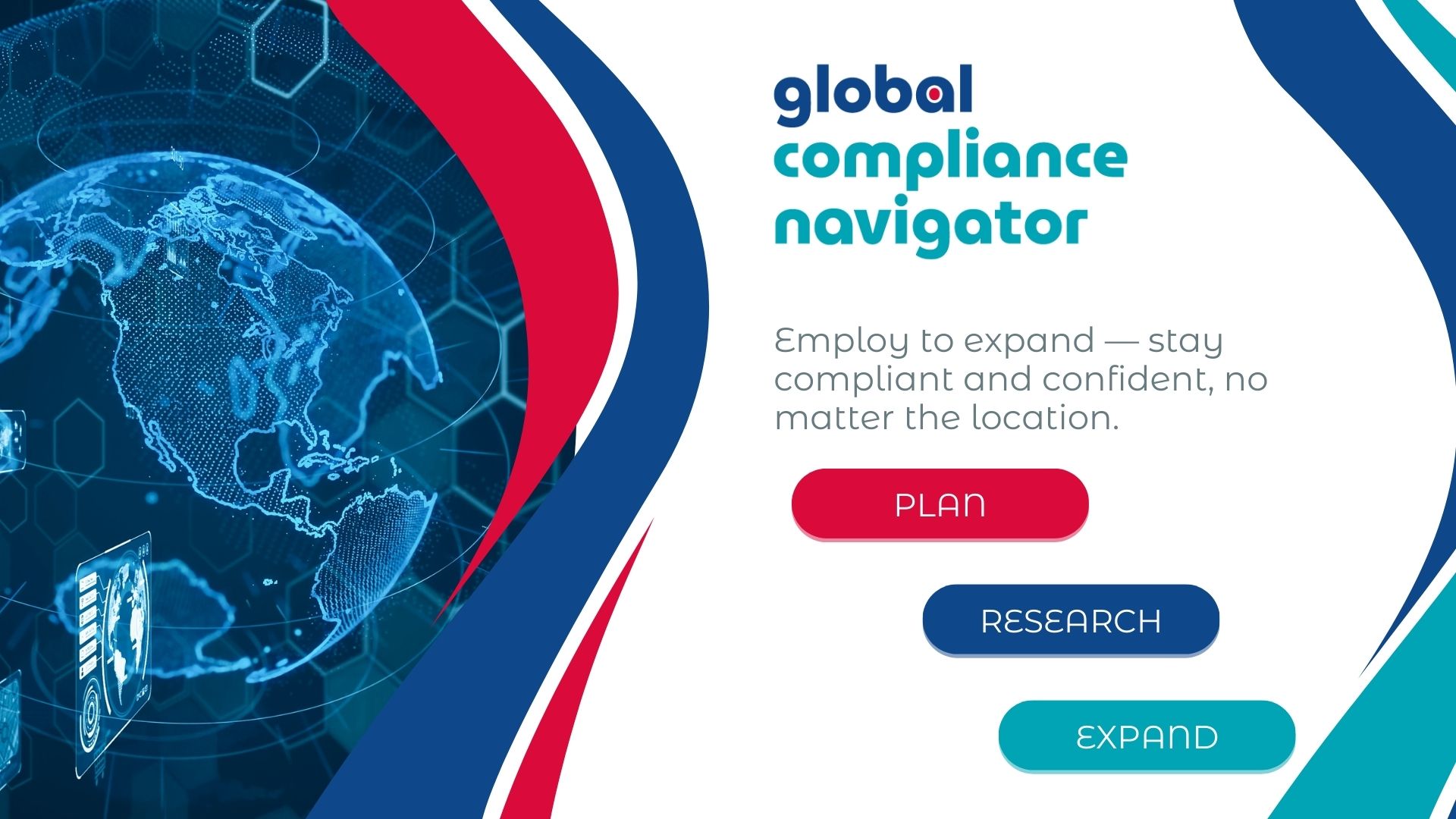
Acumen International is soon launching a powerful tool designed to simplify one of the most intricate aspects of global growth: compliance. The Global Compliance Navigator will enable businesses to navigate local laws, workforce regulations, and tax obligations in over 190 countries from a single solution.

This tool is a strategic resource for businesses planning to expand their global footprint. By providing comprehensive, accurate, country-specific insights, the Navigator allows companies to assess potential risks and plan global operations confidently, saving time and avoiding costly mistakes.

The Global Compliance Navigator complements our Express Global Employment solutions, which streamline compliant hiring in new markets, and Global Payroll Calculator, which helps you estimate employment costs across 190+ countries.

Together, these tools offer a seamless way to plan, calculate, and expand globally, all while mitigating risks and ensuring compliance with local regulations.

Stay tuned for the official launch!

Wrap Up

At Acumen International, we believe global employment is about the people behind every solution—those who need it and those who deliver it. This month’s newsletter blends practical updates with our human-first approach. For a deeper look, read A Different Take on How We Deliver Global Employment Services“, a unique, story-driven reflection on global expansion.

Steps of Global Growth

Thank you for reading the Global Employment Tax and Compliance Newsletter. If you found this edition helpful, subscribe to the latest global employment insights and updates. Stay informed, stay ahead!

Blog

A Different Take on How We Deliver Global Employment Services

At Acumen International, every solution we create is as unique as the clients we serve. This time, we’ve stepped away from the usual business talk to share something different — a short story. Why a story? Because stories can reveal complexities and human elements in ways that a traditional case study simply can’t. This one… Read more A Different Take on How We Deliver Global Employment Services

At Acumen International, every solution we create is as unique as the clients we serve. This time, we’ve stepped away from the usual business talk to share something different — a short story.

Why a story? Because stories can reveal complexities and human elements in ways that a traditional case study simply can’t. This one is inspired by the real-life experiences many of our clients face when expanding into new markets.

We hope it offers a fresh look at how we guide our clients through the unknown, with global hiring solutions that are just as human as they are effective.


A Step into the Unknown: As the Horizon Widens

In his office, Tom was a king. He knew the market, the players, the rules. Decisions were swift, assured. The walls of his office bore the weight of framed accolades, symbols of his prowess. In his country, Tom was an adult, a master of his domain.

Then came the call. Expansion. New markets. Opportunities abroad. Tom found himself weighing options —whether to establish legal entities in each new location or explore a way to test these markets with a lighter touch, without long-term commitments.

They needed people — senior executives, sales teams, the right talent in the right places. Excitement mingled with anxiety. Tom knew his business inside out, but stepping onto foreign soil was different. He felt the ground shift beneath him.

The first meeting was in London. The city buzzed with its own rhythm, but here, Tom was a stranger. He entered the office, a calm but unfamiliar space. The consultant greeted him with a welcoming smile. She spoke with clarity and ease, immediately making Tom feel a little more grounded. He could tell she was someone who understood the complexities he was about to face. But this was still new territory for him.

“Welcome, Mr. Lewis,” she said, her voice steady. Tom felt the weight of uncertainty settle on his shoulders. He had questions, too many. The assurance he had at home felt distant.

“We’ll guide you through the process,” she continued. “From managing immigration requirements to handling payroll, taxes, and benefits — covering all the essential details that are often overlooked but critical for success.”

Tom nodded, already grateful for the support. In his own country, he knew every step, every turn. Here, he was learning to walk again.

The consultant explained the regulations, the taxes, the hiring practices. It was a new language, and Tom was learning it slowly. He asked questions, sometimes obvious ones. But he asked, because he had to know. As they discussed bringing senior executives and sales teams abroad, she mentioned the importance of careful structuring— how specific decisions, like where they placed key personnel, could have broader implications, such as triggering permanent establishment risk.

“We’ll handle the complexities,” she assured. “You focus on your business. Leave the rest to us.”

In the following months, Tom traveled more. Tokyo, São Paulo, Paris — then onto dynamic and emerging markets like Lagos, Jakarta, and Buenos Aires. With each destination, Tom adapted, gaining new insights and growing more comfortable navigating the global environment.

The employment landscape shifted constantly — regulations changed, new laws were adopted, immigration policies evolved. But the consultants were always one step ahead, ready with the right questions or answers Tom needed, guiding him through each challenge with care.

Back home, Tom still ruled his office with certainty. Abroad, he was like a child discovering a new world — curious, open, and eager to learn. Each step in this unfamiliar terrain revealed new challenges, but with every lesson, he grew more sure-footed, gradually mastering the complexities of global expansion.

With each trip, he felt a bit more capable, a bit more grown. The world was vast, but he was finding his place in it. One step at a time.


A Fresh Perspective on Global Expansion

Tom’s story reflects the journey many of our clients experience as they expand into new markets. It’s not always straightforward, but with the right support, what starts as uncertainty becomes an opportunity.

At Acumen International, we help businesses navigate these challenges, offering the guidance they need to focus on their growth while we manage the complexities of international hiring and compliance.

We’re here to help you take the next step if you’re considering global expansion.

Blog

Global Employment Services in Ukraine and Risky Regions

The war in Ukraine has brought untold devastation to both lives and infrastructure. Civilians—children, the elderly, and families — have been displaced, and cities have been ravaged. The war has led to the destruction of cities, towns, villages, schools, universities, children’s hospitals, libraries, and museums, creating ecological disasters, leaving behind vast minefields, and causing widespread… Read more Global Employment Services in Ukraine and Risky Regions

The war in Ukraine has brought untold devastation to both lives and infrastructure. Civilians—children, the elderly, and families — have been displaced, and cities have been ravaged.

The war has led to the destruction of cities, towns, villages, schools, universities, children’s hospitals, libraries, and museums, creating ecological disasters, leaving behind vast minefields, and causing widespread suffering with long-lasting effects that will ripple for years to come.

Despite this, Ukraine’s resilience remains unbroken as the country continues its fight for survival and victory over russian aggression.

Case Study: Rehiring and Retaining Ukrainian Talent Across Borders During the War

One of our Ukrainian enterprise clients faced the urgent challenge of rehiring key employees displaced across Europe due to the war. These critical team members, essential to the company’s operations, had relocated to countries such as Spain, Portugal, Slovakia, Poland, and Austria. The company needed a swift and compliant solution to rehire Ukrainian employees while avoiding the complexities of establishing legal entities in each country.

Acumen International stepped in with its Global Employer of Record (EOR) solution, enabling the company to rehire and manage its relocated workforce across multiple jurisdictions, eliminating the need to set up local legal entities.

Our team handled every aspect—from drafting international employment contracts to securing work permits and ensuring hiring compliance with local labour laws. By leveraging its extensive partner network across all countries, we facilitated smooth, compliant operations across borders, ensuring all immigration and employment requirements were met efficiently.

Within weeks, the client successfully rehired their key employees, restoring operational stability and following in-country employment laws. Acumen’s swift and comprehensive support in employment and immigration matters ensured business continuity at a critical time.

Continued Hiring in Ukraine: Supporting Critical Operations

Despite the ongoing war, Ukraine remains deeply integrated into the global economy, with international businesses striving to maintain and support their regional operations. As Ukraine increases its military and weaponry production to meet growing defence demands, it receives significant support from the international community, helping to strengthen both its industries and its ability to recover.

This includes financial and logistical backing, helping bolster its industrial sectors. Ukrainian software development, engineering, and cybersecurity professionals remain in high demand.

The need for local talent has become critical, especially in sectors supporting military production and other essential industries. International companies and organisations hire locally to ensure continuity in production, supply chains, and essential services, recognising Ukraine’s resilience and strategic importance in global markets.

Supporting Businesses and People During the War in Ukraine

In the face of such tragedy, international businesses maintain operations and actively support their Ukrainian teams, ensuring affected employees can continue working and contributing.

Acumen International, rooted in Ukraine with years of global workforce management experience, helps these businesses navigate the urgent challenges of hiring, rehiring, and relocating Ukrainian talent abroad.

With our deep understanding of Ukraine’s labour market and extensive global employment infrastructure, we help businesses keep their operations running even in the most extreme circumstances.

Whether companies need to rehire displaced employees or continue operating locally, our team provides tailored, compliant solutions that ensure legal and operational continuity.

In these challenging times, our mission is to ensure businesses can focus on supporting their people and helping Ukraine win and rebuild in the long term.

Immigration Support and Streamlined Onboarding Worldwide

Another critical aspect of hiring in risky regions is the ability to onboard employees quickly and efficiently, often across borders.

Hiring in risky regions often involves relocating employees and their families. Acumen International’s immigration services extend to family members, offering support for dependent visas, relocation assistance, and more. We facilitate smooth transitions for entire families, ensuring they receive the necessary documentation and support to settle into their new countries securely and efficiently.

Whether managing work permits or handling the logistics of relocating families, we ensure that employees and their loved ones are cared for, making the transition as seamless as possible.

Our immigration services help organisations avoid delays and complications, ensuring that teams can be deployed rapidly and compliantly in 190 countries. Whether it’s bringing in skilled talent to support operations in Ukraine or other complex regions, Acumen’s immigration expertise is instrumental in getting your teams up and running.

Global Payroll Calculator: Supporting Workforce Relocation with Informed Decisions

When employees flee from unstable or risky regions, they often find temporary refuge in random countries. For employers committed to helping their workforce resettle and continue their employment officially, understanding the financial implications of relocation is essential. This is where our Global Payroll Calculator becomes an invaluable tool.

The Global Payroll Calculator enables employers to discover the total employment costs across 190 countries and identify the most cost-effective and compliant locations to hire employees.

From payroll and tax considerations to legal compliance, Global Payroll Calculator provides accurate insights that empower companies to make informed decisions about where to establish or expand operations to support their workforce

With Global Payroll Calculator, companies find the optimal locations to relocate their talent and gain clarity on the total employment costs involved, ensuring that the relocation process remains feasible and sustainable.

12 Risk Scenarios Where a Global Employer of Record is the Solution

In today’s unpredictable world, businesses can face sudden disruptions threatening workforce stability and operational continuity. Companies must be prepared to adapt quickly to changing circumstances, from geopolitical unrest to natural disasters. Acumen International’s Global Employer of Record (EOR) talent engagement model provides an essential solution for businesses navigating these challenging and unpredictable circumstances.

Below are 12 scenarios where a Global EOR becomes a reliable answer to maintaining business continuity:

1. Sudden Geopolitical Conflict

Businesses must quickly relocate and rehire displaced employees in safer locations when political instability or conflict occurs while ensuring compliance with local labour laws.

2. Natural Disasters Disrupting Operations

Natural events like earthquakes or floods can devastate infrastructure, forcing companies to shift operations and rehire staff in safer regions to keep operations running smoothly.

3. Global Supply Chain Disruptions

When supply chains are disrupted due to regional instability, businesses may need to relocate key personnel and hire staff in alternative markets to ensure operational continuity.

4. Political Sanctions Impacting Business

Sanctions can force businesses to exit specific regions, requiring them to relocate operations and rehire their team members in more stable countries.

5. Economic Collapse in Emerging Markets

A sudden economic downturn in an emerging market can push businesses to relocate their workforce to more secure locations, ensuring compliance and payroll stability in new regions.

6. Border Conflicts and Migration

When border conflicts lead to mass migration, companies must navigate the complex process of hiring and rehiring talent across multiple jurisdictions.

7. Workforce Nationalisation Policies

Government policies that prioritise hiring local workers may require businesses to either comply by reducing foreign staff or move operations to countries with more flexible employment laws.

8. Corporate Restructuring During Periods of Instability

When businesses restructure in response to regional instability, they need a compliant solution for redeploying employees across borders without establishing legal entities.

9. Forced Market Exits Due to Risk

In volatile markets, businesses may need to exit suddenly but retain essential employees to manage operations remotely. A Global EOR helps ensure compliance without establishing a local presence.

10. Post-Conflict Recovery

When regions begin stabilising after conflict, companies must rehire displaced employees and rebuild operations without facing complex legal hurdles.

11. Global Health Crises

Pandemics or other health emergencies can disrupt operations, forcing businesses to manage remote teams or rehire talent across multiple jurisdictions.

12. Governmental Instability and Regulatory Changes

Sudden government or regulatory changes can create uncertainty, compelling businesses to relocate or rehire employees in new regions while ensuring compliance.

In these scenarios, a Global Employer of Record can provide businesses with the flexibility and compliant hiring infrastructure to manage their workforce across borders, ensuring continuity and stability even in uncertain times.

Global Employer of Record (EOR) Services in Risky Regions

Ukraine is not the only region where businesses face unique challenges. Many international organisations, particularly non-governmental organisations (NGOs) with humanitarian missions, often operate in volatile, high-risk areas. These NGOs require reliable, compliant employment solutions to support their operations in places where traditional hiring processes are not feasible.

Acumen International: a Trusted Partner in Risky Locations

Our Global EOR services are designed to help these organisations hire and manage their workforce in risky, volatile, or underserved regions. We provide the infrastructure, expertise, and regulatory compliance needed to ensure safe and lawful employment, allowing our clients to focus on their humanitarian or business objectives without employment complexities.

Risky Countries Are Not the Same as Blacklisted or Sanctioned States

While Acumen International operates in regions considered risky due to factors like political instability or economic uncertainty, we strictly do not engage in blacklisted or sanctioned countries. Legal restrictions in these countries make it impossible to provide our services there.

In contrast, risky countries remain part of the global economy and offer business opportunities despite their challenges. We provide compliant, practical workforce solutions in these regions, allowing companies to operate smoothly without establishing local legal entities while adhering to international laws and financial regulations.

Our Global Employer of Record (EOR) services ensure that businesses can navigate the complexities of these environments, staying compliant and operational, even in difficult times.

The Path Forward: The Critical Role of Human Connection in Global Talent Management

Managing a global workforce demands more than processes or technology in times of uncertainty and complexity— it requires genuine human interaction. Cross-border employment intricacies, compliance with constantly changing laws, and responding to unexpected disruptions are challenges that no automated system can fully resolve.

At Acumen International, we understand the value of real human connection. The human touch ensures trust is built, problems are solved, and difficult decisions are made with empathy and foresight. Our clients don’t just need solutions — they need partners who can listen, adapt, and provide thoughtful guidance through the complexities of managing global teams, especially in risky or volatile environments.

When critical issues arise — helping re-employ talent amidst war, securing urgent work permits, or ensuring business continuity in unpredictable circumstances—our team steps in with expertise, personal commitment, and problem-solving skills that only human interaction can offer. In the face of unforeseen challenges, this hands-on approach empowers businesses to stay resilient and compliant, no matter the obstacles they face.

If you need a trusted partner to navigate these complexities, Acumen International is here to help. Let’s work together to support your workforce and maintain operations, no matter the challenges ahead.

Blog

What Is Shadow Payroll? Ultimate Guide for Businesses Expanding Globally

Many businesses expanding internationally mistakenly opt for shadow payroll, thinking it will solve their global workforce challenges. However, this quick fix often leads to compliance risks and hidden administrative burdens that surface long after the decision has been made. While shadow payroll may work in some specific, short-term situations, it often fails to offer the… Read more What Is Shadow Payroll? Ultimate Guide for Businesses Expanding Globally

Many businesses expanding internationally mistakenly opt for shadow payroll, thinking it will solve their global workforce challenges. However, this quick fix often leads to compliance risks and hidden administrative burdens that surface long after the decision has been made.

While shadow payroll may work in some specific, short-term situations, it often fails to offer the long-term sustainability needed for managing a global workforce.

In this article, we’ll explore how shadow payroll works, when it applies, and its challenges before comparing it to a more comprehensive solution: Global Employer of Record (EOR) services.

What is Shadow Payroll, and How Does It Work?

Shadow payroll is a mechanism used to ensure that companies meet local tax and social security obligations for employees working on international assignments. Unlike a regular payroll system that directly pays employees, shadow payroll operates as a parallel system to the home-country payroll. Its sole purpose is to satisfy the host country’s tax laws and reporting requirements while the employee continues to receive their salary from the home country’s payroll.

Shadow payroll mirrors the actual payroll in the home country but adjusts for tax and social security regulations in the host country. It enables businesses to comply with both jurisdictions’ tax laws without the need to completely shift the employee to the host country’s payroll system.

Example

Consider a UK company sending an employee on a year-long assignment to Spain. The employee remains on the UK payroll, but due to Spanish tax laws, the company needs to report and pay taxes in Spain. To address this, the company sets up a shadow payroll in Spain that calculates the local taxes owed, ensuring compliance with both countries’ regulations.

When is Shadow Payroll Required?

Shadow payroll is often required when an employee works abroad for an extended period—typically exceeding six months or 183 days—depending on the specific regulations of the host country. Many countries impose tax withholding obligations once the employee surpasses the 183-day threshold, triggering the need for shadow payroll to ensure compliance with local tax laws.

At this point, the host country typically requires the employer to withhold income taxes and social security contributions, even though the employee remains on the home-country payroll. Shadow payroll allows businesses to meet these tax obligations without fully transitioning the employment contract or payroll to the host country.

Instead, it mirrors the home-country payroll for reporting and compliance purposes, ensuring the employee’s earnings are taxed appropriately in both jurisdictions.

Key Scenarios

Long-Term Assignments: Employees working abroad for more than six months often trigger tax liabilities in the host country, making shadow payroll necessary to avoid compliance issues.Expatriates: Shadow payroll is often used to manage tax obligations for expatriates while they remain on the home-country payroll.

Expatriates: For expatriates, shadow payroll is often used to manage tax obligations while they remain on the home-country payroll.

    When Shadow Payroll Doesn’t Apply

    In certain situations, shadow payroll may not be necessary. For instance:

    • Short-Term Assignments: If an employee is on a short-term assignment (less than six months), tax treaties between the home and host countries might exempt them from local tax obligations, eliminating the need for a shadow payroll.
    • Global Employer of Record (Global EOR): When an organisation uses a Global EOR talent engagement model, the provider assumes full responsibility for employment and tax compliance across multiple countries, making shadow payroll redundant. This approach offers a cohesive and scalable alternative to shadow payroll, handling compliance in a more streamlined manner.

    The Benefits of Shadow Payroll

    While complex, shadow payroll can provide some specific advantages for businesses with internationally mobile employees:

    1. Compliance Without Local Contracts: It ensures tax and social security compliance in the host country without the need to sign a local employment contract, which can be unnecessary for temporary assignments.
    2. Cost-Effective for Short-Term Projects: For companies sending employees abroad for brief assignments, shadow payroll is a cost-effective solution compared to setting up an entirely new payroll system in the host country.

    The Challenges of Shadow Payroll

    The complexity of shadow payroll cannot be overstated. It involves managing multiple tax jurisdictions, handling currency conversions, and ensuring compliance with varying local tax laws.

    Many companies face these challenges:

    Compliance Risks of Shadow Payroll

    The biggest challenge with shadow payroll lies in compliance. Countries frequently update their tax laws, and companies must keep pace with these changes. Failing to meet compliance deadlines or incorrectly calculating taxes can result in penalties and increased scrutiny from tax authorities. Ensuring compliance in both the home and host countries adds an extra layer of complexity.

    Operational Complexity

    Shadow payroll requires coordination between the home country’s payroll and the host country’s tax regulations. Companies must ensure that all relevant payments and withholdings are accurately reflected in both systems. This is particularly difficult when multiple employees are assigned to different countries, each with its own tax rules and obligations.

    Administrative Burden

    Managing shadow payroll demands specialised knowledge of local tax laws and resources to ensure compliance. Tracking salary, benefits, and taxes across several jurisdictions requires specialised expertise and resources. Businesses often must rely on local payroll service providers in the host country to ensure accurate tax reporting and compliance. This can lead to fragmented processes and increased costs, as each payroll provider may handle reporting differently.

    Scaling Challenges

    Shadow payroll may work a small number of employees, but as businesses expand into more countries, managing shadow payroll in multiple jurisdictions becomes increasingly burdensome. Without a comprehensive, scalable solution, businesses risk drowning in complexity and inefficiency as their international workforce grows.

    Tax Equalisation and Protection Schemes: An Added Layer of Complexity

    One often overlooked aspect of shadow payroll is the need for tax equalisation or tax protection schemes, particularly for expatriates or employees on international assignments. These schemes ensure that employees on international assignments are not unfairly disadvantaged—or advantaged—by the tax implications of working in multiple jurisdictions.

    For example, companies may need to calculate “hypothetical taxes” to determine what the employee would have paid had they stayed in their home country, balancing the actual tax liabilities in both the home and host countries.

    Tax Equalisation

    Tax equalisation is designed to ensure that employees pay the same amount of tax as they would if they remained in their home country. Employers calculate a hypothetical tax, or “hypo tax,” which represents what the employee would have paid in the home country. The employer uses these amounts to pay the tax obligations in both the home and host countries. Year-end adjustments are often required to balance the tax liabilities.

    Tax Protection

    Tax protection allows employees to keep any tax savings they might enjoy due to lower taxes in the host country while protecting them from paying higher taxes than they would have in their home country. This requires careful tracking of both home and host country tax regulations to ensure correct reporting and payments.

    Implementing these schemes demands expert advice, as tax obligations vary by country. Calculating hypothetical taxes and managing year-end adjustments further complicates an intricate payroll process, adding another layer of administrative burden to companies running shadow payroll.

    How Global Employer of Record Differs from Shadow Payroll

    While shadow payroll addresses temporary tax obligations, it often falls short as a long-term solution for managing international employment. In contrast, a Global Employer of Record (Global EOR) offers a more sustainable and scalable approach, handling the full scope of employment, from payroll and taxes to benefits and compliance across multiple countries.

    Why Global EOR is a Better Fit for Long-Term Expansion

    1. Full Compliance: A Global EOR takes full responsibility for ensuring compliance with local laws, removing the need for constant monitoring of tax systems and eliminating the risk of penalties for non-compliance.
    2. Simplified Operations: The Global EOR handles the entire employment process, including payroll, taxes, and benefits administration, under each country’s regulations, simplifying the burden on internal teams.
    3. Scalability Across Multiple Countries: As businesses expand into multiple countries, a Global EOR allows for seamless scaling without the need to set up new legal entities or manage complex payroll systems. This is a key advantage over shadow payroll, which becomes increasingly challenging to manage across numerous countries.
    4. Combined Benefits: A Global Employer of Record provides a comprehensive solution, combining the benefits of compliance, risk mitigation, and scalability across multiple jurisdictions. Unlike shadow payroll, which is often a stop-gap solution, Global EOR offers a unified, long-term approach that grows alongside the company’s international talent management operations.

    Understand Employment Costs with the Global Payroll Calculator

    Global Payroll Calculator

    Understanding the full scope of employment costs in different countries is essential for businesses navigating international payroll complexities. Global Payroll Calculator by Acumen International offers a powerful tool to help you evaluate total employment costs, including taxes, social security contributions, and compliance requirements across 190 countries.

    By using the calculator, you can:

    • Compare costs across multiple countries and assess the financial impact of shadow payroll versus a Global EOR solution.
    • Plan for global expansion by understanding the actual cost of hiring and managing employees in new markets.
    • Stay compliant with local tax regulations by getting a comprehensive breakdown of all costs related to employment.

    The Global Payroll Calculator allows you to make informed decisions that align with your company’s strategic goals and reduce compliance risks, ensuring smoother global expansion.

    Conclusion: Global EOR—A Sustainable Solution for Global Growth

    While shadow payroll can serve as a temporary solution for managing international tax compliance, its inherent complexities, including fluctuating regulations and administrative burdens, can create significant challenges for businesses.

    In contrast, Global Employer of Record (Global EOR) offers a scalable, long-term solution that simplifies these complexities, allowing companies to manage their international workforce confidently.

    At Acumen International, we understand that navigating fast-changing regulatory environments requires more than just a quick fix. We bring together the right people, knowledge, and technology to provide a connected, holistic solution that supports your business beyond basic compliance.

    Through our Global EOR services, we help businesses build trust by ensuring every decision is backed by comprehensive regulatory insight, protecting their reputations across borders, and unlocking new possibilities for growth.

    When expanding globally, it’s crucial to choose a partner that helps you comply with local regulations and empowers you to focus on what truly drives your business forward.

    We simplify the complexity of managing a global workforce, allowing you to reframe how you approach compliance, mitigate risks, and create sustainable value in multiple countries. By choosing Global EOR, you’re investing in a future-proof solution that safeguards your operations, strengthens your global presence, and opens up new opportunities.

    In a world where compliance risks and regulatory demands continue to evolve, Global EOR is more than just a service — it is a partnership built on trust, reliability, and innovation.

    Blog

    Selling the Illusion: Why Global Employment Can’t Be Fully Automated

    The market is flooded with platformed vendors competing for the lowest price and rapid onboarding in the race to offer global employment solutions. Global employment platforms boast of covering hundreds of countries worldwide, presenting an illusion of effortless, seamless management across borders. But in the process, they often sacrifice the complexity and depth required for long-term… Read more Selling the Illusion: Why Global Employment Can’t Be Fully Automated

    The market is flooded with platformed vendors competing for the lowest price and rapid onboarding in the race to offer global employment solutions. Global employment platforms boast of covering hundreds of countries worldwide, presenting an illusion of effortless, seamless management across borders.

    But in the process, they often sacrifice the complexity and depth required for long-term success.

    Global Employment Platforms: The Short-Term Illusion

    Automated global employment platforms market a fairy tale to employers: international employment is a breeze as long as their software does the heavy lifting.

    They dazzle employers with promises of low prices, quick compliance, and ‘headache-free’ solutions, painting an overly simplified picture of what global workforce management truly entails.

    But in this rush to provide a streamlined experience, something critical gets lost: the complex, long-term nature of global hiring and the individual needs of employees.

    Automated platforms often focus on short-term efficiencies — speed of onboarding, payroll processing, and handling basic compliance. However, they ignore the deeper, more nuanced aspects of global employment—supporting employees through complex immigration processes, understanding local labour laws, and addressing ongoing, unpredictable challenges.

    Le’t explore what these platforms can’t do and why human expertise remains irreplaceable when it comes to building strong, resilient, and loyal global teams.

    Beyond the Automation Myth: The Human Complexity of Global Employment

    What happens once the paperwork is signed? Employees are often left to navigate many challenges on their own — local healthcare systems, immigration compliance, residency permits, visa extensions, or even something as basic as opening a local bank account.

    While automation can manage routine administrative tasks, it can’t provide the personalised, on-the-ground support required to tackle these issues. Employees and their families need more than software—they need real human support and guidance as they navigate their new environments.

    The Critical Role of Global Employment Infrastructure

    Global employment is not just a series of processes—it’s a complex journey that requires constant adaptation and human expertise. Platforms can only automate part of the hiring journey — such as contracts, payroll, basic compliance checks, or onboarding—but when it comes to the actual employment relationship, it involves local legal entities and human expertise.

    Platforms may offer streamlined services, but full automation is a myth—the actual employment journey requires human judgment, adaptability, and local expertise to navigate the unpredictable challenges that arise across different jurisdictions.

    In most countries, it’s not enough for vendors to merely operate through owned legal entities or local partners. A Global Employer of Record (EOR) must have a robust and reliable global employment infrastructure. This means having expert, well-established legal entities owned by the vendor or formed through long-term, vetted partnerships.

    Such entities must be human-led backed by experienced professionals with deep local knowledge. This combination ensures compliance and effective management, as technology alone is insufficient for the complex realities of cross-border employment.

    It takes years of experience, continuous learning, and human expertise to understand and respond to each country’s ever-evolving regulations and individual employee scenarios. This complex and dynamic framework explains why local expertise, supported by a robust infrastructure, is irreplaceable.

    The idea that software alone can manage all these complexities for hundreds of countries is, in essence, part of the illusion sold by these vendors.

    Replacing Multiple Vendors: The Challenge of Global Workforce Management

    Managing global employment means addressing critical challenges and pragmatic issues head-on, from cross-border tax compliance to coordinating multi-jurisdictional contracts and handling complex immigration requirements.

    Automated platforms may handle routine tasks, but they can’t anticipate sudden changes in tax laws, manage complicated visa applications, or tailor contracts to local legal requirements. These areas demand human expertise, foresight, and adaptability to mitigate risks and handle the unpredictable nature of global workforce management.

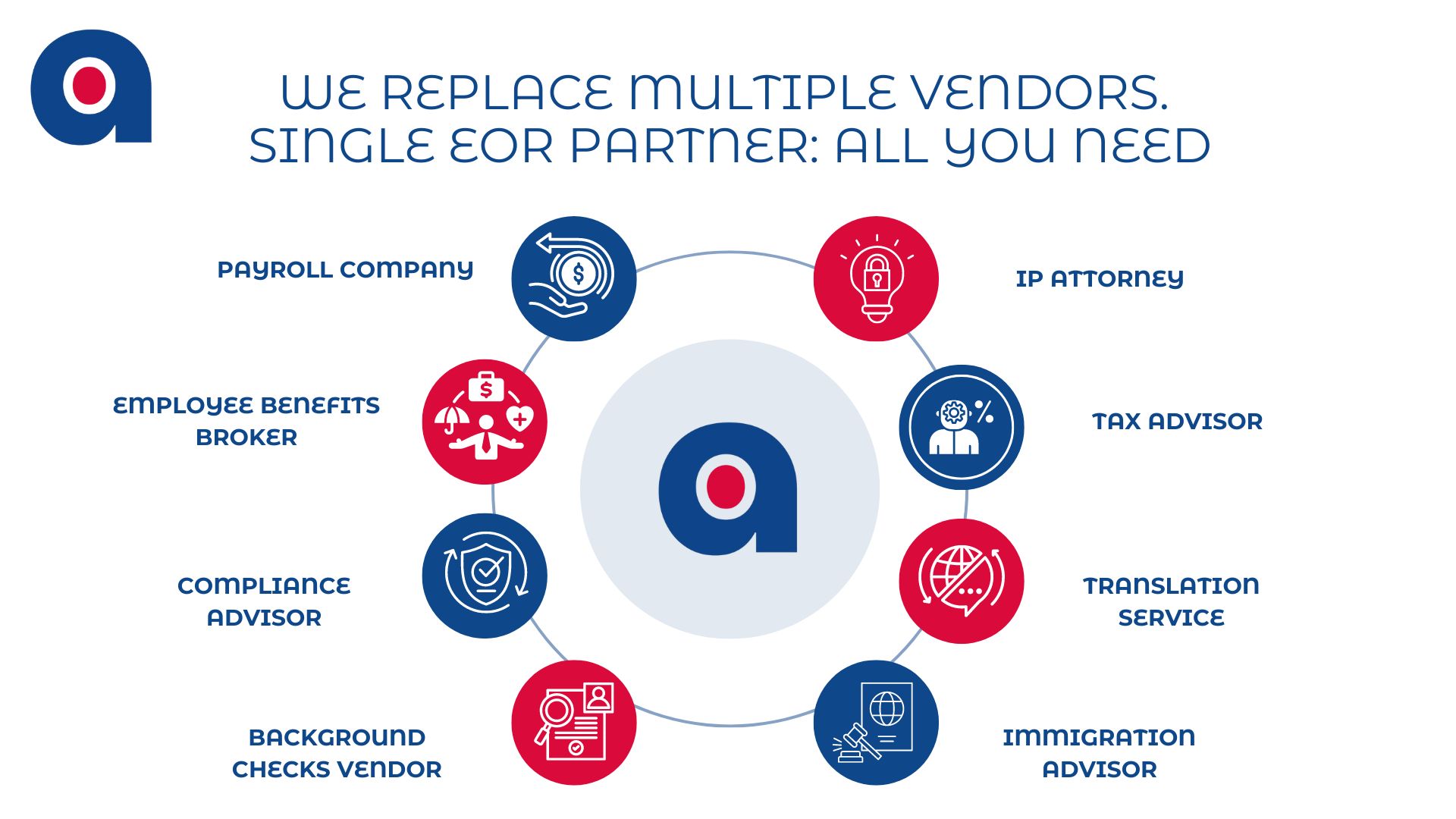
    Can platforms handle the complex, multifaceted nature of global employment? As illustrated by the roles a human-led Global Employer of Record like Acumen International can fulfil, the reality is much more complicated.

    A Global EOR replaces multiple vendors: payroll companies to manage complex tax laws, compliance advisors for ever-changing regulations, immigration specialists for visa renewals, and more. While automation can execute basic tasks, it falls short in anticipating legal changes or delivering tailored solutions to evolving needs.

    Each of these roles addresses a unique aspect of international workforce management, and it’s impossible for a single automated platform to deliver the kind of nuanced expertise that human specialists offer.

    • Payroll Company: Managing payroll across multiple countries isn’t just sending payments across borders. It involves staying on top of local tax laws, statutory benefits requirements, and currency fluctuations—all of which demand continuous human oversight and adaptability.
    • Compliance Advisor: Laws are constantly evolving, especially labour regulations. Automated platforms may alert you to changes, but interpreting and applying those changes correctly requires local knowledge and human judgment.
    • Employee Benefits Broker: Employee expectations for benefits differ significantly across countries. Automation can’t offer the tailored benefits packages critical for retaining talent in diverse locations.

    The sheer number of specialists Global EOR solution can replace is a testament to the complexity of global workforce management — something no algorithm can truly automate. The deeper a company’s international footprint, the more it needs human expertise to navigate these multifaceted challenges.

    Automation Only Goes So Far: Why Employers Need More Than Software

    The employment journey doesn’t end with an offer letter or first paycheck. It’s an ongoing reality—finding a home, understanding local taxation beyond what’s in the contract, and making sure health insurance works in real-life situations.

    Automated platforms might ensure compliance on paper, but they fall short when real-world challenges arise, such as assisting employees with relocation and integration.

    For employees relocated abroad, especially those with families, the post-onboarding phase is where the stress builds. They need ongoing, human-driven assistance in understanding local regulations, cultural norms, and practical issues. Automated platforms leave this vital support out of the equation.

    Global Employment Is Human, Unpredictable, and Beyond Automation

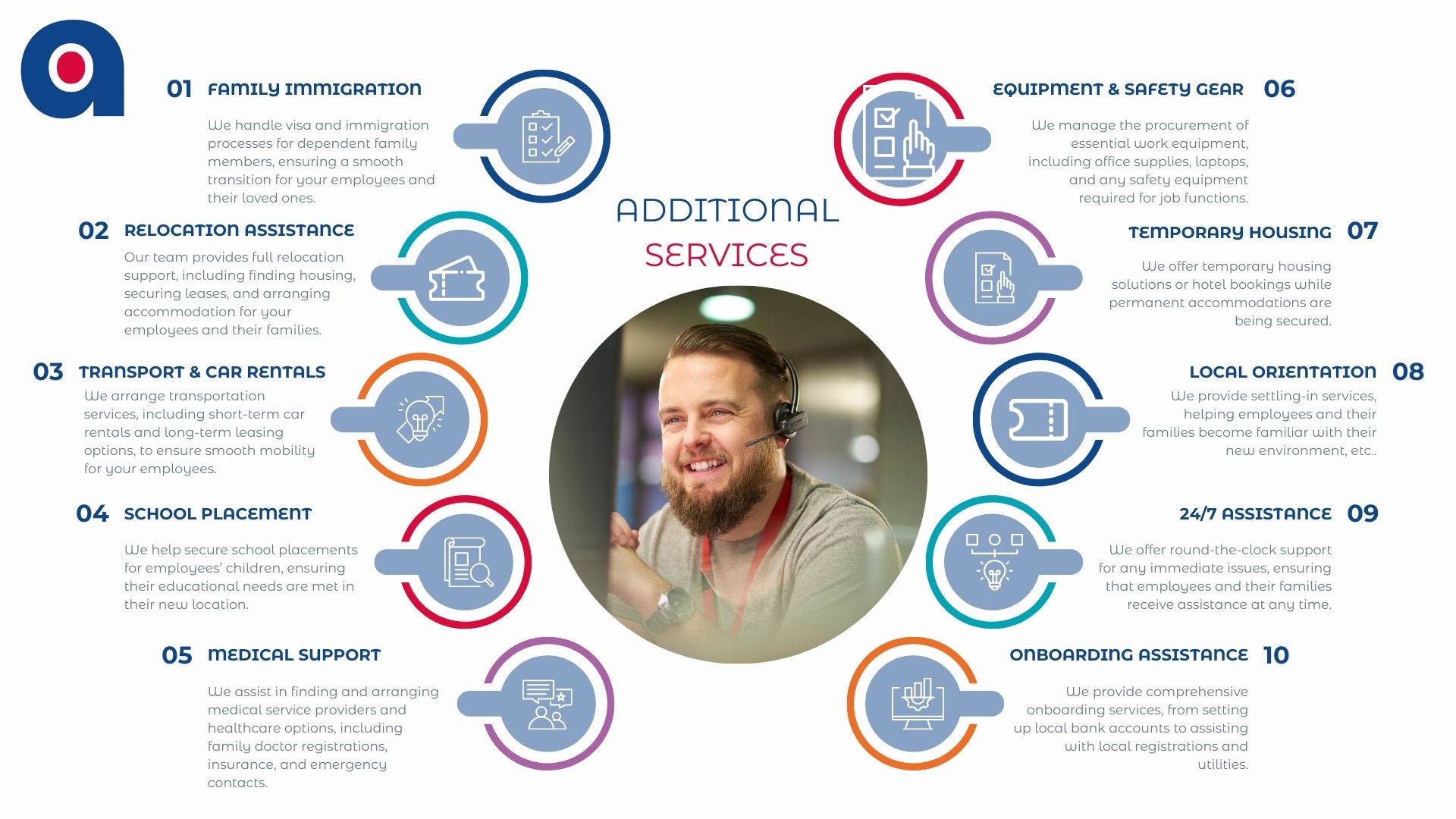
    This slide highlights Acumen International’s additional global employment services beyond payroll: family immigration, school placements, temporary housing, and 24/7 assistance.

    These are real and often unpredictable needs, unique to each employee and their family. Global employment goes beyond signing contracts—supporting employees through critical life transitions in real time.

    Automation thrives in predictable environments, but global employment is full of unforeseen challenges. For instance:

    • A senior executive is relocated to a new country, and their family requires immediate access to medical care. An automated platform can’t respond to this situation in real-time, nor can it offer personalised support for finding local healthcare providers, understanding insurance coverage, and navigating the local medical system.
    • Employees need help enrolling their children in schools that meet local and international standards. School placements are deeply personal and vary by country, city, and even neighbourhood. A human-led EOR, like Acumen International, offers tailored solutions to ensure employees and their families feel secure and supported in a foreign country.

    In short, automation may simplify routine tasks, but it can’t adapt to the complexities of real life. When employees need flexible, responsive support, only a human-centric Global Employer of Record can offer the empathy and agility necessary to meet those needs across locations.

    Is your current platform offering real support to your global employees or just handling paperwork?

    Real Expertise: The Key to Navigating Cross-Border Employment Laws

    Automation works best when it follows a set of predefined rules. But here’s the problem: labour laws are rarely static. Countries adjust tax rates, benefits, and employment protections on short notice. Automated systems can identify changes in the law, but they can’t interpret how those shifts affect your business strategy or workforce.

    A minor misinterpretation of tax law could cost your company thousands or risk employee dissatisfaction. Relying on local expertise to navigate these legalities mitigates risk while ensuring compliance.

    For example, the notoriously complex French labour code frequently undergoes revisions to protect worker rights. A software solution might alert a business to a law change, but it takes a human expert with local knowledge to understand and adapt employment contracts or company practices accordingly. Automation provides data; experts offer context and insight.

    Strategic Compliance: The Role of Human Insight

    Compliance plays a crucial role in global employment platforms. It involves analysing how local laws shape business strategies. For instance, shifts in local tax regulations can impact employee compensation and influence workforce structuring.

    Automated platforms can flag changes, but they lack the strategic insight needed to interpret those changes in the context of a company’s goals. Human experts can advise on adapting business strategy, ensuring companies remain compliant while maximising opportunities in each local market.

    Complexities of Global Mobility: Personalised Support That Automation Misses

    The human complexity of relocating high-value talent goes beyond paperwork. International employees require far more than a timely visa application; they need comprehensive, real-time support in navigating the legal complexities of work permit renewals, understanding local residency regulations, and ensuring their families are adequately supported in a foreign legal system —areas where automation fails to meet expectations.

    From healthcare access to education, these challenges extend far beyond the workplace, and no automated system can provide the personalised, real-time guidance that employees need to feel secure in a new country.

    Automation may handle routine immigration tasks, but managing the unique complexities of high-value talent is a different story. A highly skilled professional — someone your business has worked hard to find and convince to relocate from South Africa to Germany — doesn’t just need legal documents filed on time.

    This employee, whose rare expertise your company’s success depends on, requires personalised support: reassurance that their family’s needs are met, real-time solutions to any issues, and ongoing help as they adapt to life in a new environment.

    Are you willing to gamble on this crucial hire at the lower cost of an automated platform? Saving a few pounds might seem appealing, but investing in human-led expertise can make all the difference in retention and your company’s long-term future. Do you want to play the low-cost game or secure the talent your company needs to thrive?

    When Automation Hits a Wall: Handling Crises and the Unpredictable

    Automation is fantastic—until it isn’t. Systems thrive in controlled environments, managing predictable tasks, but when unforeseen crises hit, they fall short. Crises require adaptability, rapid responses, and real-time decision-making, all of which automation struggles to provide. Automated platforms are limited by their predefined processes, making them ill-suited for situations where quick and strategic interventions are essential.

    Automation revolutionised global employment, especially in response to the COVID-19 pandemic, when companies urgently needed ways to onboard and manage remote workers across borders. Indeed, many of the platformed solutions available today emerged during this period, addressing the demand for faster onboarding, remote work compliance, and payroll solutions in a rapidly changing landscape.

    However, even as these platforms helped manage the basics—like hiring remotely, processing payroll, and ensuring tax compliance—they weren’t designed to handle the full complexity of crises.

    Geopolitical events and economic disruptions revealed the limits of automation. When sudden changes occur—a new labour law is enacted, or borders are closed—relying solely on predefined automated processes can leave businesses vulnerable.

    Another example is the war in Ukraine, where geopolitical disruptions displaced millions of people, including key talent crucial to businesses. Automated systems couldn’t handle the nuanced challenges of relocating employees to new countries, securing temporary work permits, or ensuring continuity in business operations.

    Acumen International stepped in, rapidly re-employing displaced talent across Europe and crafting bespoke solutions in countries like Spain, Portugal, and Poland. Our team’s deep local expertise allowed for swift contract adjustments and compliance with new legal environments. Machines can’t anticipate these human-centric challenges, but experienced, human-led teams can—because crises, by nature, demand flexibility, ingenuity, and empathy.

    Only a team with deep local expertise could provide real-time guidance, adjust contracts, advise on temporary remote work solutions, and ensure compliance in a chaotic environment. Machines can’t improvise.

    A Personal Touch: Building Employee Loyalty Through Human Interaction

    You mentioned employee retention in your last article, and here’s an important continuation: loyalty isn’t built through automated processes. Employees want to feel understood, supported, and valued as individuals, not as payroll entries. Global employees, in particular, face unique stresses—from navigating new cultures to dealing with homesickness or visa uncertainties.

    A hiring platform cannot listen, empathise, or provide the emotional intelligence that human experts bring to the table. It cannot build trust.

    Employees stay loyal when they feel understood and valued as individuals, not just entries on a payroll.

    Conclusion: Automation Isn’t the Silver Bullet. People Still Matter

    While automation brings efficiency and scalability to global employment operations, it cannot replace the adaptive, personalised approach required to manage an international workforce effectively. From helping employees navigate life in a new country to providing strategic compliance advice, human expertise fills the gaps that automated global employment platforms leave behind.

    The future of global employment isn’t about choosing between automation and human insight; it’s about blending both to create adaptive, sustainable solutions for employers and employees alike.

    But in the face of complex and unpredictable challenges, the human element makes all the difference.

    Choosing short-term savings over lasting success is a risky move. Your people—and your company’s future—deserve better.

    Blog

    Why and How to Expand into Azerbaijan

    Practical Guide for Strategic Business Growth Azerbaijan, strategically located at the crossroads of Europe and Asia, offers a unique combination of economic opportunity and government support for foreign businesses. While often overshadowed by its larger neighbours, the country presents real advantages for companies seeking growth beyond familiar markets. From a robust oil sector to a… Read more Why and How to Expand into Azerbaijan

    Practical Guide for Strategic Business Growth

    Azerbaijan, strategically located at the crossroads of Europe and Asia, offers a unique combination of economic opportunity and government support for foreign businesses. While often overshadowed by its larger neighbours, the country presents real advantages for companies seeking growth beyond familiar markets. From a robust oil sector to a rapidly growing technology scene, Azerbaijan’s diverse economy invites attention for companies with well-planned expansion strategies.

    This article will explore why Azerbaijan is an ideal market for expansion, particularly for energy, technology, agriculture, and logistics industries.

    It will also provide a step-by-step guide on how to enter the market effectively, ensuring regulatory compliance and long-term sustainable growth.

    1. Strategic Geopolitical Position

    Azerbaijan sits at a critical juncture between Europe, Asia, and the Middle East, making it a natural hub for trade. Its infrastructure, including the Baku-Tbilisi-Kars railway, is designed to facilitate the seamless movement of goods, which is ideal for businesses in logistics, manufacturing, and supply chains.

    The Caspian Sea Advantage: Connecting Continents

    Azerbaijan’s Caspian Sea coastline positions it as a key transit country in the Trans-Caspian International Transport Route, also known as the Middle Corridor. This initiative connects China to Europe via Central Asia, Azerbaijan, and Turkey. The Alat Free Economic Zone near Baku is being developed to boost trade and logistics further, providing incentives for companies to operate in this strategic hub.

    This creates strategic advantages for logistics and trade, connecting Azerbaijan to neighbouring regions and allowing access to Europe through partnerships and shipping lanes.

    2. Growth Opportunities in Diversified Sectors

    While the energy sector remains prominent, Azerbaijan has diversified significantly, opening up new avenues in:

    • Agriculture: Strong government initiatives are in place to boost production in areas like cotton, fruit, and wine. This presents a growing market with governmental backing for agribusiness or food processing businesses.
    • Technology and Innovation: Azerbaijan’s tech sector is seeing increasing investment, particularly in fintech and telecommunications. Supported by initiatives like Startup Azerbaijan, the local tech talent is ready to collaborate on innovative projects.

    Streamlined Visas for Tech and Innovation Talent

    The Azerbaijani government launched a Simplified Visa Program in 2017 to encourage IT specialists and startups to set up operations there. This program is designed to streamline visa applications for skilled workers, including IT professionals and engineers, to support the development of the tech sector. The Innovation Agency, established in 2018 to promote entrepreneurship and R&D, further supports the startup ecosystem. This is part of the government’s initiative to develop a knowledge-based economy and reduce reliance on oil. Foreign tech professionals are eligible for simplified visa procedures.

    Government Support and Business-Friendly Environment

    Azerbaijan offers a range of government incentives designed to facilitate foreign businesses’ entry. Special Economic Zones (SEZs) provide tax incentives and simplified administrative procedures, making it easier to establish operations. The government’s clear focus on diversifying the economy means non-oil sectors can benefit from grants and tax relief.

    Azerbaijan has worked to streamline regulatory processes, making it easier for foreign companies to navigate the legal landscape. Setting up a business is straightforward, with digital platforms in place to handle much of the bureaucracy efficiently.

    Alat Free Economic Zone (AFEZ): A Hub for Investment and Growth

    AFEZ, strategically situated adjacent to the Baku International Sea Trade Port and key global transport corridors, aims to become a prominent regional investment hub. It offers a compelling business environment with various fiscal and non-fiscal incentives, coupled with robust infrastructure and an independent legal framework.

    Legal Framework

    • The legal foundation of AFEZ is the Law of the Republic of Azerbaijan, “On the Alat Free Economic Zone.” This law and internal regulations issued by the AFEZ Authority take precedence over the base economy legislation, creating a distinct and business-friendly regulatory environment within the zone.

    Incentives for Investors

    • Tax Benefits
      • Exemption from value-added tax (VAT), withholding tax, and corporate taxes.
      • Exemption from customs duties and taxes on imports and exports.
      • Products manufactured in AFEZ enjoy duty-free access to 10 neighbouring countries due to Free Trade Agreements.
    • Labour and Ownership
      • No personal income tax for employees earning up to 8,000 manat (approximately $4,700) monthly.
      • Optional social security payments for foreign skilled personnel.
      • No restrictions on foreign ownership or the need for a local partner.
    • Business Facilitation
      • No restrictions on foreign currency transactions or profit repatriation.
      • Trade facilitation-based customs regime.
      • Protection against nationalization or expropriation.
      • Full protection of intellectual property rights.
      • On-site one-stop shop for business services (appraisal, licensing, permitting).
      • Access to visas for foreign nationals.
      • Independent dispute resolution mechanisms.
      • Independent regulatory body.

    Target Sectors. Infrastructure and Support

    • AFEZ welcomes investors in high-value-added, export-oriented manufacturing and internationally traded services, focusing on innovative technologies and best practices.
    • In addition to the attractive legal and fiscal framework, AFEZ offers industrial land plots equipped with ready-to-use infrastructure and utilities, simplifying the business setup process.
    • The zone actively assists in finding local skilled personnel.

    A Global Leader in Business Reforms

    Azerbaijan has made notable progress in improving its business environment, outpacing many regional neighbours. According to the World Bank, the country has implemented nearly 40 reforms over the past decade to enhance regulatory efficiency and overall business quality.

    Ranked 34th out of 190 countries in the World Bank’s Doing Business report, Azerbaijan stands out for simplifying business registration, streamlining property registration, and improving tax systems, further establishing itself as a business-friendly destination.

    How to Expand into Azerbaijan: A Step-by-Step Process

    1. Pre-Entry Planning and Market Research

    Before entering any market, it’s crucial to assess the total employment costs, legal requirements, and opportunities in key sectors. This is where the Global Payroll Calculator becomes invaluable. The tool helps companies calculate the total cost of employment across 190 countries, including Azerbaijan. By using this tool, businesses can gain a clear understanding of their potential payroll burden, which includes base salaries, benefits, taxes, and compliance-related expenses.

    This data allows companies to make informed decisions about where to allocate their resources and how to structure their workforce most efficiently.

    Tax Relief for Government-Prioritized Sectors

    Azerbaijan’s income tax rates for employees are progressive, with a 14% tax rate for incomes under AZN 2,500 (about USD 1,470) and a 25% tax rate for incomes exceeding that amount. However, employees working in Special Economic Zones (SEZs) or on government-backed projects may qualify for tax reductions or exemptions, offering a considerable financial advantage for businesses operating in those areas.

    2. Choosing the Right Market within Azerbaijan

    Not all regions within Azerbaijan offer the same opportunities. Baku, for example, is a clear choice for tech and financial services, while the country’s rural regions are better suited for agriculture and manufacturing investments.

    Baku: A Hub for Finance and Technology

    As the capital and largest city, Baku is the epicentre of Azerbaijan’s financial services and technology innovation. Rural areas, by contrast, offer fertile ground for agribusiness and manufacturing ventures.

    3. Selecting the Mode of Entry: Employer of Record for Flexible, Cost-Effective Market Entry

    Your choice of entry mode depends on your company’s long-term goals and resources. Standard options include establishing a representative office for market visibility, forming a subsidiary for complete operational control, or leveraging a Global Employer of Record (EOR) for faster market entry without the need to establish a legal entity or build costly employment infrastructure.

    While setting up a legal entity may seem like a conventional route, it comes with substantial administrative and financial burdens, especially in countries like Azerbaijan, where incorporation can take weeks and involve significant ongoing costs. Moreover, managing a foreign entity requires long-term investment in compliance, payroll, tax filings, and navigating changing local regulations.

    In contrast, the Global EOR model provides an efficient, flexible solution for companies seeking to expand quickly into Azerbaijan or multiple jurisdictions simultaneously. The Global Employer of Record assumes 100% responsibility and liability for hiring employees on your behalf, managing compliance with local labour laws, and overseeing payroll and benefits administration.

    This allows businesses to test the market with minimal upfront investment and avoid the complexities of setting up and managing a legal entity.

    The Long-Term Financial and Administrative Burden of Entity Setup

    Setting up a legal entity in Azerbaijan requires significant upfront and ongoing costs, including incorporation fees, legal advisors, and in-house HR staff to manage payroll, taxes, and employee benefits. Beyond these costs, exiting the market can be difficult and costly, involving liquidation processes, legal disputes, and potential litigation.

    A Flexible and Risk-Reducing Approach

    With a Global Employer of Record, companies have easy entry and easy exit options. This is especially beneficial if the market needs to pivot or if performance doesn’t meet expectations. By using a Global EOR, businesses can scale operations up or down without the risks and complications of entity liquidation or employee termination, which often involve complex legal processes.

    Administrative Efficiency Across Multiple Jurisdictions

    For companies expanding not only into Azerbaijan but also into multiple countries, the EOR model allows them to centralize their employment and compliance processes. This reduces the need to deal with jurisdiction-specific regulations individually and avoids the long-term management commitments associated with setting up multiple legal entities across various regions.

    Administrative and Financial Flexibility with Global EOR

    Companies can begin operations in Azerbaijan using an Employer of Record with minimal costs and commitments compared to establishing a legal entity. The EOR model simplifies compliance management, payroll administration, and workforce scaling, offering a seamless entry into the market that can be adjusted as needed. Unlike a traditional entity setup, where exit can be costly and complicated, the EOR ensures a smooth transition if the company needs to scale down or withdraw from the market.

    4. Determining the Talent Hiring Model in Azerbaijan

    When expanding into Azerbaijan, it’s important to understand the distinctions between full-time employees and independent contractors to avoid misclassification risks. Like many countries, Azerbaijan has clear employment laws that dictate what constitutes an employee versus a contractor. Misclassifying a worker can lead to legal penalties, tax complications, and reputational damage.

    A Global Employer of Record (EOR) can be critical. By working with a Global EOR, businesses can assess the correct classification for each role, ensuring they meet the country’s legal standards for employment. An EOR manages employment’s payroll, benefits, and compliance aspects, which is especially valuable for companies navigating the complexities of hiring in Azerbaijan.

    Avoiding Employee Misclassification Risk

    Employee misclassification often arises due to financial motivations or a lack of understanding of local regulations. Like many others, the Azerbaijani government has increased scrutiny on businesses that incorrectly classify employees as independent contractors to avoid taxes and benefits. An EOR ensures that all employees are correctly classified and compliant with local labour laws, reducing the risk of audits and penalties.

    The Global Payroll Calculator by Acumen International helps businesses in balancing global talent acquisition budgets by accounting for diverse benefits, 13/14 salary accruals, and varying in-country taxes. This tool aids in identifying the actual cost of employment, factoring in all necessary local obligations.

    Global Payroll Calculator

    Transparent, Progressive Tax System

    Azerbaijan operates a progressive income tax system, applying different rates based on an employee’s income level. The tax structure is designed to ensure fairness for full-time employees while incentivising growth in government-primary sectors, such as agriculture and innovation.

    Using Global Employer of Record solutions helps businesses comply with Azerbaijan’s tax regulations. The EOR calculates and deducts the appropriate income taxes, social security contributions, and other statutory benefits. This ensures businesses avoid potential tax penalties or legal complications arising from incorrect filings.

    Navigating Global Regulations and Tax Laws

    Expanding businesses need to consider the broader global tax and labour landscape in addition to local tax compliance. An EOR ensures compliance with ever-changing regulations across multiple jurisdictions, preventing legal consequences and operational disruptions.

    The Global Payroll Calculator helps businesses identify cost-effective, tax-friendly locations for hiring, avoid costly oversights, and ensure adherence to local laws.

    10 Reasons to Use Global EOR to Expand into Azerbaijan

    1. Accelerated Market Entry with Full Compliance

    With Global EOR, businesses can bypass the lengthy process of establishing a local entity and launch operations in 1 to 2 weeks. This approach ensures full compliance with Azerbaijan’s labour laws, minimizing risks and legal complexities.

    2. Flexibility Without Long-Term Legal Obligations

    Global EOR allows companies to enter the Azerbaijani market without committing to a legal entity, offering the flexibility to pivot or exit quickly if needed. This is ideal for businesses testing the market before making a permanent investment.

    3. Access to Local Talent Without Administrative Hassles

    Hiring through Global EOR allows access to local talent, particularly in high-demand fields like tech and engineering, without the burden of managing employment contracts, payroll, and tax filings. The EOR handles these processes, freeing up your resources.

    4. Compliance with Evolving Labour Regulations

    Labour and tax laws in Azerbaijan can change frequently, especially in dynamic industries. Global EOR ensures your business remains compliant with real-time regulatory updates, avoiding costly legal missteps.

    5. Mitigation of Currency and Tax Risks

    Dealing with Azerbaijan’s distinct currency (Azerbaijani Manat) and progressive tax system can be complex. Global EOR manages payroll, taxes, and social contributions, minimising risks related to currency fluctuations and local tax obligations.

    6. Culturally Informed HR and Employment Practices

    Global EOR solutions align HR and employment processes with local customs and business etiquette, ensuring compliance and improving employee satisfaction from the start. This culturally informed approach helps businesses retain local talent.

    7. Focus on Core Operations, Not Administrative Burden

    Global EOR allows companies to concentrate on their core operations rather than getting bogged down by the intricacies of labour laws and administrative tasks. With the administrative side handled by the EOR, businesses can focus on their growth strategy.

    8. Seamless Integration of Remote and Distributed Teams

    For companies building remote or distributed teams, Global EOR simplifies cross-border operations by ensuring consistent payroll and contract terms, making it easier to integrate Azerbaijani employees into global teams.

    9. Cost-Effective Expansion with Predictable Costs

    Setting up a legal entity can lead to hidden costs such as office space, local staff, and legal fees. Global EOR eliminates these expenses by providing transparent pricing based on employee costs, allowing businesses to scale up or down efficiently based on market performance.

    10. Protection from Compliance Risks and Audits

    Non-compliance with Azerbaijani labour and tax laws can result in fines, audits, or operational disruptions. Global EOR ensures that employment practices remain fully compliant, protecting businesses from financial and legal risks.

    Strategic Advantage of Expanding into Azerbaijan with Acumen International

    Expanding into Azerbaijan offers immense potential, but it requires a clear strategy, local expertise, and a focus on compliance. Acumen International’s Global EOR solution simplifies every step of this process, allowing businesses to expand rapidly without the overhead of establishing local entities.

    One of the most complex challenges for businesses expanding into new markets is navigating the immigration and work permit sponsorship processes, especially when relocating international talent. With Acumen’s Global EOR, your company can secure work permits and sponsor visas for employees in Azerbaijan without navigating the intricate local bureaucracy. Acumen’s expertise ensures that all necessary documentation and processes are handled efficiently and in full compliance with local regulations.

    With over two decades of experience and a network of in-country professionals, Acumen International combines the best of human-centric service with technology-enhanced solutions to provide businesses with tailored, scalable global employment solutions.

    By partnering with Acumen, you gain access to a trusted advisor capable of navigating complex regulatory environments, including immigration laws, ensuring your operations remain compliant, no matter how challenging the jurisdiction. With a focus on flexibility, cost-efficiency, and seamless integration, Acumen’s Global EOR enables businesses to expand into Azerbaijan and beyond with confidence, speed, and minimal risk.

    Unlock the potential of global growth with Acumen International and transform your approach to international expansion, including the complexities of immigration and work permits.

    Blog

    Global Employment Tax and Compliance Newsletter. August 2024

    Welcome to the August 2024 edition of our Global Employment Tax and Compliance Newsletter. Each month, we bring you the latest updates on employment and immigration laws that impact your business. This month, we’ve gathered the most critical updates in employment and immigration law worldwide. As you navigate these changes, you can also explore our… Read more Global Employment Tax and Compliance Newsletter. August 2024

    Welcome to the August 2024 edition of our Global Employment Tax and Compliance Newsletter. Each month, we bring you the latest updates on employment and immigration laws that impact your business.

    This month, we’ve gathered the most critical updates in employment and immigration law worldwide.

    As you navigate these changes, you can also explore our latest guides and articles—designed to help you stay compliant and informed. Let’s dive in.

    Netherlands🇳🇱: New Legislation Aiming to Strengthen Job Security for Flexible Workers

    The Dutch government is moving forward with a proposal known as the “More Security for Flexible Employees Act,” which has been in public consultation since July 2023. This proposed law would overhaul the current system of on-call contracts, replacing them with a new type of employment arrangement called “basic contracts.”

    These contracts will establish a minimum number of guaranteed working hours that employees are scheduled and paid for, providing greater stability and predictability.

    The flexibility currently afforded to employers under on-call contracts will be significantly reduced, with only students and new temporary agency workers (within their first 52 weeks) continuing under these arrangements.

    Changes to Anticipate

    • Introduction of Basic Contracts: Under this new framework, employees will be assured a set number of paid hours, minimizing the uncertainty inherent in on-call contracts. This change is expected to shift the balance more in favour of workers, ensuring they have more predictable work schedules and incomes.
    • Extended Gap Between Contracts: The legislation also aims to prevent the easy renewal of fixed-term contracts by extending the mandatory break between them from 6 months to 5 years. If an employee has been under contract for over three years, and the gap between contracts is less than five years, the most recent contract will automatically convert into a permanent one.

    When Will This Take Effect?

    The law is expected to be enforced between January 2025 and January 2026. Once the law is enacted, employers will have approximately six months to adjust their practices to comply with the new requirements.

    What Employers Need to Do and Why

    To prepare for these changes, employers should start phasing out on-call contracts in favour of basic agreements, except in cases involving students and recent temporary hires. It’s also crucial to carefully track the duration and breaks between contracts to ensure compliance with the new rules, especially since mismanagement could lead to unintended permanent employment commitments.

    Employers who fail to adapt to these new requirements may face significant legal and financial risks. For example, incorrectly managing contract breaks could lead to employees automatically receiving permanent contracts, which could carry unintended long-term obligations.

    Finland 🇫🇮: Unemployment Benefits Changes

    The Finnish Parliament has enacted several significant changes to unemployment benefits, including reductions in labour market subsidies and unemployment allowances. These changes were implemented on three key dates in 2024: January 1, April 1, and September 2.

    Key Changes

    1. Extended Waiting Period
      As of January 1, 2024, the waiting period for a newly unemployed person to start receiving unemployment benefits was extended from 5 days to 7 days. Additionally, if a freshly unemployed person has remaining holiday days from their previous employment, the compensation for those days will delay the start of their unemployment benefits.
    2. Abolishment of Child Increments
      Additional cuts to unemployment benefits came into effect on April 1, 2024. Mainly, child increments previously paid to supplement unemployment benefits have been abolished. Furthermore, the amount of income a person receiving unemployment benefits can earn without affecting their benefits has been decreased.
    3. Prior Work Requirement Adjustments
      As of today, September 2, 2024, the prior work requirement for determining a person’s eligibility for earnings-related unemployment allowance has been extended to 12 months, up from approximately six months. Earnings of at least €930 in a calendar month now count as one month towards meeting this requirement.

    Transition Contractors onto Full-time Employees

    Transition Contractors onto Full-time Employees

    Navigating the Shift: From Independent Contractors to Full-Time Employees

    Today, the line between independent contractors and full-time employees often blurs, leading to significant business risks. Misclassification is not just a legal grey area—it’s a real threat that can result in fines, back taxes, and costly lawsuits. As companies expand their global operations, managing contractors across multiple jurisdictions becomes increasingly complex.

    Many forward-thinking organisations are strategically transitioning their contractors into full-time employees to tackle this head-on. This shift is an investment in building a committed and stable workforce. But how can your company navigate this transition smoothly?

    Why Make the Transition?

    • Risk Mitigation: By converting contractors to full-time employees, businesses can significantly reduce the risk of legal repercussions associated with misclassification.
    • Increased Stability: Full-time employees are more likely to stay with your company, leading to higher retention rates and a stronger, more cohesive team.
    • Enhanced Productivity: Employees who feel secure and valued are more engaged and productive, driving innovation and performance across the board.

    Key Trends Shaping the Transition

    Several global trends drive the transition from contractors to employees:

    • Complex Regulatory Landscapes: Compliance requirements are becoming more intricate, necessitating robust governance frameworks to avoid pitfalls.
    • Increased Scrutiny: Governments worldwide are intensifying audits and regulatory scrutiny, especially concerning employee classification.
    • Evolving Compensation Structures: As companies rethink their compensation models, aligning them with business goals and regulatory requirements is essential.

    Your Roadmap to a Smooth Transition with Acumen International

    Successfully transitioning contractors to full-time employees requires a strategic approach:

    1. Audit Your Workforce: Evaluate your current contractor engagements for compliance risks.
    2. Estimate Costs: Use comprehensive cost models to understand the financial impact of the transition.
    3. Legal Compliance Check: Ensure your transition plan adheres to local employment laws in each country where you operate.
    4. Implement the Transition: Prepare and communicate your transition plan clearly to all stakeholders, ensuring a seamless shift.

    Resources for Further Reading

    For more in-depth guidance on this topic, we invite you to explore our LinkedIn guide and the full article on our website, How to Convert Independent Contractors into Employees.

    Employ to Expand into Cyprus qith A global EMployer of Recorm

    Cyprus: Your Next Strategic Move in Global Expansion

    As global businesses eye new frontiers, Cyprus often remains a hidden treasure in the strategic landscape of international expansion. Cyprus is an unpolished gem for forward-thinking enterprises looking to establish a foothold in pivotal markets at the nexus of Europe, the Middle East, and Africa.

    In our latest exploration, “Cyprus: A Strategic Hub for Global Expansion,” we explore why Cyprus rapidly emerged as a go-to destination for companies seeking a blend of strategic location, tax efficiency, and regulatory stability. This isn’t just another destination—it’s your gateway to robust growth and sustainable success.

    Why Cyprus? Key Highlights

    • Geostrategic Powerhouse: Cyprus serves as a gateway to some of the world’s most dynamic markets, providing businesses with unparalleled access to Europe, the Middle East, and Africa.
    • Tax Efficiency: With a corporate tax rate among the lowest in Europe and an extensive network of double taxation treaties, Cyprus is engineered for financial efficiency. This tax environment is favourable and transformative, allowing businesses to reinvest in growth while maintaining a competitive edge.
    • EU Member Benefits: As part of the European Union, Cyprus provides seamless access to the EU’s single market, facilitating the free movement of goods, services, and capital.
    • Talent Magnet: Cyprus boasts a highly educated multilingual workforce ready to drive innovation in finance, technology, and beyond.
    • Emerging Innovation Ecosystem: Supported by government initiatives like the Cyprus Startup Visa, the startup ecosystem in Cyprus is on the rise, offering exciting opportunities for entrepreneurs and investors.

    If you’re looking to gain a strategic advantage and integrate Cyprus into your global expansion plans, we invite you to delve into our detailed guide on LinkedIn or read the full article on our website here.

    Acumen International: Your Global Employment Partner in Cyprus and Beyond

    The complexity of global expansion demands a partner with both deep local knowledge and global reach. At Acumen International, we don’t just help you expand—we help you thrive. With expertise across 190 countries and a human-centric approach to global employment solutions, we are uniquely positioned to guide your business through the complexities of expanding in Cyprus.

    • Precision and Compliance: We navigate the complexities of local laws, taxes, and employment regulations, ensuring that your operations are compliant and optimised for success.
    • Tailored Solutions: Our boutique approach means you get tailored support, with a dedicated advisor to guide you every step and ensure that your transition into Cyprus is seamless.
    • Strategic Support: Whether it’s through our Global Employer of Record solutions, global payroll services, or immigration expertise, we provide the tools and insights you need to make informed, strategic decisions about your global workforce.

    Czech Republic 🇨🇿 Introduces Labour Code Amendments and Minimum Wage Changes

    The Czech Republic is set to implement significant changes to its Labour Code and minimum wage regulations, which are expected to take effect on 1 January 2025.

    From 1 January 2024, the minimum wage in the Czech Republic has already increased to CZK 18,900 per month (up from CZK 17,300). The minimum hourly wage has risen to CZK 112.50.

    New Minimum Wage Calculation Method

    A new mechanism for calculating the minimum wage is proposed. The monthly minimum wage would be set based on the national economy’s average gross monthly nominal wage for the following calendar year and a coefficient. The goal is to achieve a coefficient of 47% by 2029 (currently at 42.2%).

    Guaranteed Wage Changes

    The proposal suggests cancelling the levels of guaranteed wages for the private sector. The public sector will be graded according to four groups of work instead of the current eight.

    Labour Code Amendments

    The draft amendment includes several changes:

    • Extended probationary periods (up to 4 months for non-managerial employees and 8 months for managerial employees)
    • Shortened notice periods for dismissals due to employee fault
    • Guaranteed role reinstatement for employees returning from parental leave
    • More flexible working hour arrangements

    Implications for Employers and Employees

    These changes aim to provide more flexibility in employment relationships and ensure fair wage practices. Employers should prepare to:

    • Adjust wages to meet new minimum wage levels.
    • Familiarize themselves with the new Labour Code provisions.
    • Review and potentially update employment contracts and policies.

    The draft is still in the early stages of the legislative process and may be subject to further changes.

    Czech Republic 🇨🇿: Further Changes to the Labour Code

    The Government has proposed an amendment to the Labour Code, introducing several significant changes. It is expected to come into force on 1 January 2025.

    These include:

    • Probation Periods: The amendment allows for a 4-month probation period for managing employees, which can be extended to 8 months.
    • Notice Period Commencement: Changes to when the notice period begins, with a reduction in its duration from 2 months to 1 month in some instances.
    • Employee Scheduling: The introduction of the option for employees to schedule their own working time.
    • Payment in Foreign Currency: Employers can pay certain types of employees in a currency other than CZK.

    France 🇫🇷: Upcoming Measure on Birth Leave

    The French Government has introduced a new birth leave policy to replace the current parental leave system. Entry into force is expected in August 2025. Although the details are yet to be fully finalized, the expected changes include:

    • Replacement of Parental Leave: A 6-month birth leave for both parents, replacing the existing parental leave system.
    • Flexibility in Usage: Leave can be taken by one or both parents, simultaneously or successively, and can be utilised full-time or part-time.
    • Compensation: Social security will compensate the leave at 50% of the last salary, with a maximum limit of €1,800. The employer may supplement this compensation.

    France 🇫🇷: Immigration Law Updates

    The French Government has empowered préfets with the authority to regularize undocumented workers employed in sectors facing significant labour shortages. This initiative, valid until December 31, 2026, aims to address these shortages by granting one-year residence permits to eligible individuals.

    Eligibility Criteria

    To qualify for regularization, workers must meet the following conditions:

    • Relevant Employment: The individual must have been employed in a role listed as experiencing recruitment challenges for at least 12 months within the last two years. This period can be non-consecutive.
    • Consistent Job Holding: The worker should have maintained employment in these specified roles or regions.
    • Stable Residency: The individual must have lived in France continuously for at least three years.
    • Clean Legal Record: A clean criminal record (bulletin n°2) with no significant legal issues or disqualifications is required.

    Discretionary Power of Prefects

    Even if all criteria are met, préfets retain the discretion to deny regularisation. Decisions will consider the individual’s social and family integration, compliance with public order, and alignment with French societal values.

    Strict Penalties for Non-Compliance

    The law also imposes significant penalties on employers who fail to comply with these regulations:

    • Fines Up to €30,000: For employing a foreign worker without proper authorisation to work in France.
    • Increased Fines: Up to €200,000 if an organised group commits the violation.
    • Additional Penalties: For employing foreign nationals outside the terms of their work permits or in unauthorized professional categories or locations.

    Next Steps for Employers

    The law introduces further obligations, including enhanced training requirements for non-French speaking employees and adjustments to social security benefits for non-EU nationals.

    Employers must proactively update their hiring and compliance processes to align with these new regulations. Failure to do so could result in severe financial and legal repercussions.

    Entry into force: The law is awaiting final implementation.

    Romania 🇷🇴: Key Legislative Updates Affecting Employment and Retirement

    Recent legislative changes in Romania will gradually raise the retirement age for women from 63 to 65 by 2035. This adjustment reflects ongoing efforts to align retirement policies with demographic trends. Notably, women with children will see a reduction in their retirement age, recognizing the demands of family care.

    Effective Date: 1 September 2024

    What Employers Need to Do

    Employers should prepare for potential updates to their internal processes and documentation. Keeping an eye out for additional government guidance will be essential to ensure compliance and smooth implementation.

    Lithuania: Updates on Leave for Adoptive Mothers 🇱🇹

    The Lithuanian Labour Code has been updated to address a prior inconsistency in parental leave. Previously, adoptive fathers were granted both paternity and parental leave, while adoptive mothers were only eligible for parental leave. The amended Labour Code now entitles adoptive mothers to 30 calendar days of leave under the same terms as paternity leave for adoptive fathers.

    Effective Date: 1 July 2024

    Employer Implications and Risks of Non-Compliance

    Employers must not refuse to grant this new leave to adoptive mothers. The leave is funded by the State Social Insurance Fund, not the employer.

    Failure to grant the leave may result in a labour dispute. The dispute resolution body can override employer decisions, mandate compensation, and impose fines. Fines could be as high as €3,000, with additional administrative penalties ranging from €240 to €880 imposed by the State Labour Inspectorate for repeated violations.

    Netherlands🇳🇱: Changes to Unemployment Premium and State Pension Age

    Unemployment Premium

    As of 1 January 2025, the rules governing unemployment premiums for overtime hours in permanent employment contracts will be broadened. Currently, employers pay a lower premium for permanent contracts and a higher one for flexible contracts. To maintain eligibility for the lower premium, employees can work up to 30% overtime in addition to their contracted hours without triggering a higher premium.

    However, if more than 30% overtime is worked, the higher premium applies retroactively for the entire year. This rule does not apply to larger employment contracts where employees work an average of 35 or more hours per week. The new changes will expand this exemption to contracts with 30 or more hours per week. This adjustment aims to increase employer flexibility while preserving job security for employees.

    Impact Date: 1 January 2025

    Employer Implications

    Starting January 2025, employers can consider offering contracts with 30 working hours per week (instead of the current 35 hours) to benefit from the lower unemployment premium. Employers might also explore reducing the workweek to 28 hours, with an additional 2 hours of overtime, to remain within the exemption criteria for lower premiums.

    Singapore🇸🇬: Updates on Employment Pass / COMPASS

    Employment Pass (EP) and COMPASS Framework

    The Ministry of Manpower (MOM) in Singapore has introduced a new evaluation framework called the Complementarity Assessment Framework (COMPASS) for Employment Pass (EP) applicants. This framework is designed to help employers bring in highly skilled foreign professionals while enhancing workforce diversity. COMPASS operates on a points-based system, assessing both the individual’s qualifications and the specific needs of the employment market.

    To qualify for an EP under COMPASS, applicants must meet the new minimum qualifying salary of S$5,000 per month (S$5,500 for financial services) and score at least 40 points in the COMPASS assessment.

    Bonus Criteria

    MOM has also introduced additional bonus points under COMPASS:

    • Skills Bonus (Criterion 5): EP applicants who possess skills in high-demand areas with a significant shortage can earn bonus points.
    • Strategic Economic Priorities (SEP) Bonus (Criterion 6): Firms that contribute to Singapore’s strategic economic goals and are supported by sector agencies can earn up to 20 bonus points per EP application.

    Shortage Occupation List (SOL)

    Applicants applying for roles on the Shortage Occupation List (SOL) can earn up to 20 additional points. Firms benefiting from the SEP Bonus will receive ten bonus points for each EP application. To qualify, firms must be backed by sector agencies and may receive the SEP Bonus support for up to three years.

    Educational Verification

    MOM is tightening the requirements for verifying educational qualifications for EP applications. From September 2023, employers must ensure that the qualifications declared are verified through selected background screening companies listed on MOM’s website. This requirement applies to both new applications and renewals from September 2024. MOM also explores alternative verification methods, such as online portals linked to government or educational institutions.

    Effective Date: 1 September 2024 for renewals.

    Slovakia 🇸🇰: Recent Employment Updates

    Employment Opportunities for Ukrainian Nationals

    Ukrainian citizens and specific family members living in Ukraine before February 24, 2022, can apply for temporary protection in Slovakia. This status allows them to work under more streamlined conditions. The protection also extends to non-Ukrainian foreign nationals and their families who had been granted international protection in Ukraine by that date. Upon receiving temporary protection, individuals are provided with documentation that authorizes them to work within Slovakia.

    Validity Period: March 1, 2022, to March 4, 2025.

    Proposal for a Four-Day Working Week in Slovakia

    A proposal under consideration by the National Council could introduce a four-day working week in Slovakia. This change would allow employees to work their full weekly hours over four days instead of five, giving them an additional day off. This day would be intended for personal well-being, including family time, health care, and other personal matters.

    Although the proposal has not yet been enacted, employers should stay informed. If the change is implemented, significant adjustments in work schedules and resource management could be required.

    Compliance Guide 2024: Essential Insights for Global Employers

    As your business expands into new markets, the complexities of managing a global workforce become more evident. The “Compliance Guide 2024—Global EOR” is designed to provide you with clear, actionable insights into navigating these challenges effectively.

    What’s Inside

    • Current Trends: An analysis of the key shifts in global employment, from the rise of remote work to the evolving expectations of international employees.
    • Foundations of Compliance: We break down the core areas where compliance is critical, including employment contracts, tax obligations, and social security requirements.
    • Risk Management: We explore the potential risks associated with global employment — such as worker misclassification and permanent establishment risk — and offer strategies to mitigate them.
    • Practical Tools: From checklists to best practices, this guide provides the resources to streamline your compliance efforts and focus on your business goals.

    Click here to read the Compliance Guide 2024

    In global employment, unpredictability is the rule rather than the exception. Expanding across borders means you will inevitably encounter situations that no automated system can fully address.

    Whether adapting to sudden changes in local legislation or managing the complexities of relocating key employees and their families—especially without a legal entity in the target country and requiring a work permit sponsor—these challenges demand a personalised approach.

    Why Personalised Global Employer of Record Solutions Count

    1. Handling HR Compliance Challenges: Laws are different everywhere and can change without warning. You need someone who knows the local rules to help you adapt quickly. Automated systems can’t do that.
    2. Solving Payroll Issues: Global payroll is rarely straightforward. Unexpected tax problems or local regulations can throw things off. With a personalised Global EOR service, you have real people who can quickly step in and fix these issues.
    3. Customising Employee Benefits: Employee expectations differ across regions, and a one-size-fits-all benefits package falls short. Our experts leverage their deep local knowledge to design competitive, tailored benefits that resonate with your workforce, ensuring they feel genuinely valued and understood.
    4. Tackling Global Mobility Challenges: Relocating employees isn’t just about paperwork; it’s about managing the unexpected. Whether navigating visa complications, finding suitable housing, or securing a school for your employee’s children, our dedicated advisors address these challenges.

    Click here to read the full article.

    Try Global Payroll Calculator by Acumen International

    Expanding globally? Global Payroll Calculator helps you make smart decisions by quickly showing you the total cost of hiring in 190 countries. Compare taxes, benefits, and compliance details to find the best places to grow your team.

    You can spot the most cost-effective locations and avoid surprises with accurate, up-to-date data. Whether you’re budgeting for new hires or planning your next move, our tool makes global expansion more straightforward and transparent.

    Conclusion

    Keeping up with these legal updates is crucial for staying compliant in your global operations. If you found these insights valuable, subscribe to our Global Employment Tax and Compliance Newsletter to receive monthly updates in your inbox. Stay informed and prepared for what’s next.